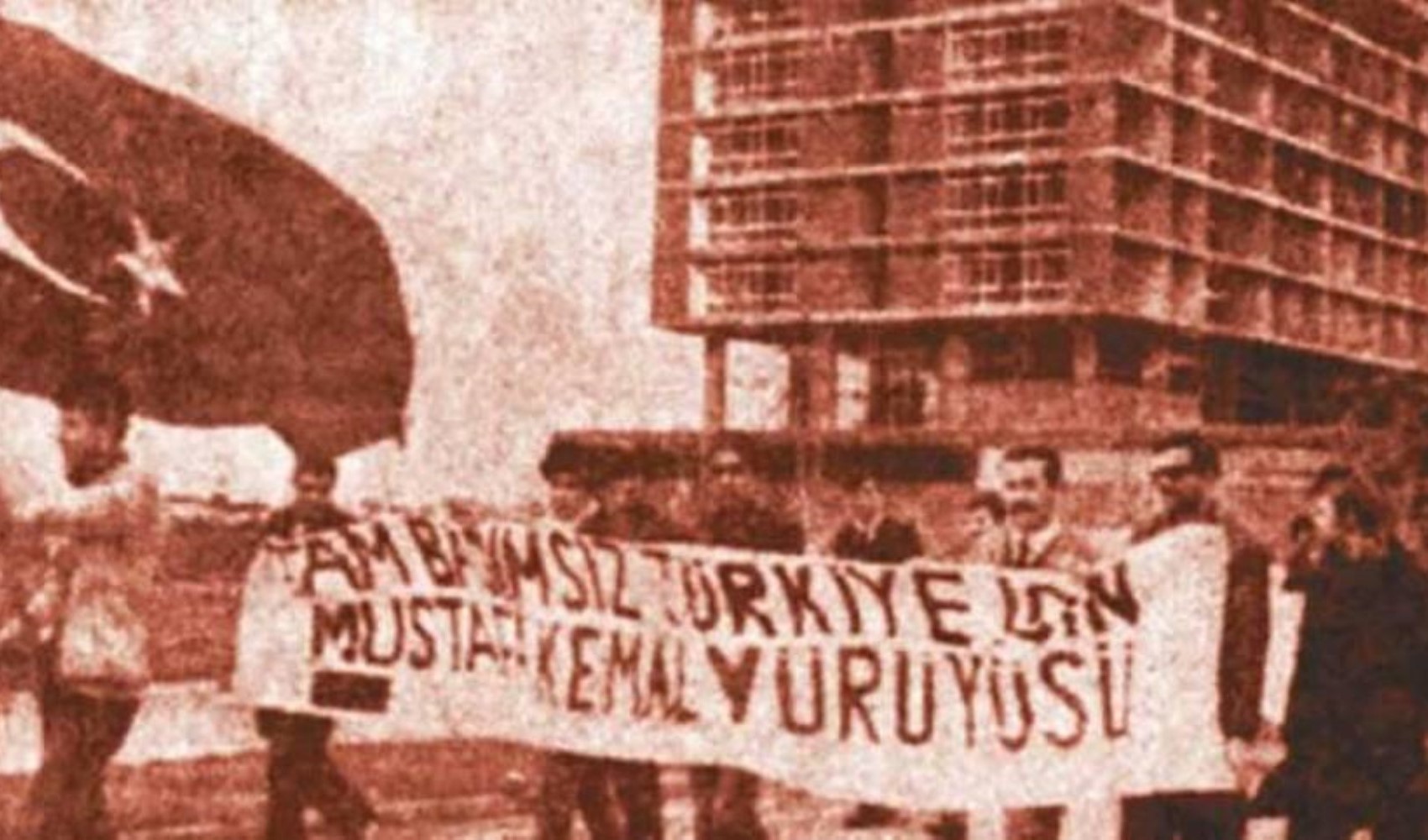
Some socialist parties and circles, in their posts referring to May 19, 1919, the date Mustafa Kemal set foot in Samsun and launched the National Struggle, have not only belittled the war of national liberation but have also produced content attempting to portray the leaders of this struggle as mass murderers. This date, which everyone from old-guard communists to the revolutionaries of the '68 Generation hailed as an anti-imperialist and anti-feudal popular movement, has unfortunately been distorted by these segments in line with the "Pontic Genocide Remembrance Day" invented by the Greek parliament in 1994. Such posts, beyond being detached from historical reality, serve as tools for imperialist manipulations.
Some circles that define themselves as left-socialist are, unfortunately, as distant from this country and the historical reality of these lands as a peasant in the Andes. Their clinging to the "Pontic Genocide" claims—which have questionable historicity and contain intense disinformation and imperialist manipulation—on May 19, the symbol of the national independence struggle, is not only historical blindness but also an ideological drift.
These segments think that speaking not in the language of Turkish workers and laborers, but in the language of the Greek and Western ruling classes, is "ultra-leftism." Yet, if they looked at history with a little care, they should be ashamed of the stance of Greek communists like Nikos Zachariadis and his friends, who were executed for refusing to participate in the Greek occupation during the years of the War of Independence.
If they were alive today, these circles would most likely declare them "chauvinist" or "racist" as well.
Mustafa Suphi's following words are sufficiently explanatory on this matter:
“The Anatolian people are showing heroic resistance against the occupying armies of imperialism. This war is our war too. The cause of the Turkish peasant, worker, and the poor is the cause of the socialists.”
In the same period, at the 2nd Congress of the Comintern, Lenin clearly stated the following:
“The oppressed peoples of the East are not alone in their struggle against imperialism. Proletarian internationalism must support this struggle.”
However, the issue is not limited to 1919. There is another history that has never entered the radar of these circles: the history of systematic ethnic cleansing and genocides carried out against the Turkish and Muslim population in the Balkans.
The process that began with the massacre of more than 30 thousand Turks and Muslims during the Greek revolt in the Morea (Peloponnese) in 1821 turned into a catastrophe with the Balkan Wars of 1912-13. During the Ottoman withdrawal from the Balkans, approximately 5 million Muslims and Turks were driven to Anatolia through massacres or forced migration. Their homes, mosques, and graves were destroyed. The pain of this history resonates in every family in Anatolia, but unfortunately, for these circles, these deaths are invisible.
Yet, a left that speaks not with the language of imperialism but with the history of peoples cannot remain blind to these pains either. An approach that only voices selected grievances and shows sensitivity only to tragedies deemed appropriate by imperial centers is not populist or internationalist, but a reproduction of the colonial intellectual model.
If they looked a little closer at the political past, theses, and approaches to the reality of Turkey of the first-generation socialists—from Şefik Hüsnü to Mustafa Suphi—whom they reference in every criticism they level at the Republican Revolution, they would not hesitate to accuse them of being "social chauvinist" or "Kemalist" as well.
The truth is this: A socialist stance that does not see the national independence struggle as a popular movement against imperialism denies its own roots. This mentality, which mistakes the transformed tools of imperialism for "truth," is neither revolutionary nor populist. An "internationalism" so alien to history, struggle, and peoples remains only on paper.
Written by: İbrahim Utku Nar
News Source: 12punto