Dr. Hande Orhon Özdağ
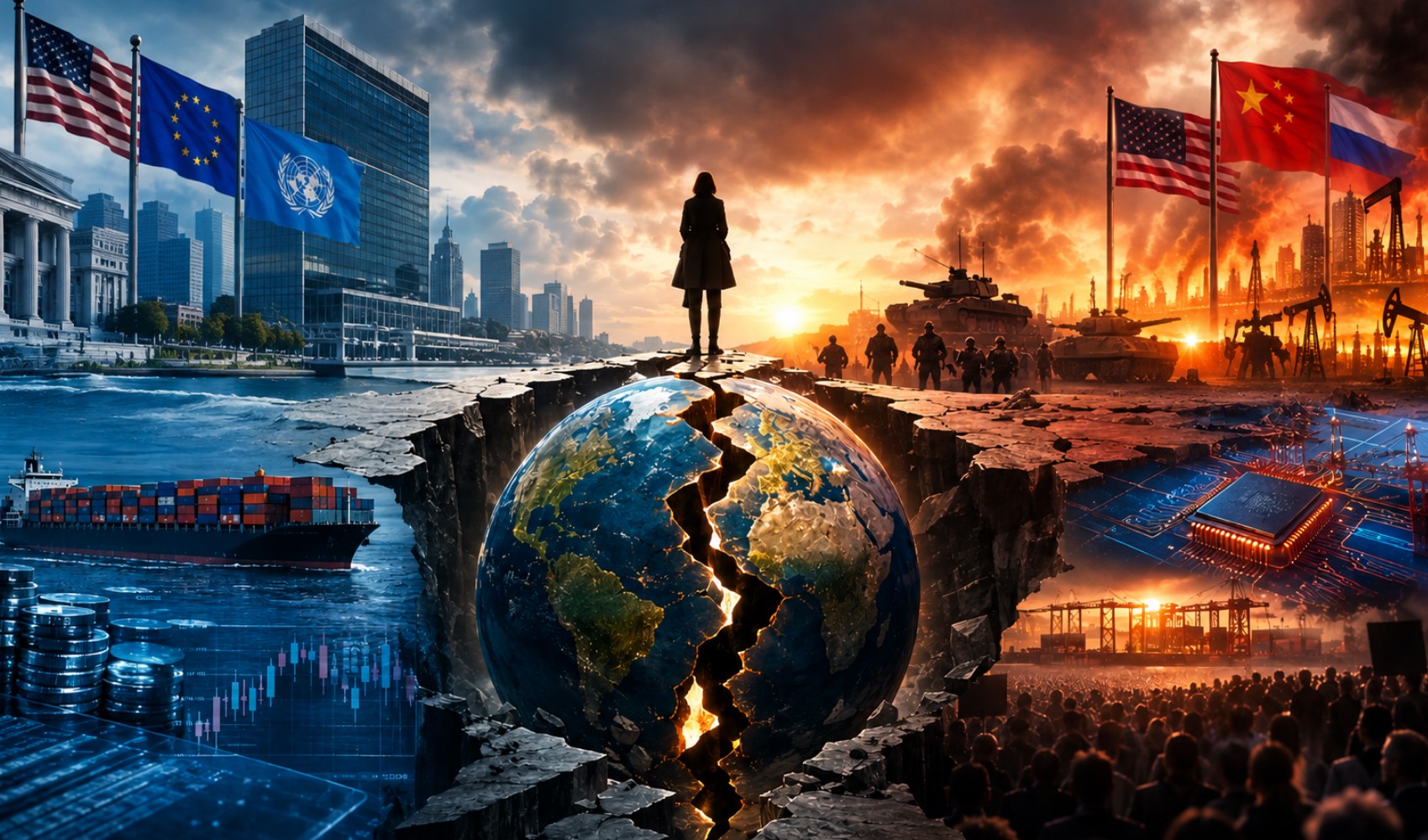
For some time now, there has been talk that the “end of the world as we know it” has arrived, and that nothing is or will ever be the same again. In this process, which Canadian Prime Minister Mark Carney described in January 2026 at one of the most symbolic venues of the “world as we know it” order, the Davos World Economic Forum, with the words “We are in the midst of a rupture, not a transition,” developments that shatter our conventional wisdom continue to follow one another. Almost everyone agrees that global relations are undergoing a transformation and that the global order is not functioning as it once did. However, it remains unclear what kind of order this dissolution will evolve into, and which institutions, power relations, and political-economic balances it will produce.
Antonio Gramsci has a concept he used precisely to describe such historical thresholds: Interregnum. An “interim period” where the old order has begun to dissolve, but the new order that will replace it has not yet been established; where the old has not entirely lost its authority, and the new has not yet taken on a distinct form.
WHILE THE ASSUMPTIONS OF THE OLD WORLD ARE SHAKEN
In fact, it is certainly open to debate how broad a consensus the network of global relations, referred to as the “old order,” was actually built upon. However, it is indisputable that we are in a process where even the actors who structured the world after the Second World War have had their consent to the existing order deeply shaken.
We do not yet know what the new order will look like, but we see that the fundamental assumptions of the old world are eroding one by one. In the economic sphere, free trade, market priority, and the pursuit of efficiency are increasingly being replaced by protectionism, industrial policies, economic security, and strategic state interventions. In the political sphere, the mechanisms of consent that accompanied the discourse of liberal democracy and rules-based governance are weakening. The weight of executive power, security politics, and authoritarian tendencies is increasing. In the geopolitical sphere, the assumptions that economic interdependence would strengthen peace and stability are being shaken. It is becoming increasingly clear that the networks connecting actors—from energy to finance, technology to supply chains—also create strategic dependencies and vulnerabilities; and that these dependencies can even be turned into tools of pressure through sanctions, trade restrictions, and technological embargoes.
THE FRACTURES PREPARING THE RUPTURE
Of course, we did not reach this point of “rupture” in a single day. Fractures added on top of one another brought us to today's threshold. The 2008 global financial crisis shook the perception that markets could “self-regulate” and once again demonstrated the indispensability of the state in times of crisis. Brexit and Trump’s first presidential term made the cracks in the political consensus behind globalization visible. Trade wars and tariffs returned as strategic tools. The Covid-19 pandemic brought state intervention and economic resilience back to the center. The Ukraine War showed quite clearly how “interdependencies” in security, energy, finance, and supply chains could simultaneously turn into tools of pressure. Trump’s second presidential term, on the other hand, brought into question not only the economic rules of the global order but also the traditional alliance relations that sustain it. The 2026 Iran war once again revealed how a regional conflict can rapidly produce global consequences through energy, trade, and security channels.
A NEW ORDER OR A NEW STRUGGLE?
At the point we have reached today, the world is drifting into an increasingly harsh political and geopolitical climate. Armament is accelerating, and security concerns are being placed at the center of economic and political decisions. Trade, energy, technology, and even supply chains are turning into tools of great power competition. In the economic sphere, alongside free trade and market priority, protectionism, strategic industrial policies, and the search for economic security are gaining strength. In the political sphere, in an environment where liberal democratic institutions and traditional mechanisms of representation are eroding, far-right and authoritarian tendencies can produce new channels of social consent. The state is repositioning itself as a more strategic and interventionist actor in a wide field ranging from the economy to technology and security. In short, as the boundaries between economy, politics, and geopolitics become increasingly blurred, the international order is taking on a more fragmented, security-focused, and power-politics-dependent form.
However, all of this does not lead us to a definitive conclusion about what the new order will be. Because the state gaining more weight in the economy does not mean that the market has completely withdrawn. The rise of protectionism does not show that financialization has ended. The strengthening of the emphasis on sovereignty and national interest does not produce a more populist and just political order. While bloc formation and fragmentation in the global economy are increasing, these developments do not mean that we have reached the end of globalization.
In short, while some elements of the old order persist, new ones are being added to them. Moreover, a significant portion of these rising new trends carries a more security-oriented, protectionist, and confrontational character. On one hand, states are reorganizing their economies and technologies according to the requirements of strategic competition; on the other hand, the institutions, rules, and interdependence relations of the old order continue to exist. This state of crisis, where the old and the new exist simultaneously, clash with each other, and neither has yet established a stable order, increases the pressure on the system.
INTERREGNUM: THE STRUGGLE AGAIN FOR A NEW HEGEMONY
For precisely these reasons, the interregnum concept that Gramsci used nearly a century ago is regaining importance for understanding today. Because what we are witnessing now is not just a waiting state where the old order has dissolved and the new one has not yet been established; it is a historical threshold where old and new forces, different interests, and searches for alternative orders are struggling to establish a new hegemony. While the old order is increasingly losing its capacity to manage its contradictions and produce consent, a new hegemonic project that could replace it has not yet emerged. What we are experiencing is also a struggle for hegemony over who will determine the rules of the world that is taking shape, within which power relations, and how.
News Source: 12punto