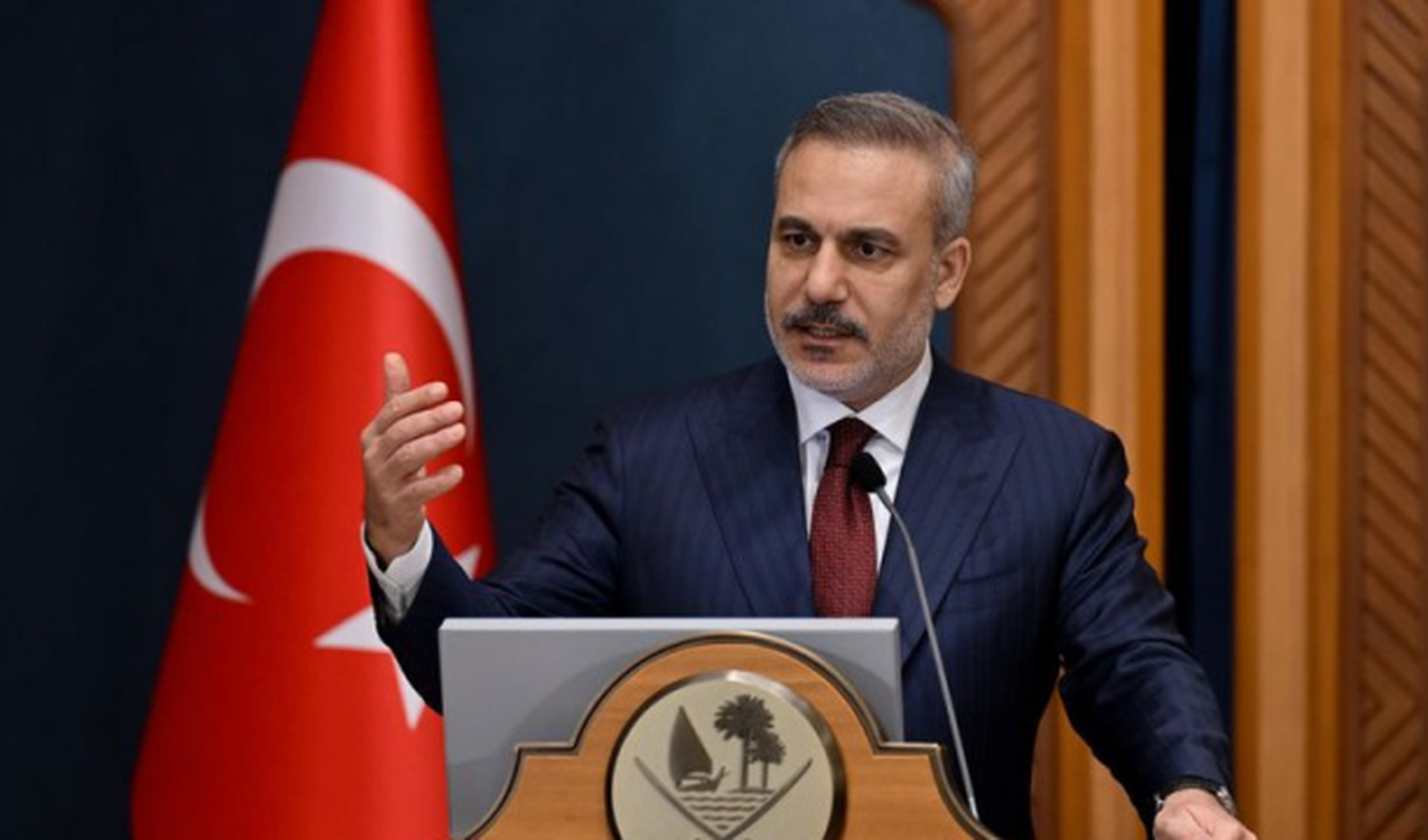
Following his trip covering Saudi Arabia, Qatar, and the United Arab Emirates, Minister Fidan pointed out that disagreements between the US and Israel regarding the war have become more pronounced. Fidan stated, "It does not seem very possible to negotiate while the war is ongoing. The possibility of declaring a short-term ceasefire, starting talks during this period, and resuming the war if no results are achieved should also be taken into consideration." Stating that there are indications that Israel may pursue a policy aimed at prolonging the war and intends to inflict more damage on Iran, Fidan said that the path the US will follow in this process is also important.
Minister Fidan noted that Israel will not pause its attacks without eliminating its military and industrial targets, and that assassinations continue in the region. At the same time, he reiterated his stance by saying, "Israel started the war. The problem is not that there is no plan to end the war, but that Israel does not want peace. We are stating this clearly on all platforms."
Fidan predicted that new developments could occur in the Gulf countries after the war and expressed that it is likely that new collaborations in the defense industry will come to the agenda in this context. Pointing out that Iran could put forward demands regarding US bases in the Gulf, Fidan underscored how critical the energy resources passing through the strategically important Strait of Hormuz are for many countries.
Minister Fidan said, "We have maintained a clear stance from the beginning. We have clearly pointed out mistakes, regardless of which side they come from. We see that trust in Turkey is increasing."
"WE ARE NOT PART OF THIS WAR"
Evaluating Iran's attacks on some Gulf countries in the region, Fidan said, "Gulf countries are questioning why they are being targeted in this struggle and are expressing that they are not parties to the war. They find the attacks against them unjust and share the view that they should respond to them." He pointed out that the Gulf countries have declared from the beginning that they will not allow their airspace and bases to be used against Iran.
Fidan also underscored that Iran is deliberately targeting not only military points but also economic infrastructure in its attacks.
REGIONAL RISKS ARE RISING
Minister Fidan announced that if the current tension continues, Gulf countries may have to take countermeasures. Fidan stated: "In the meetings, they expressed their warnings more strongly following the recent attacks. The risk is rising. We do not desire a long-term, all-out war in the region in any way. We will continue diplomatic initiatives to end the war; it saddens us to see the accuracy of the predictions we have made from the beginning."
At the meeting held in Riyadh, it was emphasized that Iran's aggressive steps in the region affect all countries and that everyone is evaluating this emergency situation with seriousness. Fidan noted that Turkey continues its principled stance in foreign policy and that they oppose both Israel's military aggression and Iran's efforts to spread the war to the region.
Stating that Turkey pursues a policy that prioritizes stability in the region, Fidan expressed that the parties' search for gains or superiority makes a solution difficult. Stating that they offer both accurate analysis and constructive solution proposals, Minister Fidan said that they will continue their balanced and constructive foreign policy.
Making assessments regarding relations with the European Union, Minister Fidan reminded that membership remains a strategic priority for Turkey. Stating that political will needs to be strengthened on the EU side as well, Fidan said, "Updating the Customs Union and visa liberalization are important issues. Our talks are ongoing. Our relations are stable; they are not getting worse, and they could get better. The need for us in areas such as illegal migration and counter-terrorism continues. As for visa liberalization, our relevant institutions continue to work on the remaining six items."
News Source: 12punto