



The AKP government did not refrain from taking a similar position in its early years either. Coming to power with promises of freedom and claims of including the country in the European Union, the AKP actually never broke away from this network of relations that was kept more in the background. In fact, it continued to carry almost all the actors of that day into the present.
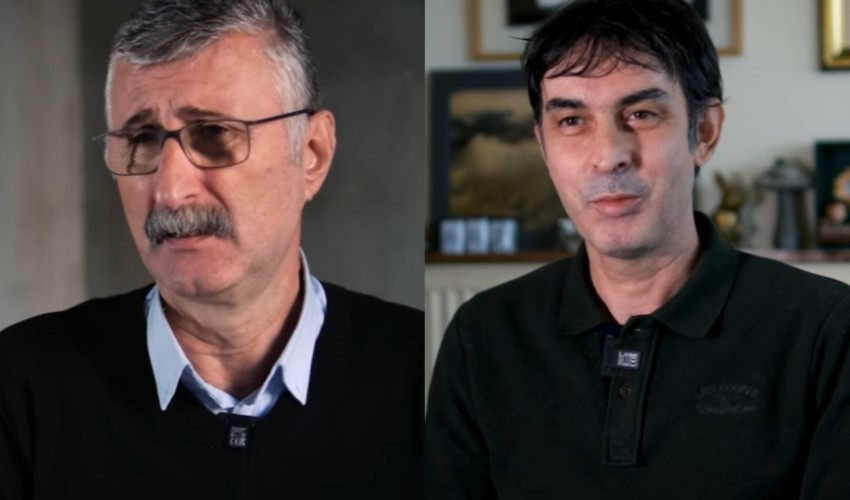
SOL Party Central Executive Committee member Alper Taş and journalist Bahadır Özgür evaluated the mafia-state-politics relations that have lasted from the mafia order of the 90s to the present day of the AKP on BirGün TV.
"ECONOMIC CRISIS, ASSASSINATION, UNSOLVED MURDERS"
Evaluating the 90s, Taş said, "The 90s were a period when the foundations of today's regime were laid, and the tensions and debates on that subject deepened. It is a period in which the regime crisis manifested itself in various forms. There is an economic crisis dynamic. There is a crisis in terms of representation. It is a process that proceeded with coalitions. There are assassinations, murders, and unsolved cases where the dirty war practically rotted society. It is a period when political Islamism emerged as a crisis."
"IT BEGAN WITH THE 1972 COUP"
Adding to the evaluations, Özgür spoke as follows:
"When we say the 90s, the first thing that comes to mind is 'Susurluk'. Susurluk represented a structure where politics, trade, mafia, and state relations were intertwined. But this was not something unique to the 90s. The relations that emerged in the 90s actually mean that the political functioning that emerged and became integrated within the state mechanism in the 70s came to light in the 90s. It is especially the process of the Mehmet Ağar team appearing on the scene for the first time. The entry of the mafia into the state apparatus and its becoming an instrument began with the 1972 coup."
Referring to Mehmet Ağar regarding the dark structure of the 90s, Özgür said, "When we look at Mehmet Ağar, a history of these relations also emerges. He starts as a police officer, becomes a police administrator, becomes a Minister, becomes a member of parliament, and appears before us as a business person; that is, his career appears before us in a rising position, not one that is gradually falling."
"MAFIATIC RELATIONS ARE EXPOSED EVERY TEN YEARS"
Özgür continued:
"When we look at the events of today, we must look at them by taking into account both continuity and ruptures. There is a continuity in Turkey. For 40 years, we have been encountering scandals where mafiatic relations are exposed every ten years. Every ten years, these accumulated relations are exposed. This continuity is not just about the actors. It is related to the political and economic structure in Turkey itself. In every new government period, we are faced with a situation where these relations have been re-engineered."
"IT WAS A PERIOD THAT ENTERED ANOTHER PROCESS WITH FEBRUARY 28"
Touching upon the February 28 period, Taş stated, "The army, which is the greatest instrument of the ruling powers, took this process, which developed with the 'turn off the lights' protests that developed under the initiative of the people, under its own control with the February 28 process because the Refah Yol government was in question there. The Welfare Party (Refah Partisi) was also a coalition that spoke by clearing the corruption of the True Path Party (Doğru Yol) and Tansu Çiller in a way. An army-centered opposition process developed against the True Path government for closing its eyes to the reality of Susurluk, and the process became another period that began naturally after the army personally seized the process as a political party on February 28, 1997."
"CAPITALISTS PLAYED AN EFFECTIVE ROLE"
Continuing his words, Taş said, "The main point underlying all these fights was a process regarding how the capital would restructure itself in the context of the new world order and how the ruling classes would position themselves in this new conjuncture. One should not take the process here independently of the army, capital, and the religious community (cemaat). It was a response that the rulers gave to the crisis during this crisis process. 'They had the intentions that the executive should be more effective, become a part of a regional power with the Presidential System. Capital could now turn to other markets outside of searching for a market within the National Pact (Misak-ı Milli) borders, and the army could be moved to a point that would allow this.'"
"THE LIFEBUOY THROWN BY DEVLET BAHÇELİ SAVED THEM"
Taş said, "The AKP took very important steps regarding the construction of the regime by establishing various pragmatic alliances, taking the left-liberal segments with it, and even taking the Kurdish movement with it or dominating it during the solution process, against the resistance of these traditional state powers towards itself. After 2017, these steps intensified. The July 15 coup process brought an opportunity for the AKP, and it continued its strategy with the lifebuoy thrown by Devlet Bahçeli. Again, as a state policy, the AKP-MHP united, and the effective actors of the ruling powers carried the process to the presidential process."
News Source: 12punto









