Announced to the public on August 1st through the initiative of Republican intellectuals, journalists, and artists, the declaration titled "We will not allow our country to tumble off the cliff" reached hundreds of supporters in a short time.
The call text highlighted the demand for a secular, independent, egalitarian, and planned Turkey by opposing the questioning of the Treaty of Lausanne, the opening of existing borders to debate, neo-Ottoman dreams, sectarianism, and political structures based on ethnic-religious identities. There was great interest in the text. More than 700 intellectuals supported and signed the declaration. However, discussions began alongside it. Some segments criticized the declaration and the TKP.
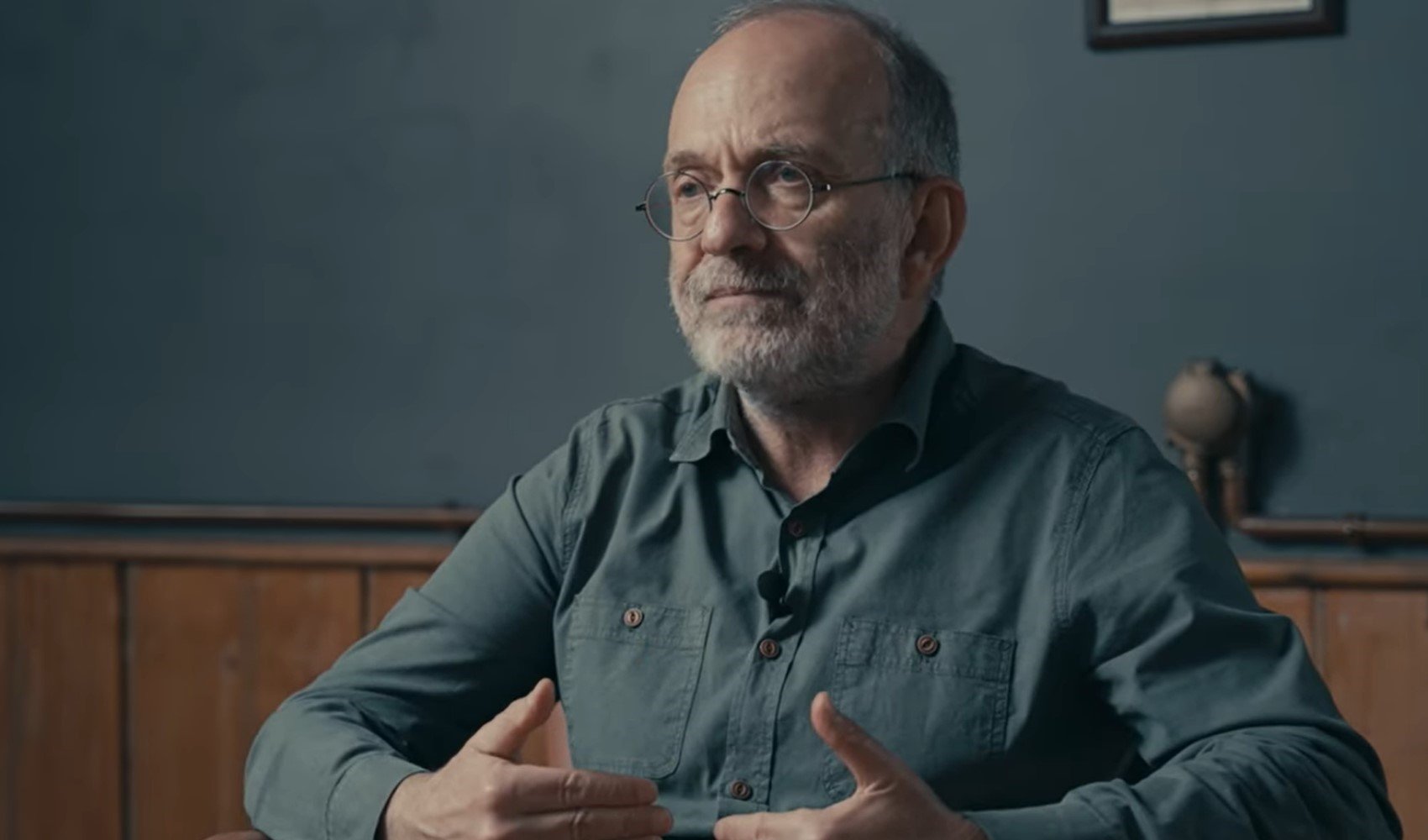
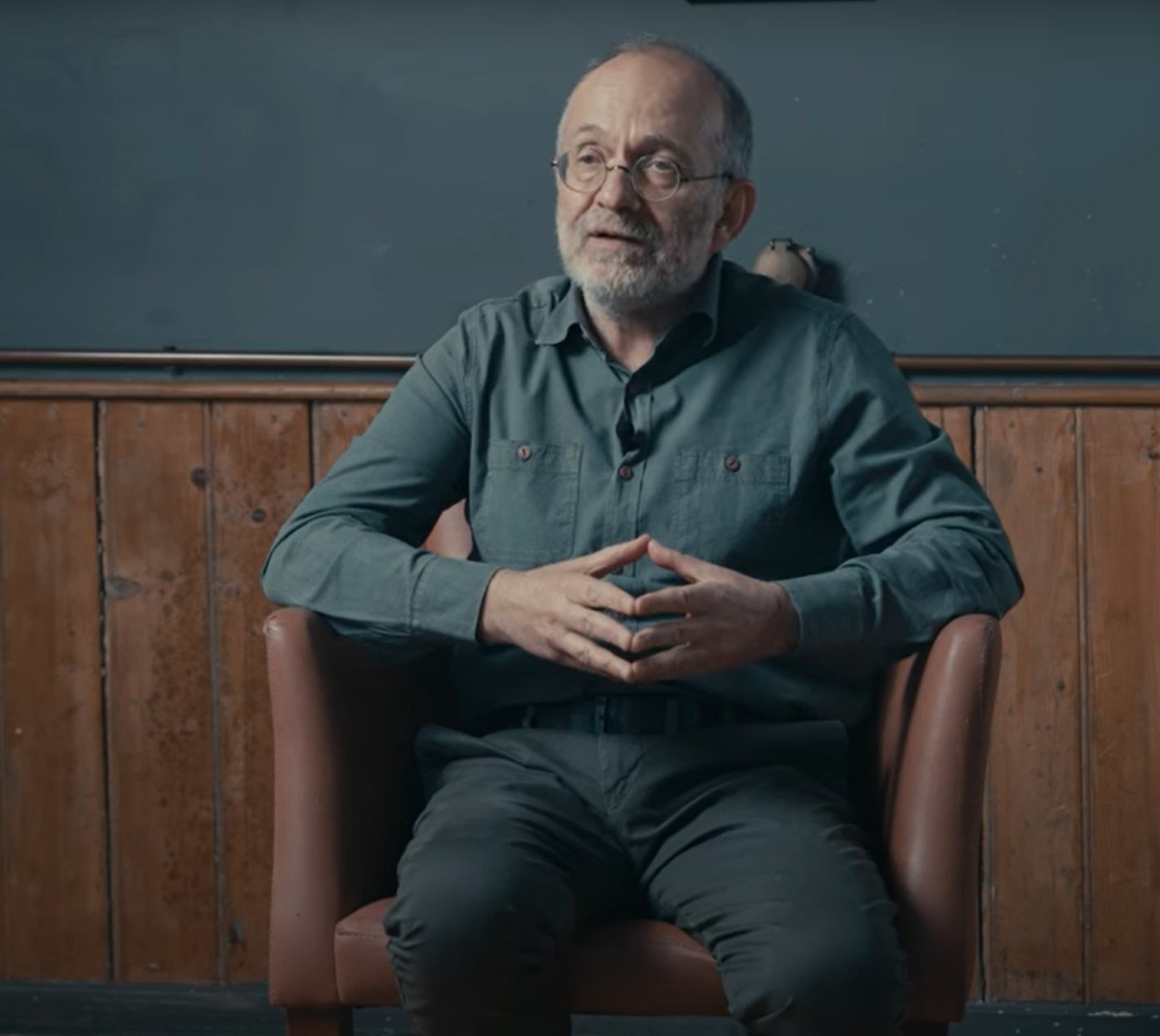
Describing the "We will not allow our country to tumble off the cliff" declaration as a "clear stance," according to Communist Party of Turkey General Secretary Kemal Okuyan, the process presented with rhetoric of peace and brotherhood is actually progressing in tandem with the regional plans of imperialist powers and threatens the fundamental values of the Republic.
Responding to 12punto's questions, Okuyan emphasized that the government's policies are running parallel to those of the US and Israel, and that the strengthening of religious sects and the exploitation by monopolies are being imposed on society under the guise of "brotherhood." For this reason, the campaign is not just a signature movement, but also a call to revitalize the revolutionary accumulation of the Republic.
Emphasizing that true peace is impossible without secularism and a planned economy, Okuyan says, "The solution to Turkey's problems lies in a republican, anti-imperialist, and egalitarian program."
Kemal Okuyan evaluated the 'process alliance' that the government has named 'Terror-Free Turkey,' which is being conducted together with the DEM Party, the support and criticisms directed at the "We will not allow our country to tumble into the abyss" declaration with plain expressions.
In addition to the support for the declaration titled "We Will Not Allow Our Country to Tumble into the Abyss," which was prepared under the initiative of the TKP and signed by intellectuals with different ideological and political preferences, there have also been harsh criticisms. Let's start with the support first; did you think it would receive such widespread acceptance?
It was necessary; above all, it was necessary. In terms of timing and in terms of direction. This was the first thing we needed to evaluate. Its widespread acceptance and effectiveness are certainly important, but what is truly decisive is its relevance. We are talking about a short text. Although it gives the impression of consisting of elements that would not face much objection, it created a polarization in a short time. Because, while being short and simple, it pointed to the real issues that need to be discussed. The most important reason for it being supported by a wide segment is this clarity and simplicity.
Do you expect a text of this brevity to enable the emergence of a focus, a Republican alliance, in the coming period? Assessments have been made in this direction. At the very least, is this an aim of yours?
We have been making an intense effort for some time now, together with our friends, for a strong focus to emerge from within the Republican accumulation that will revitalize that accumulation with a revolutionary perspective. The declaration text under discussion must, of course, be evaluated in conjunction with this effort. However, this statement is insufficient in terms of producing a program or a direction. It was not intended for that purpose anyway. We wanted to start a discussion, and I think we succeeded in that.
What are you basing that on? Because there has been a polarization, at least on social media, between those saying 'well done' and those hurling insults or even making threats. Can you call this a discussion?
What stands out on social media is mostly the superficial part. Let's call it the froth. However, the content is also being discussed at the bottom. Besides, one should not evaluate it solely through social media. There are differences among those who signed this text, and a discussion is deepening there as well. Of course, there is no unity among those who do not like this text either. However, the most important piece of data is that, with this declaration, the owners of the 'new resolution process' have decided to be more careful. Because they themselves saw that they could not get away with labeling the signatories as 'Oh, these are just Ergenekon supporters.' They do not feel comfortable with any major operation without receiving approval from Turkey's true intellectual accumulation and its projection in the social sphere. The entire history of the AKP has shown us this. A similar state of being cornered is also valid for the other owners of the process.
So, is a polarization taking place in Turkey right now? Is this polarization between 'pro-resolution' and 'anti-resolution' camps? Or, to put it more mildly, is society and politics in Turkey heading toward a divide in the form of 'pro-process' and 'anti-process'?
Pro-resolution and anti-resolution are definitions invented by the government. I cannot speak for everyone, but I know that a significant portion of the signatories object to this type of labeling. Why would anyone object to the resolution of a problem? We have said from the beginning that we look at the content. We say that the solution to Turkey's problems lies in a Republican, anti-imperialist, secular, and egalitarian program. We object because we see the exact opposite in this process. We are warning because this is a process that is interacting with the regional plans of Israel, the UK, and the US. We stand apart because we know this is not a solution and that it will deepen the problems. The declaration started by saying, 'We want peace and brotherhood.' This was not the product of a search for balance. There can be no peace and brotherhood without an egalitarian, planned economy, without secularism, and without reviving the idea of the Republic. This is what we are saying.
Then this is the perfect time to ask about the criticisms. Why did it draw so much reaction? Was there no valid side to the criticisms at all?
Conducting an operation of this scope together with the current government and being part of such a process is a serious decision. It is not something that those involved in this business or those supporting this process from the 'left' can easily stomach. Reservations were already being voiced, and then they were persuaded through various methods, or they aligned themselves even if they weren't persuaded. It is quite natural to react to every objection that triggers their past reservations or doubts, or reminds them of those, and to try to suppress those objections. I say this for those who have to support this process, which does not sit well with them in the name of being a leftist or a democrat. The biggest reaction came from them.
Why didn't it sit well with them? If it didn't, why have they been drawn into the process now?
It didn't sit well with them because for a long time they were advocating for the unity of the broadest possible forces to ensure that the government, which they coded as the "Palace Regime," would leave regardless of the cost. Principles, direction, programs, and the class realities of the country—these all melted away within the "Palace Regime" rhetoric. And now what happened? They are actively supporting a process that the "Palace Regime" is conducting, or at least is a partner in. This means the bankruptcy of an entire paradigm. However, there is no substance here either. Why were they opposing the AKP government? "Well, because it was authoritarian." That cannot be the only answer. Substance, direction, program! When these are not discussed, at the first moment of fracture, one returns to the "Not enough, but yes" spiral.
Do you think we have returned to that?
Even if it is not entirely the same, yes! And in some respects, it is more dire.
What would you say to the criticisms coming from the DEM Party circles?
For a very long time, DEM has been striving to make the left subordinate to its own line in all its policies. This is nothing new, and they have seen the TKP's separate stance as a problem for years. There is nothing strange about this; politics is like that. The problem here is the left's acceptance of this. Indeed, this habit led to them being drawn into the process. As for the criticisms... A series of accusations, from being Ergenekon-affiliated to being fascist, were directed at the TKP. Furthermore, accusations were made based on the pasts of some of the signatories. These types of labeling attempts are meant to preempt a discussion that has just begun. The concern of those who dismiss it by saying, "Oh, they are just fascists," is to prevent the essence of the issues from being discussed. They will not succeed. An argument along the lines of "Who is even opposing Lausanne, where are you making this up from?" is also doomed to be ineffective. A similar defense is coming from Palace circles as well. They raised objections by asking, "Who is defending ummah-ism, who is defending expansionist Ottomanist policies?" As I said, this signature text encouraged everyone to be more careful. It is not easy for them to deal with the resistance of the Republican accumulation in Turkey, which manifests itself on all levels.
Doesn't receiving criticism from the left, DEM, and the AKP at the same time make the TKP a focal point?
It doesn't stop there. The TKP is also facing very harsh criticism from some nationalist segments that are against the process.
Why? Many figures from those circles have announced that they like the TKP's stance.
The pieces are shifting in Turkey. Ideological and political references are being shaken. Who supported whom, who liked what—we are not concerned with that. I repeat, first the direction and the program. As is known, nationalist-conservative circles are reacting differently to this process. We are talking about a very broad segment. Some of them have begun to see the social system that produces inequality at the root of Turkey's problems. Undoubtedly, with their own set of concepts. There is a tendency toward a real distancing and reckoning with the structure we define as the order of holdings and religious sects. We will all see the results of this together. On the other hand, for years, nationalism and liberalism have fed and complemented each other in this country. They are two sides of the same coin. Isn't this process proof of that? After spending the last decade with an "uncompromising" "counter-terrorism" concept that almost all nationalist-conservative circles supported one way or another, the government suddenly switched to "resolution" mode. They squeezed this process into a mold called "a Turkey without terror," but that is irrelevant. We know that this process has a direction and the issue is not just about the silencing of guns.
What is the criticism coming to the TKP from nationalist-conservative circles?
The TKP thinks there is a problem at hand. Look, the system in Turkey has turned the Kurdish issue into a gangrene and has ensured that an issue that already had regional dimensions has become internationalized. Moreover, it has turned it into an instrument of imperialist intervention. The government says, we will take this issue out of the hands of Israel and other countries. The PKK was saying, if you don't solve this issue with us, you will be in trouble; we have other options. Some segments say, there is no such problem, this is entirely the work of imperialists! It is very interesting that those who say this have for years defended NATO, the most troublesome organization of imperialism in this country, and have embraced the US's war against socialism at both an intellectual and practical level. Imperialism only comes to their minds regarding the Kurdish issue. Those who would be the last to complain about the PKK or any other organization being supported by the US are the NATO-ists. Now they have come out to try to criticize the TKP because it says "there is a Kurdish issue." Of course, there is a Kurdish issue. But our approach is different; there is no Kurdish issue that is independent, separate, or above everything else. Let us say it immediately: those who deny the existence of this problem are the real dividers. We will not learn patriotism from NATO-ists.
In that case, shouldn't you discuss the TKP's approach to the "Kurdish issue" and the ways to solve it?
I repeat, outside of the fundamental issues, there is no fixed Kurdish issue in this country. There is a social system in this country that produces inequality. The Kurdish issue feeds on this. Secularism has been abolished in this country, and religious sects have taken over everywhere. The Kurdish issue is within this. This country is being dragged into the competition and conflicts within the imperialist world. The Kurdish issue is within this. An approach like "tell us your solution" without discussing these is a trap. Undoubtedly, the Kurdish issue has its own dynamics. The issue that needs to be solved is the removal of the obstacles preventing citizens of Kurdish origin from feeling that they belong to this country. These obstacles are related to the fundamental problems I have listed. These obstacles exist. You cannot overcome these obstacles with identity politics. Now the government is trying to include other segments, such as the Circassians, starting with the Alevis, in the process. In other words, this country will set sail for new adventures with the US, while competing with Israel it will establish some partnerships with it, the country will turn into a playground for religious sects, and most importantly, large monopolies will ruthlessly exploit the laborers of this country regardless of their origin, and brotherhood will emerge from this! Forget it. Autonomy or localism is the desire of the holding and sect order in Turkey. It further strengthens their dominance. At the same time, it means conflict. You start arguing about the distribution of resources. Agricultural lands, water, energy—it goes on like this. It means conflict. So, is it good now? No! Who says it is good now, or that it was good yesterday? Equality is also achieved by operating a planned process to eliminate inequalities between regions. Look at our state now! It is said that a socio-economic system that oozes injustice and foolishness from every side will bring brotherhood and peace. I'll skip the others; there are those who accept this in the name of being left-wing! Yet, at best, this will only produce imperialist peace, capital peace!
What do you mean by this?
Look at the practices of this government! Civil servant salaries, public employees, retirees, minimum wage discussions. A government that opposes even the slightest improvement in these areas and takes into account the interests of a handful of exploiters, not the vast majority of society. Is it possible for the peace and brotherhood of this government to encompass the people? Ultimately, they want to get ahead in regional competition by opening up a little more space for Kurdish capital within the internal balances of the capitalist class. This is one dimension of the matter. The other is that they are planning an "economic revival" alternative to China, where Iran is neutralized and Israel's security is ensured in a wide region. This is also imperialist peace. Here, the AKP has the idea of stealing a role from Israel and wants to use the Kurdish issue for this. In other words, both a competition and a cooperation are ongoing between Israel and Turkey. A result might come out of this, but at the end of the day, new wars always emerge from imperialist peace. Now they say, "but at least the Kurdish issue is being solved." No, nothing is being solved. On the contrary, the existence of the Republic of Turkey will begin to be questioned in this process. We have explained the reasons and the whys of this at every opportunity.
There are those who ask, "Is it up to the TKP to defend the Republic?"...
If there are those saying this in the name of the left or Marxism, I will remind them of this: No Marxist debate can emerge from this process involving the AKP, MHP, Sheikh Said, TÜSİAD, and the US. Marxism stands on one side, and other ideologies stand on the other. If these words are coming from nationalists, let us remind them: You have made a great contribution to this country and this Republic reaching this state. Regardless of past references, anyone who looks at this country today and draws real, sincere, and honest conclusions is valuable to us. But we have no business with anti-communists. Everyone go your own way!
WHICH DECLARATION DID THE INTELLECTUALS SIGN?
“We, the undersigned, call upon Turkey's republican accumulation to stand behind this claim: We will not allow our country to tumble off the cliff.
We want peace and brotherhood.
We do not want the questioning of the Republic of Turkey or the Treaty of Lausanne; the discussion of our current borders; neo-Ottoman dreams, illegitimate designations such as the Turkish Empire, sectarianism, or political structures and institutions based on ethnic and sectarian identities.
We want peace and brotherhood, as well as an independent and secular country, an egalitarian order, and a planned economy.
We will not allow our country to tumble off the cliff.”
News Source: 12punto