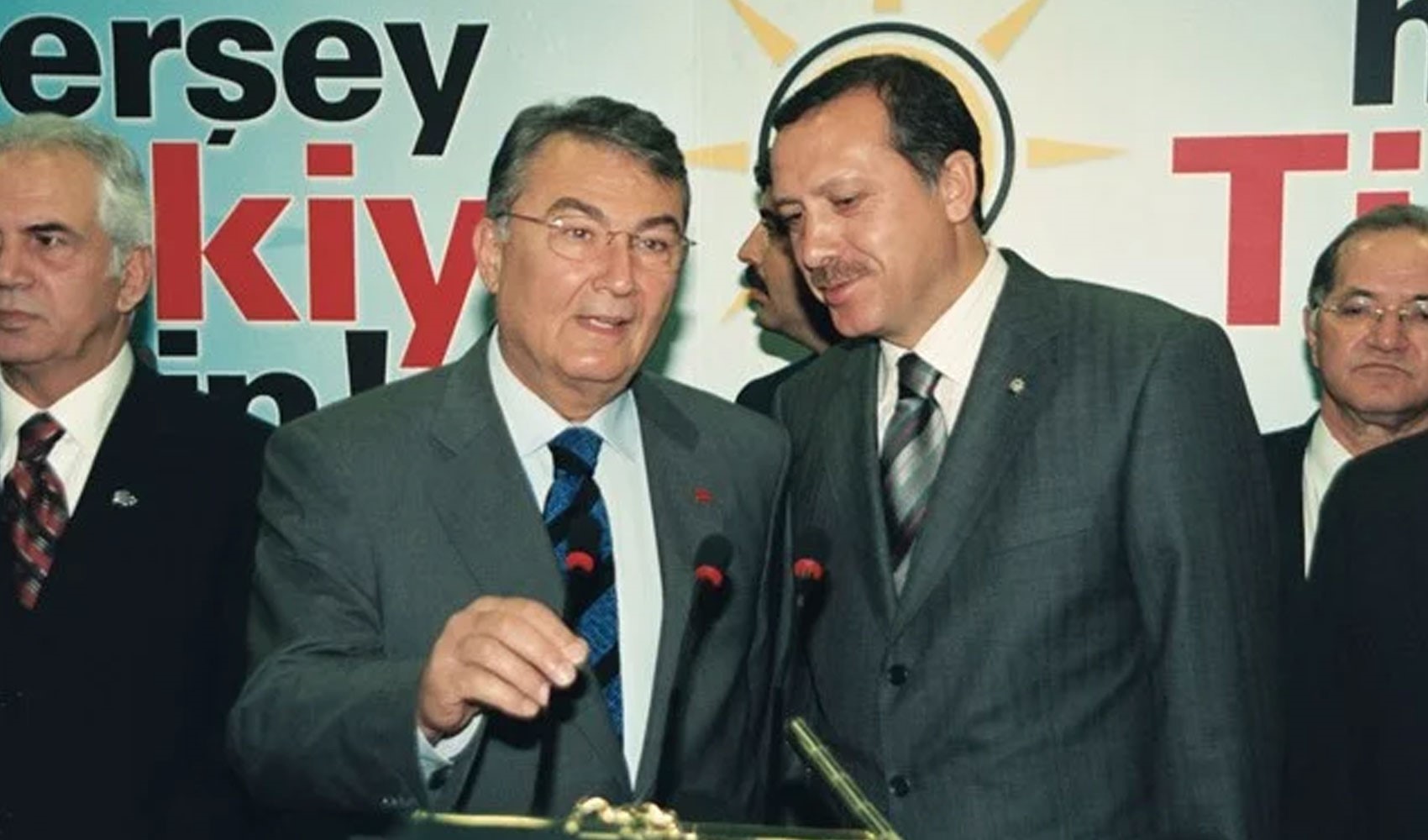
CHP Chairman Özgür Özel visited AKP Chairman and President Recep Tayyip Erdoğan at the AKP Headquarters following the March 31 Local Elections. Forty days after this meeting, Erdoğan paid a return visit to the CHP.
Erdoğan's last visit to the CHP had taken place in 2006, when Deniz Baykal was serving as chairman. The CHP side, meanwhile, had last visited the AKP in 2002.
Yılmaz Ateş, known for his closeness to Baykal, has shared the unknown details regarding the meeting that took place 22 years ago for the first time.
Speaking to Saygı Öztürk from Sözcü, Ateş explained the background of the decision made by Deniz Baykal, who was the target of criticism for congratulating Erdoğan in 2002 before the election results were announced:
“There is no other example of this in Turkish political life. Perhaps there isn't one in democratic world politics either. While congratulatory visits are always made after the final election results are officially announced, Baykal did not wait. The situation that made the visit urgent was this: Deniz Bey always cast his vote in Antalya during parliamentary elections. With the DSP, ANAP, DYP, and MHP failing to pass the threshold in the November 3, 2002 elections, it had become clear from the unofficial results that the AK Party had won 363 seats (a two-thirds majority in parliament) with 34.4 percent of the vote, and the CHP had won 178 seats with 19.4 percent. On the evening of November 4, Deniz Bey called me; he asked me to check how the election results were being received in Ankara and requested that I pick him up from the airport when he arrived in Ankara on Tuesday morning.
On Tuesday morning, I met Baykal at Esenboğa Airport. Once we got into the car, Deniz Bey asked, ‘Tell me, what is happening in Ankara, how are the election results being received?’ I expressed my view and then made the following suggestion: ‘Sir, the first thing we should do is take one or two of our colleagues with you, visit Mr. Erdoğan at their headquarters, and congratulate him. This is how we can most effectively show certain circles and the public that we stand behind the national will.’
Baykal usually did not reveal his own opinion when he wanted to learn someone else's. From his facial expression and his words, I thought that Deniz Bey had already made this decision in his own mind. The next day, Deniz Bey went to the AKP Headquarters with Deputy Chairmen Eşref Erdem and Mehmet Sevigen, and Secretary General Önder Sav, and congratulated Erdoğan. Turkey had arrived at those days after passing through a very painful ten-year period. Parties linked to reactionary activities and separatist terrorist organizations were being shut down by the Constitutional Court. The AKP, which appeared to be a continuation of one of those parties, had won the election with a two-thirds majority with almost the same staff. This visit was made in such an environment. The goal was to prevent democracy from having an accident.”
WHAT DID BAYKAL SAY TO ERDOĞAN IN THAT MEETING?
Yılmaz Ateş also explained what Baykal and Erdoğan talked about during that visit:
“Deniz Bey said, ‘Do not play with the founding philosophy and values of the democratic, secular republic. Do not play with Turkey's foreign policy. Do not play with secular education or the unity of education. We need to establish a functioning democracy. The political tradition you come from did not pay attention to these, and there was suffering; you should be careful.’ As he also stated to the press, Baykal had said inside as well, ‘Depriving a person of their right to be elected because of a poem they read is incompatible with democracy; we must get rid of this shame.’ Upon these words, Erdoğan said that he should not worry and that they would put democracy on the right track together.”
DID ERDOĞAN FOLLOW BAYKAL'S SUGGESTIONS?
Yılmaz Ateş responded to the question of whether Erdoğan followed Baykal's suggestions that day with the following questions: “If he had followed them, would Turkey be making an effort for normalization or softening 22 years later, and would it be Turkey's number one agenda item while there are so many problems? Would operations have been carried out against parties like the CHP and MHP, or rather, against Turkish politics? Would the July 15, 2016 Coup Attempt have happened? Would a shadow have been cast over secularism, secular education, judicial independence, and the rule of law? Most importantly, would this freak Presidential government system have been adopted?”
THE LIFTING OF ERDOĞAN'S POLITICAL BAN
Ateş responded to the allegations that Deniz Baykal lifted Erdoğan's political ban through a bargain by citing dates:
“I was the Deputy Speaker of the Grand National Assembly of Turkey at that time. Mr. Erdoğan's political ban was accepted in the Parliament on December 22, 2002, after the veto, and it was finalized by being published in the Official Gazette dated December 29, 2002. The meeting they claim was the subject of a bargain took place exactly 2 months after this date, on February 22, 2003, in Istanbul. The topic was the March 1 Memorandum, which came to the Parliament's agenda a week later.”
Ateş said the following regarding the Özel-Erdoğan meeting:
“Turkey has very serious, well-known problems. There is nothing more natural than the party that came in first in the last election and the party in power coming together and taking steps to solve these problems. However, I hope that this ‘Normalization’ or ‘Softening’ does not turn into the ‘exploratory’ talks of 2015, the subsequent ‘reconciliation’ (helalleşme), or the ‘Table of Six’.”
News Source: 12punto