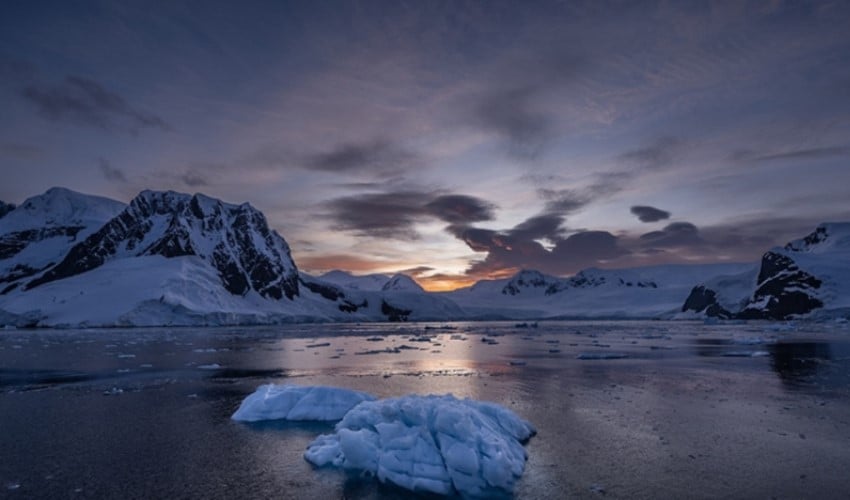
According to a CNN report, scientists stated that the 14-million-year-old landscape in question was formed by rivers before the formation of the East Antarctic ice sheet and resembles the hills and valleys of present-day North Wales.
Using aircraft equipped with ice-penetrating radar systems and satellite data, the research team scanned an area of 32,000 square kilometers, roughly the size of Belgium.
Stewart Jamieson, a professor at Durham University and lead author of the study, stated that the team set out to map the history of the ice sheet and how it evolved over time, noting that having an idea of what the landscape looked like before it was covered by the ice sheet is important in this context.
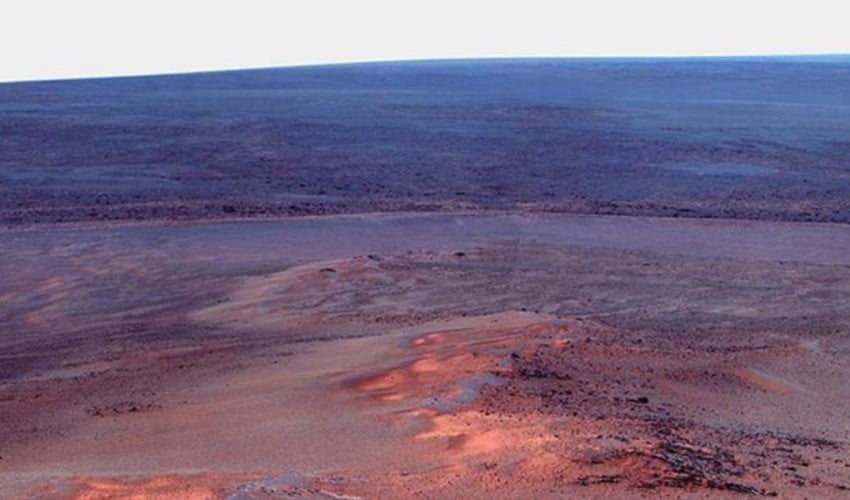
''LESS KNOWN THAN THE SURFACE OF MARS''
Jamieson said, "The landscape beneath the East Antarctic ice sheet is less known than the surface of Mars."
Explaining that the structure of the terrain determines the flow pattern and direction of the ice in Antarctica, Jamieson added that it also controls how the ice sheet will respond to future climate change.
Stating that the well-preserved nature of the discovered landscape makes it special, Jamieson pointed out that it is rare to find relatively unchanged terrain beneath such a continent-covering ice sheet.
The geophysical data collected by the scientists provided clues as to what lies beneath the 2-kilometer-thick ice sheet.
The results of the research were published in the journal "Nature Communications".
News Source: AA