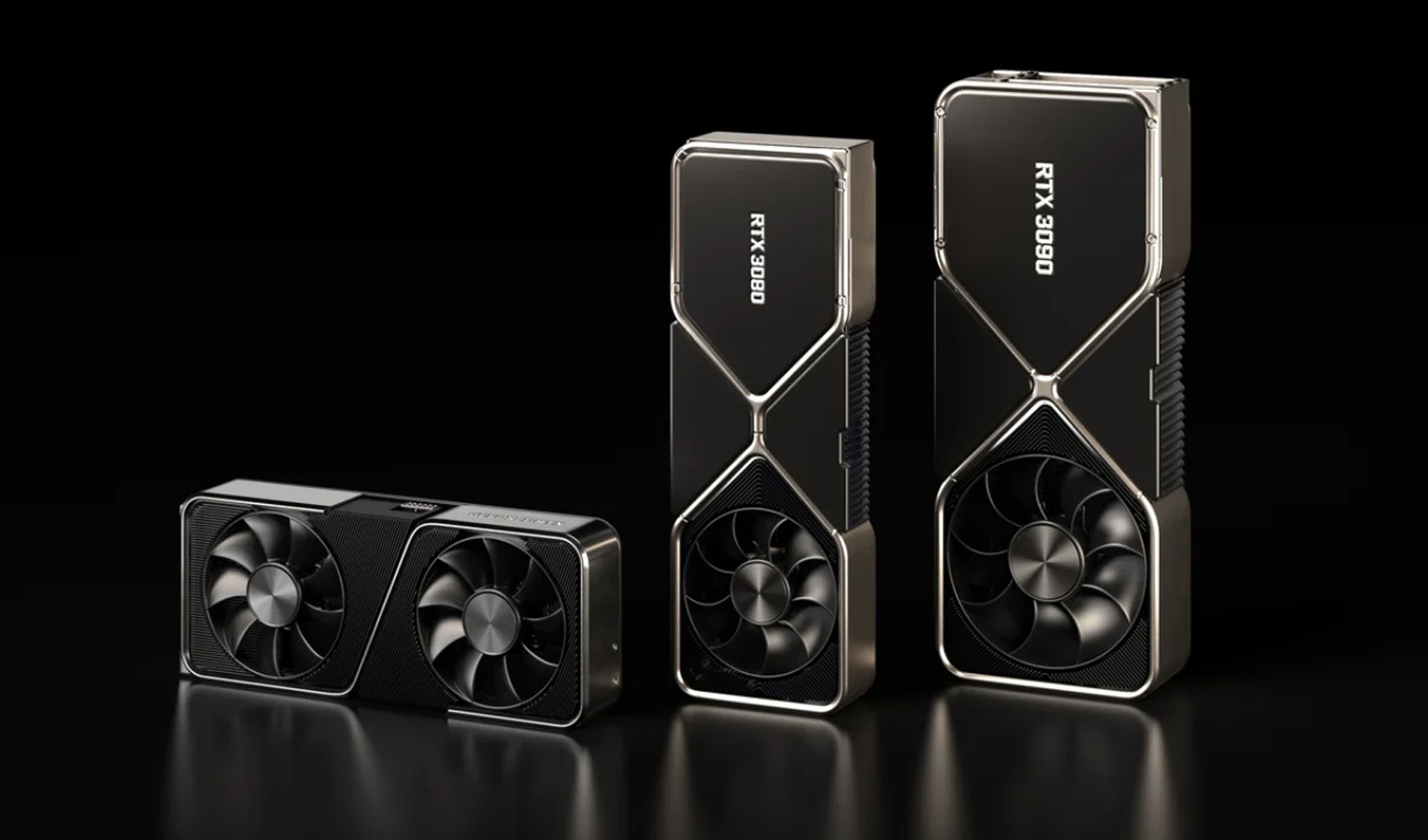
A new open-source tool targeting the NVIDIA GeForce RTX 30 series has entered the agenda of users who closely monitor graphics card performance in artificial intelligence applications. The Linux kernel module named Zagitta, shared on GitHub, is stated to significantly increase FP16 and BF16 computational performance on some Ampere-based cards.
According to the information provided, the tool works without requiring vBIOS flashing or any physical intervention on the card. The module, which intervenes with hardware-level speed selectors before the NVIDIA driver is activated, is said to increase the FP/BF16 FMA instruction processing speed on GA102, GA103, GA104, and GA106 graphics chips.
Tests shared on social media and in developer circles specifically point to the RTX 30 series. Accordingly, it was claimed that on the RTX 3090 Ti model, BF16 processing power increased from 87.5 TFLOPS to 157.4 TFLOPS, and TF32 performance rose from 42.5 TFLOPS to 82.6 TFLOPS. It was also reported that for the RTX 3080 10 GB, FP16/BF16 performance increased from approximately 65 TFLOPS to the 110-113 TFLOPS range at the stock 320W power limit.
LATENCY REDUCED IN LLM TESTS
In the shared results, not only raw processing power but also large language model scenarios stand out. It was reported that the pre-loading time in long-context queries accelerated by approximately 33-36 percent, and the latency to reach the first response decreased by around 25 percent. In contrast, it is stated that there is no significant change in the “decode” phase where text generation continues.
It is stated that Zagitta is currently used on Linux and primarily on RTX 30 series Ampere chips. Although the RTX 40 series is also included in the discussion in some posts, the technical notes provided state that there is no support for the 40 series and that Secure Boot must be disabled. For this reason, the tool should not be considered a risk-free and standard solution for general users.
The development has also been reflected in the second-hand graphics card market. It is stated that users running artificial intelligence models or fine-tuning models are turning specifically to the RTX 3090 and RTX 3090 Ti models, which have 24 GB of VRAM. It is reported that RTX 3090 listings, which were previously seen in the $1,000 band on international second-hand platforms, have exceeded the $2,000 threshold, and levels of $2,650-3,000 are being discussed for the RTX 3090 Ti.
This situation creates a lower-cost computing option for AI developers, while it means renewed price pressure for gamers. Whether the demand will be permanent will depend on the technical reliability of the tool, its status against driver updates, and the risk appetite of users.
News Source: 12punto