
As a result of observations made at the KECK Observatory in Hawaii, a new comet-like planet named WASP-69b has been discovered.
THE PLANET HAS A TAIL EXTENDING 580 THOUSAND KILOMETERS
Researchers revealed this fascinating phenomenon through detailed observations conducted at the KECK Observatory in Hawaii. The tail of WASP-69b is 580 thousand kilometers long, which is one and a half times the distance between the Earth and the Moon. However, scientists anticipate that this length could be even greater, as they were unable to see the end of the tail during their observations. The formation of this impressive structure occurs as intense radiation from the star "boils" the planet's atmosphere and pushes it out into space.
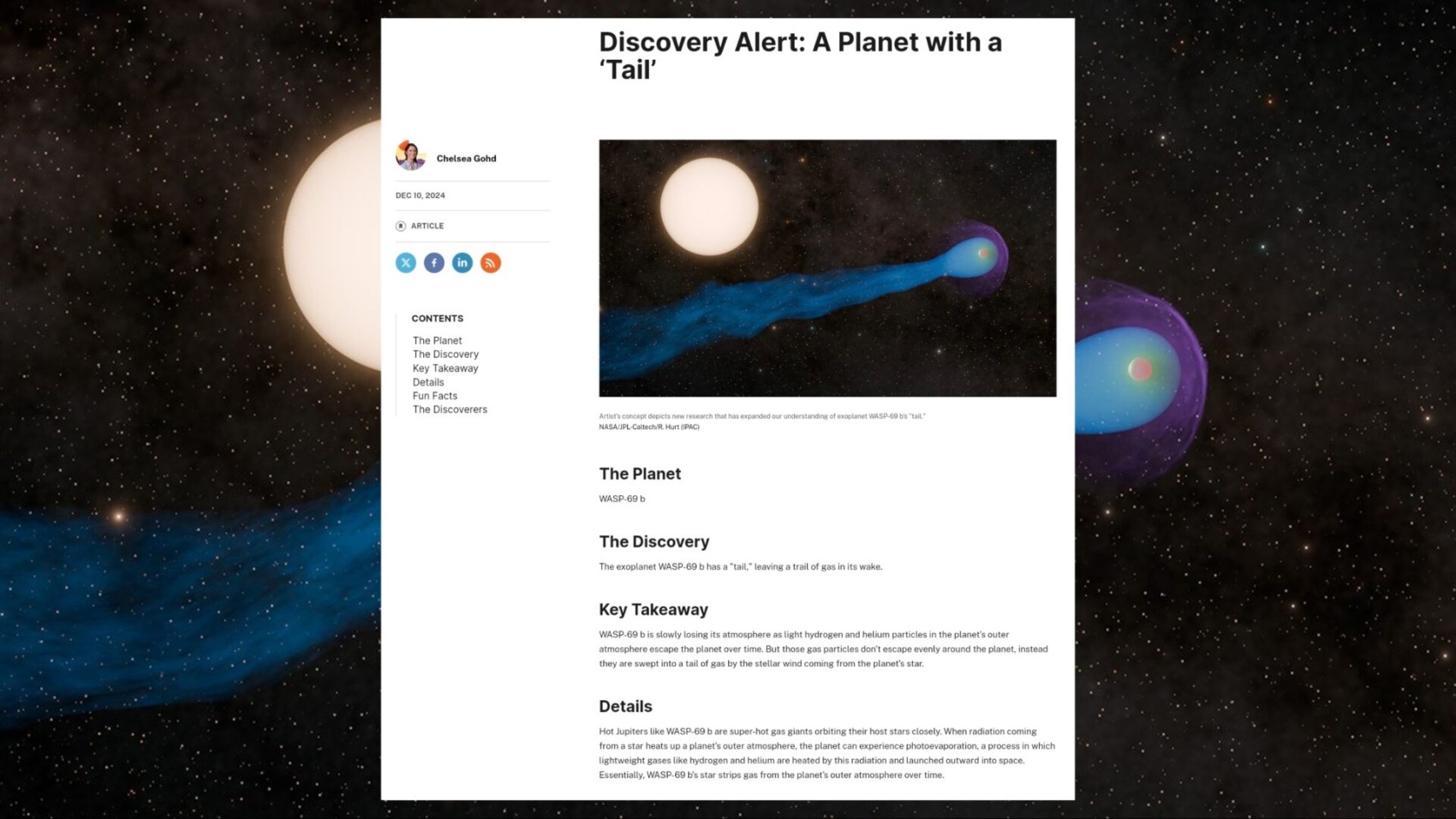
The lead author of the study, Dakotah Tyler, explained the discovery as follows:
“Previous research suggested the existence of a thin tail, or even that there was none at all. But now we have definitively detected this structure and shown that it is at least seven times longer than the planet itself.”
The planet has 90 times the mass of Earth and has lost only two Earth masses of gas so far. Therefore, it is predicted that the planet will survive throughout its lifespan. According to the researchers, this discovery has provided a new perspective for understanding the dynamics of large gas giant planets known as "hot Jupiters."
News Source: 12punto