‘Terrible lizards’ may reign supreme in movies. However, we are incorrectly exaggerating the history of dinosaurs.
According to information featured in Popular Science Turkey, dinosaurs dominated the Earth for more than 150 million years. The reign of these reptiles, where predatory tyrannosaurs hunted beaked dinosaurs, giant sauropods shook the ground with deafening footsteps, and spiky stegosaurs swung their tails, was so magnificent that it only ended with the unexpected impact of a 10 km-wide asteroid. The ensuing catastrophe handed the world over to our ancestors and relatives; the mammals. Thus, 66 million years later, we would be able to claim that we took over what these terrible lizards left behind. But what is striking is that this retold history is fundamentally flawed in several ways.
Now, let's talk about some of the worst rumors and what really happened during this so-called “Age of Dinosaurs”.
- Myth: Dinosaurs have dominated the planet since they first appeared.
- Fact: Dinosaurs were initially cute, small creatures.
The oldest dinosaurs we know lived about 235 million years ago in the middle of the Triassic period. These reptiles did not dominate anything. From recent findings in Africa, South America, and Europe, we know that they were no larger than a medium-sized dog and were slender, omnivorous creatures that fed on leaves and insects.
In contrast, the ancient relatives of crocodiles were much more abundant and diverse. Among the crocodile relatives in the Triassic period were sharp-toothed carnivores that chased large prey on two legs, “armadillodiles” covered in bony scales and spikes, and fern-eating, almost ostrich-like beaked creatures.
Even as the first dinosaurs began to evolve into the main lineages that would flourish throughout the rest of the Mesozoic era, most were small and rare creatures compared to their crocodile relatives. The first large herbivorous dinosaurs, reaching 8 meters in length, did not evolve until the final times of the Triassic period, about 214 million years ago. But everything changed at the end of the Triassic period.
Intense volcanic eruptions in the middle of the Pangea continent altered the global climate; gases released into the air caused the world to oscillate between hot and cold phases. By that time, dinosaurs had evolved warm-blooded metabolisms and insulating coats of feathers, allowing them to survive the crisis relatively unscathed, while many other reptile species disappeared. If this mass extinction had not occurred, it might have been more of an “Age of Crocodiles”; or at least it would have been a very different story with a much wider range of reptilian characters. The only reason for the emergence of this Age of Dinosaurs was that they were lucky in the face of a global extinction.
- Myth: Dinosaurs spanned the entire planet.
- Fact: Dinosaurs never evolved to live in the sea.
Talking about dinosaurs “ruling” an ocean world sounds interesting. Although sea levels have risen and fallen over time, the seas make up about 71 percent of the Earth's surface and contain more than 1.375 billion cubic kilometers of water. Although they were very diverse, the claim that dinosaurs were the dominant life forms on Earth would make sense if we ignored that three-quarters of our planet is ocean.
Although some dinosaurs swam and left scratches and swimming tracks in ancient shallows, none evolved to live their entire lives in the oceans. Even in penguins (living dinosaurs), the ability to stay in the sea like many marine mammals has not evolved. They need to return to their nests on land. If we emphasize the prehistoric oceans, there were marine reptiles of various shapes and sizes that ruled this water kingdom. Fish-like ichthyosaurs, long-necked and four-flippered plesiosaurs, giant relatives of the Komodo dragon called mosasaurs, and many more non-dinosaur reptiles lived in the seas for millions of years, and many fed on much more abundant spiral-shelled cephalopods called ammonites.
Of course, these ecosystems were built on a foundation of plankton. Without disc-shaped algae called coccolithophores, these charismatic swimmers of the Triassic, Jurassic, and Cretaceous periods could not have flourished. Ubiquitous, tiny life forms ensured the success of charismatic creatures like marine reptiles. This reminds us once again that the land and sea creatures that impress us cannot exist without the various small creatures that form the foundations of food webs. What we see as dominance in any ecosystem is actually the result of many relationships and interactions that often go unnoticed.
- Myth: Dinosaurs suppressed the evolution of mammals.
- Fact: Mammals grew and flourished during the Age of Dinosaurs.
A classic example of dinosaur dominance is a small, excited mammal chasing an insect on a Cretaceous night. Allegedly, dinosaurs snatched up all the monsters that grew too large or were foolish enough to roam during the day; therefore, mammals evolved as small, nocturnal creatures until the asteroid allowed our ancestors and relatives to emerge from the shadows. Some of these small-sized and insect-hunting adaptations of mammals in the Mesozoic era have been assumed to be signs that mammals were restricted by the success of dinosaurs, preventing them from growing larger and opening up new niches.
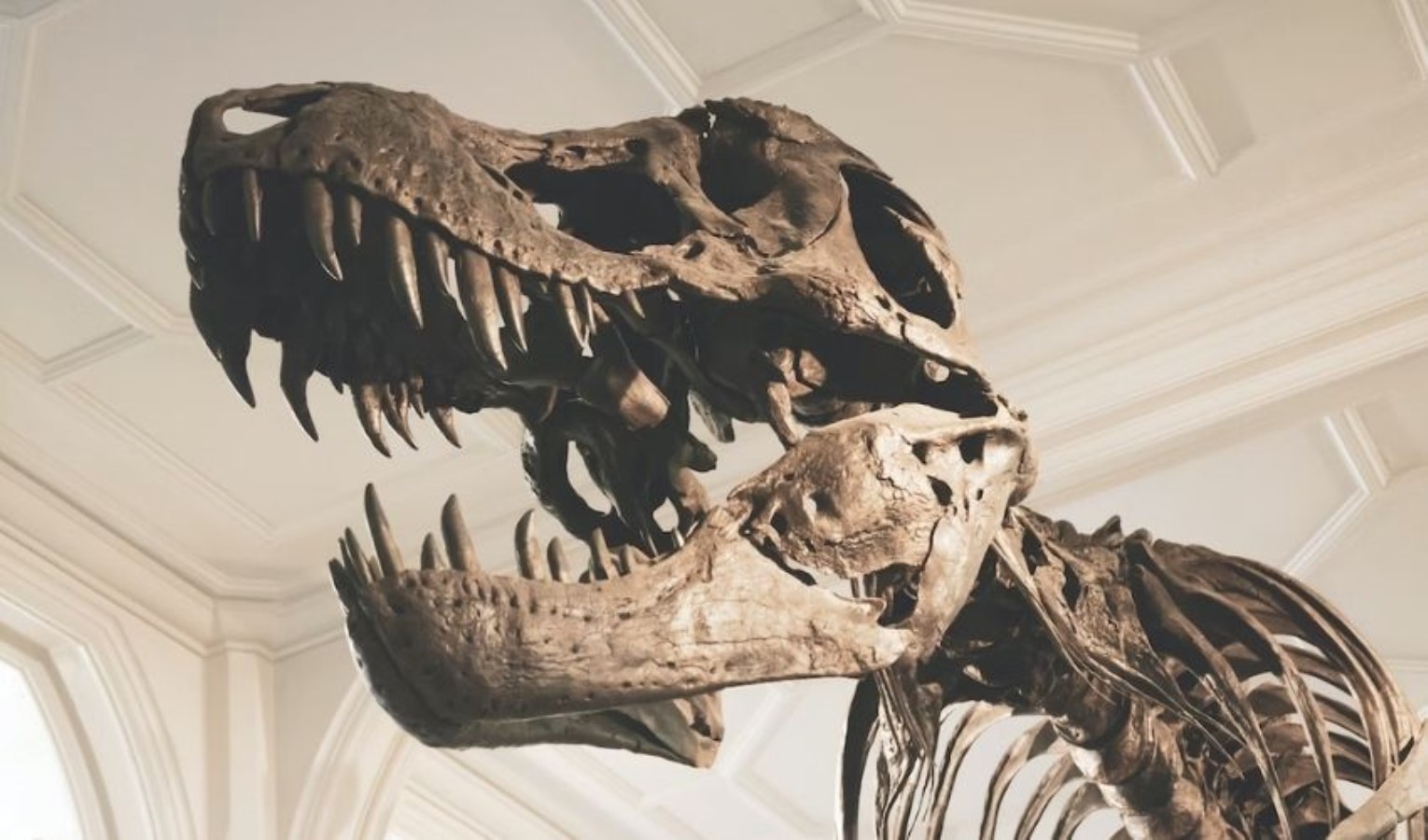
However, paleontologists have rewritten this classic story over the last 20 years, showing that mammals and their relatives grew and flourished alongside dinosaurs. In the Mesozoic era, there were furry beasts that swam in water, dug in the ground, glided between trees, and even ate small dinosaurs. The ancestors of squirrels, raccoons, otters, beavers, sugar gliders, anteaters, and more evolved throughout the Jurassic and Cretaceous periods. Among these were the first primates that fled from trees, passing over the heads of T. rexes. While it is true that all Mesozoic creatures we know of now were small (the largest was about the size of an American badger), researchers have realized that the way our ancient ancestors interacted with each other was much more important in shaping their evolution than dinosaurs. In fact, even after the dinosaurs were gone, most new mammal species remained small. We get so hung up on size that we miss the real story that is closer to the ground.
- Myth: Dinosaurs ruled the planet for millions of years.
- Fact: A single species cannot rule a planet.
Your obsession with a prehistoric hierarchy says more about us than the actual geological record. We imagine that dinosaurs were the creatures that took over the planet and remained so until they were wiped out by a cosmic accident. The dinosaurs of the Triassic, Jurassic, and Cretaceous periods lived on all major landmasses for more than 150 million years. The reign they are thought to have held is often compared to the reign we think we have; that is, the insignificant 300,000-year period that Homo sapiens has been wandering around.
But this comparison is not one-to-one. Dinosaurs were not a single species, but an entire group of living things. More fundamentally, no species is truly independent: even the longest-living and most widespread creatures rely on others. Giant, plant-eating dinosaurs had to feed on a Mesozoic salad bar consisting of ginkgoes, horsetails, conifers, and other plants; for these foods, they needed specialized bacteria in their guts for digestion. Even the legendary T. rex was an ecosystem in itself. It hunted herbivores that ate plants that had developed relationships with fungi and microorganisms in the soil. Looking at such a picture of life and focusing on dominance means looking in the wrong place and dividing the history of life into winners and losers, missing the connections and communities needed for different creatures to grow and flourish. Perhaps dinosaurs can reign in movies where we are constantly obsessed with putting ourselves in front of their toothy mouths. But the real lesson we can learn from Triceratops and their kind lies in how evolution blossoms; not in who rules the Earth.
News Source: 12punto