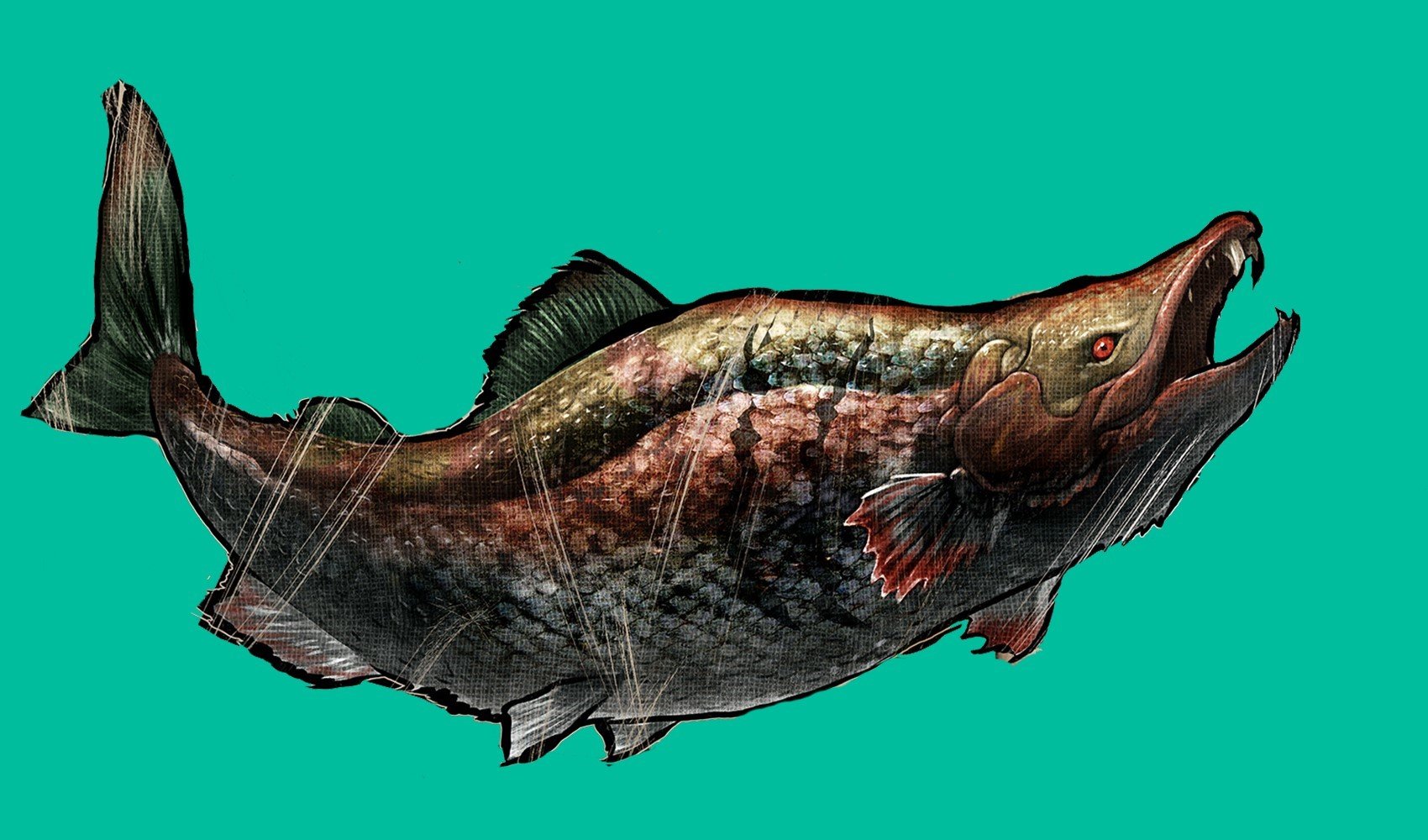
In a new study, scientists examined fossils and detailed computer scans of the species described as the "largest salmon ever." The research concluded that the teeth of the massive fish, which reached a length of approximately 3 meters, were actually long and curved to the side, similar to those of a wild boar.
Philadelphia College of Osteopathic Medicine professor and research team leader Kerin Claeson stated that a 1970 study had determined the salmon's teeth were curved downward, which is why it was named the "saber-toothed salmon," but noted that the current research reveals this is not the case.
Stating that the new research determined the teeth were curved and extended to the side, Claeson pointed out that this species is considered the "largest salmon to have ever lived."
Claeson drew attention to the fact that the teeth had functions in many areas such as defense and nest building, noting that the extinct salmon also showed similarities to its modern-day relatives.
Details and photographs regarding the research were published in the scientific journal "PLOS ONE."
Meanwhile, a study published in 2016 had also revealed that fossils belonging to the giant salmon indicated that this species may have lived approximately 12 million years ago.
News Source: AA