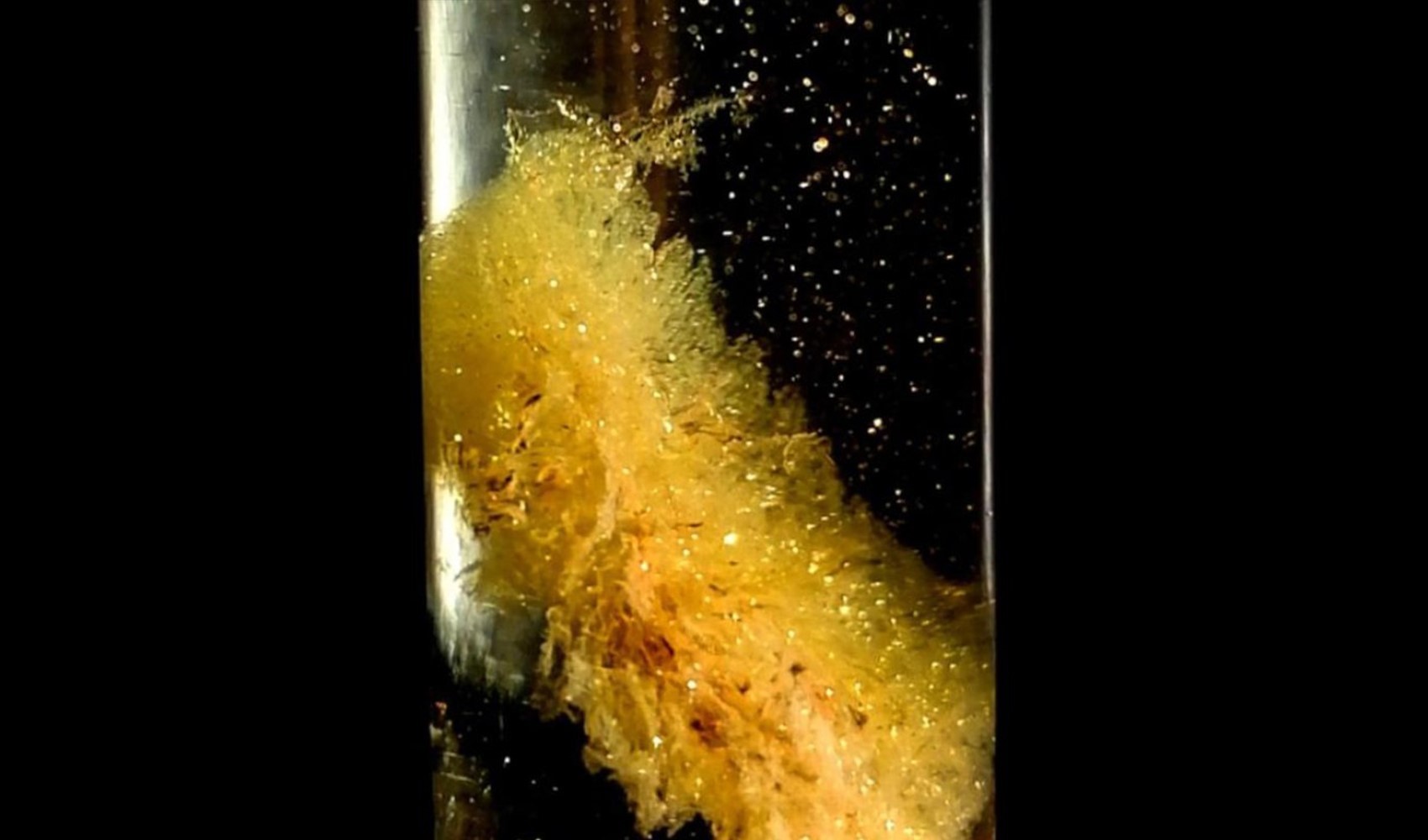
Scientists have developed an effective method for recovering gold from electronic waste, stating that for every dollar spent, 50 dollars' worth of gold can be obtained. The researchers used protein sponges, a byproduct of the cheesemaking process, to develop the method, which they claim is sustainable and commercially viable.
According to a study featured in Popular Science Turkey, scientists recovered a 450-milligram piece of 22-karat gold from just 20 old computer motherboards. The findings show that the procurement costs of the source materials and the energy costs for the entire process are 50 times lower than the value of the gold that can be recovered.
Using the method, the researchers created a protein slurry by altering the nature of whey proteins under acidic conditions at high temperatures, and then dried this slurry to obtain sponges. After removing metal parts from 20 motherboards, they placed a protein-fiber sponge into the solution to attract the metal ions they had dissolved in an acid bath.
While other metal ions can also stick to the fibers, it was noted that gold ions do so much more efficiently. The scientists then heated the sponge to turn the gold ions into flakes and melted these flakes into a piece of gold.
Using the method described in the academic journal Advanced Materials, they were able to obtain a piece weighing approximately 450 milligrams from 20 computer motherboards. The study stated that 91 percent of the nugget was gold, with the remainder being copper, which corresponds to 22 karats.
The researchers state that the procurement costs of the source materials added to the energy costs for the entire process are 50 times lower than the value of the gold that can be recovered. Professor Raffaele Mezzenga from ETH Zurich, one of the authors of the study, said, "My favorite thing is that we are using a food industry byproduct to obtain gold from electronic waste... It doesn't get more sustainable than that."
News Source: 12punto