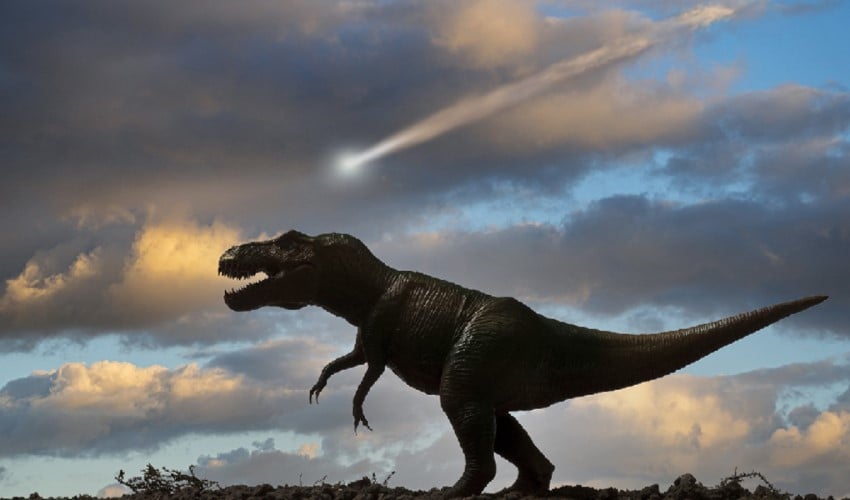
According to the article published in the journal Nature Geoscience, the team re-examined the consequences of the collision that formed the Chicxulub crater in Mexico and wiped out all dinosaur species except for avian dinosaurs, as well as a large portion of life on the planet. According to the report published in Oksijen Gazetesi, the team analyzed a well-preserved rock sample from the North Dakota region of the US that dates back 66 million years and found that the sample contained far more silicate dust particles than expected.
PLANTS COULD NOT PHOTOSYNTHESIZE, STARVATION BEGAN
Based on the data, Şenel and his team developed a model suggesting that after the asteroid hit Earth, small dust particles were scattered into the air in clouds, creating a curtain in the sky that may have prevented plants from photosynthesizing for up to two years. Proposing the thesis that the inability of vegetation to survive caused numerous herbivorous species, including some dinosaurs, to die of starvation, the scientists state that this period may have extended up to 15 years, and that global temperatures may have dropped by as much as 15 degrees during the process.
Pointing out the importance of having reached data for the first time indicating that photosynthetic activity was suppressed for two years, Berk Şenel said, "To improve our understanding of the precise killing mechanisms of this collision, we need to gain deeper knowledge about what caused the global cooling and the loss of photosynthesis."
News Source: 12punto