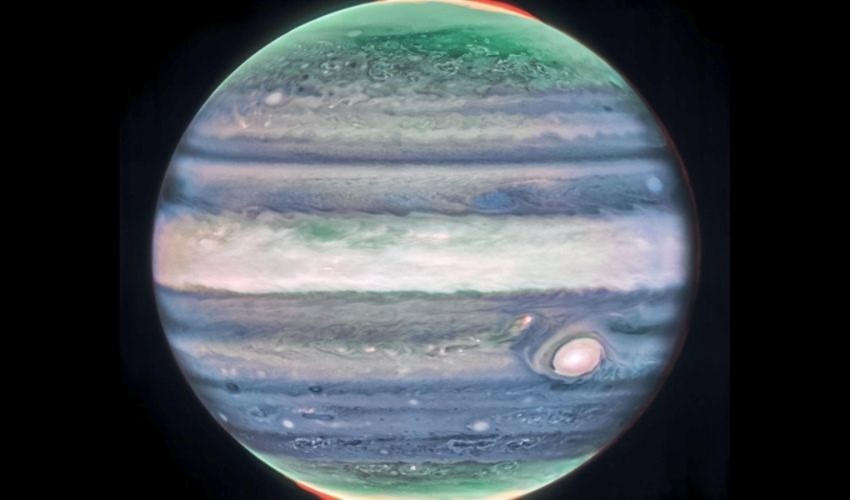
Jupiter is one of the best-studied planets in the Solar System. Despite this, the gas giant still hides many surprises and mysteries. Thanks to the JWST's sharp infrared eye, another one of these has been discovered. It appears that there is a high-speed jet stream above Jupiter's equator, approximately 40 kilometers above the main cloud layers.
The jet stream is over 4,800 kilometers wide and has winds moving at 515 kilometers per hour. This is twice as fast as a Category 5 hurricane and slightly faster than the strongest wind ever recorded on Earth. Furthermore, astronomers had no idea this stream was there before it was found by the JWST.
The speed of the jet stream was determined by comparing the movement of two layers
In a report shared by Chip, lead author Ricardo Hueso from the University of the Basque Country in Bilbao, Spain, said, “This is something that completely surprised us,” and continued: “What we have always seen as hazy blurs in Jupiter’s atmosphere now appear as clear features that we can track along with the planet’s fast rotation.”
The stream is confined to plus or minus three degrees from the equator. The JWST’s infrared capabilities allow us to measure the hazes far above the clouds. The research team compared observations from the JWST with views from Hubble, which come from deeper in the atmosphere. By comparing the movement of the two layers, they were able to determine how fast the jet stream is moving.
Additionally, the combination of the two data sets allowed researchers to track the development of convective storms around Jupiter’s equator. These are not related to the jet stream, but they demonstrate the power of different observatories working together. The team plans to continue tracking these weather events.
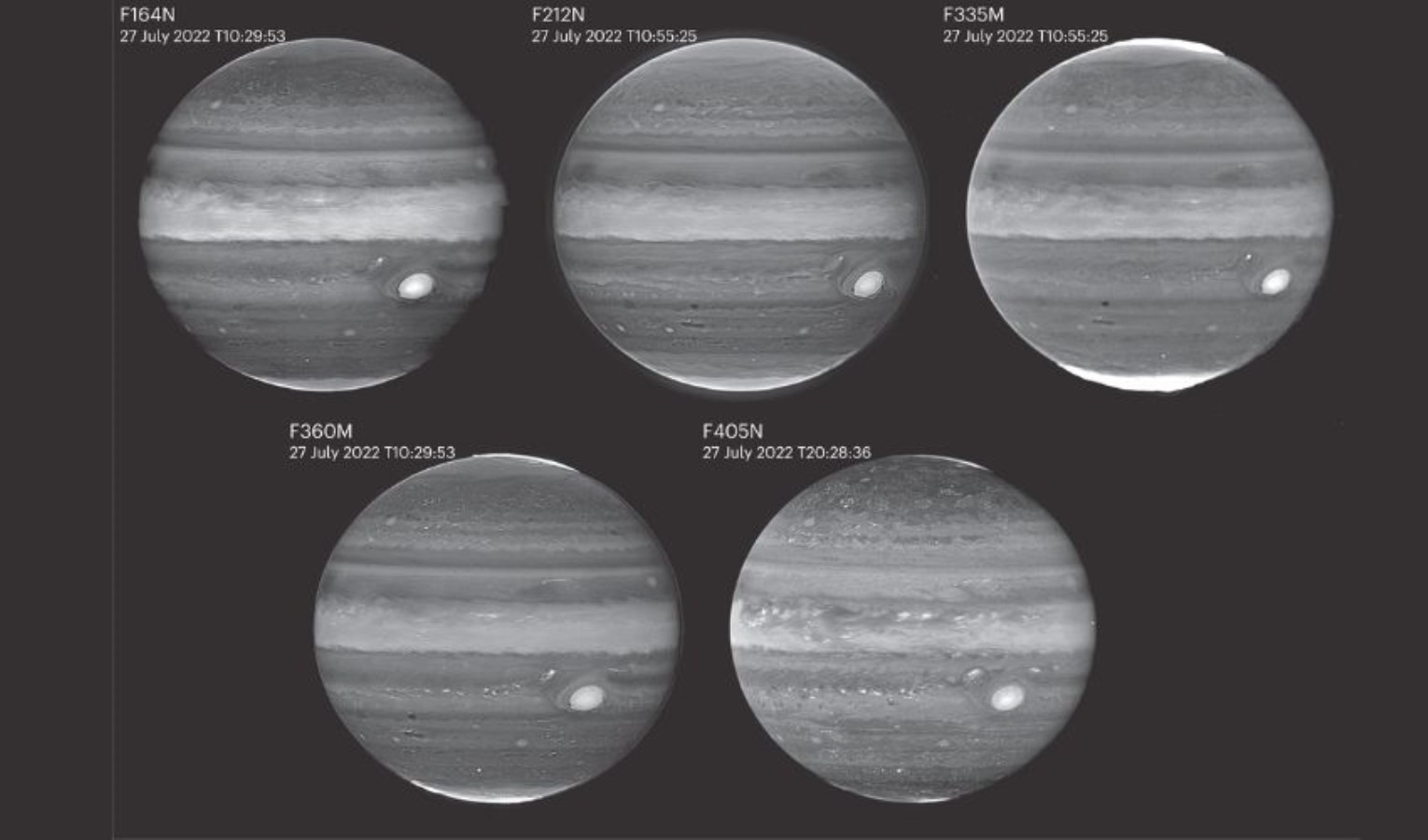
Leigh Fletcher, a team member from the University of Leicester in the UK, said, “There is a complex but repeatable pattern of winds and temperatures in Jupiter’s equatorial stratosphere, far above the winds in the clouds and hazes measured at these wavelengths,” and added:
“If the strength of this new jet is tied to this oscillating stratospheric pattern, we might expect the jet to vary significantly over the next two to four years; it will be really exciting to test this theory in the coming years. After tracking Jupiter’s clouds and winds from many observatories over the years, it is astonishing to me that we still have more to learn about Jupiter, and that features like this jet could remain hidden from view until these new NIRCam images were taken in 2022.”
The article was published in the journal Nature Astronomy.
News Source: 12punto