Black holes, one of the most fascinating and mysterious phenomena in the depths of the universe, have long continued to captivate both scientists and the public.
With the first-ever photograph of a black hole captured within the last five years, interest in these enigmatic structures has grown even further. However, a new simulation prepared by NASA using cutting-edge technology continues to expand our knowledge of the astonishing nature of black holes.
WHAT DOES IT FEEL LIKE TO FALL INTO A BLACK HOLE?
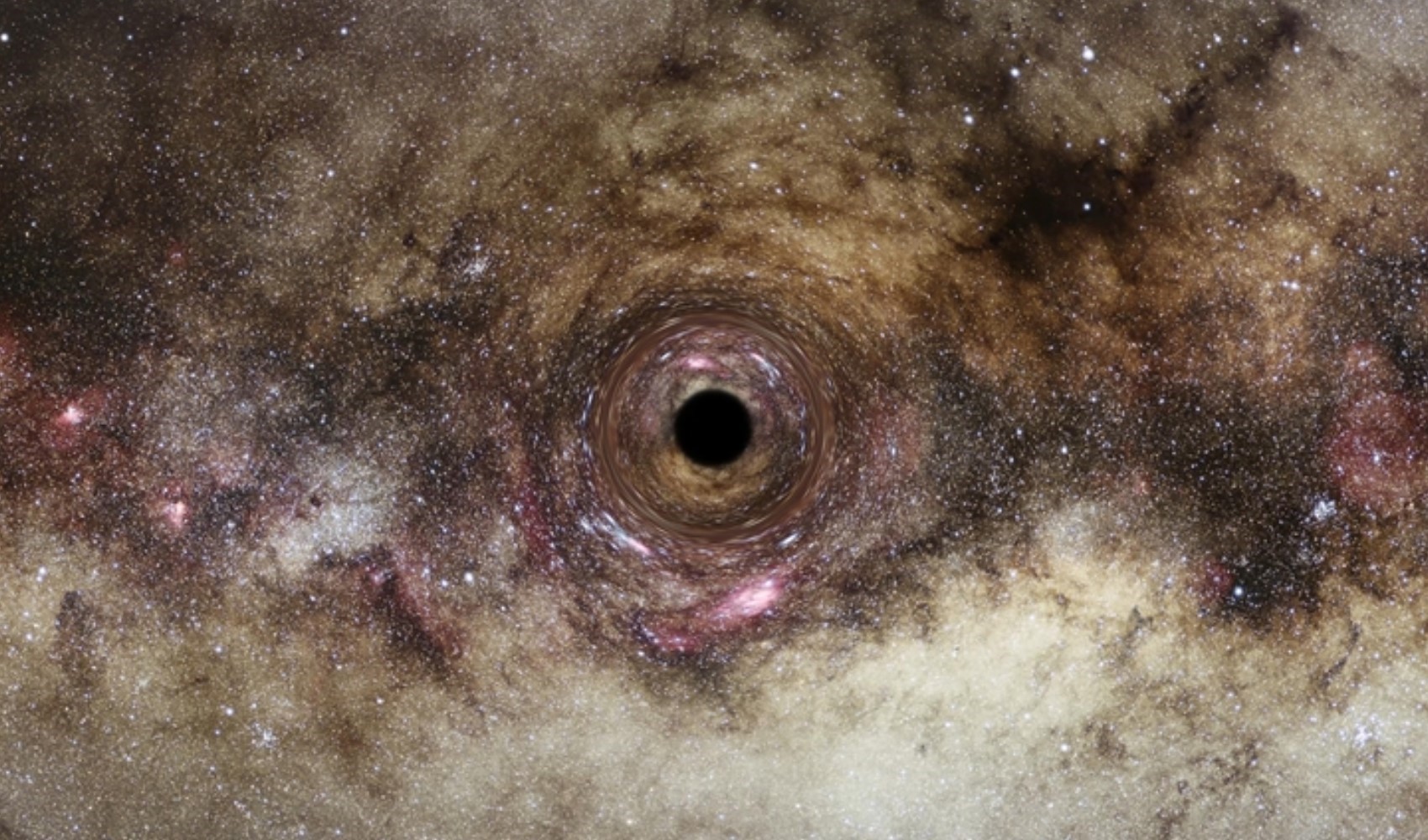
Released on YouTube on May 6, this animation reveals what it would feel like to fall into the dark abyss of a supermassive black hole.
In the video, we watch as we approach a giant black hole located at the center of the Milky Way galaxy, which has a mass 4.3 million times greater than the Sun. As we approach the event horizon, the point of no return, the scenery around us begins to change, and light appears to bend under the influence of the black hole.
Completed in five days using only 0.3 percent of the Discover supercomputer located at NASA's Center for Climate Simulation, this animation covers a process that would take more than 10 years for a laptop to complete, as it had to process more than 10 terabytes of data.
As Xavier Calmet, a Professor of Physics at the University of Sussex, has explained, the gravitational pull of a black hole is so intense that a phenomenon called 'spaghettification' occurs during this process. This refers to objects being stretched into long, noodle-like shapes and torn apart by the powerful gravitational force.
News Source: 12punto