



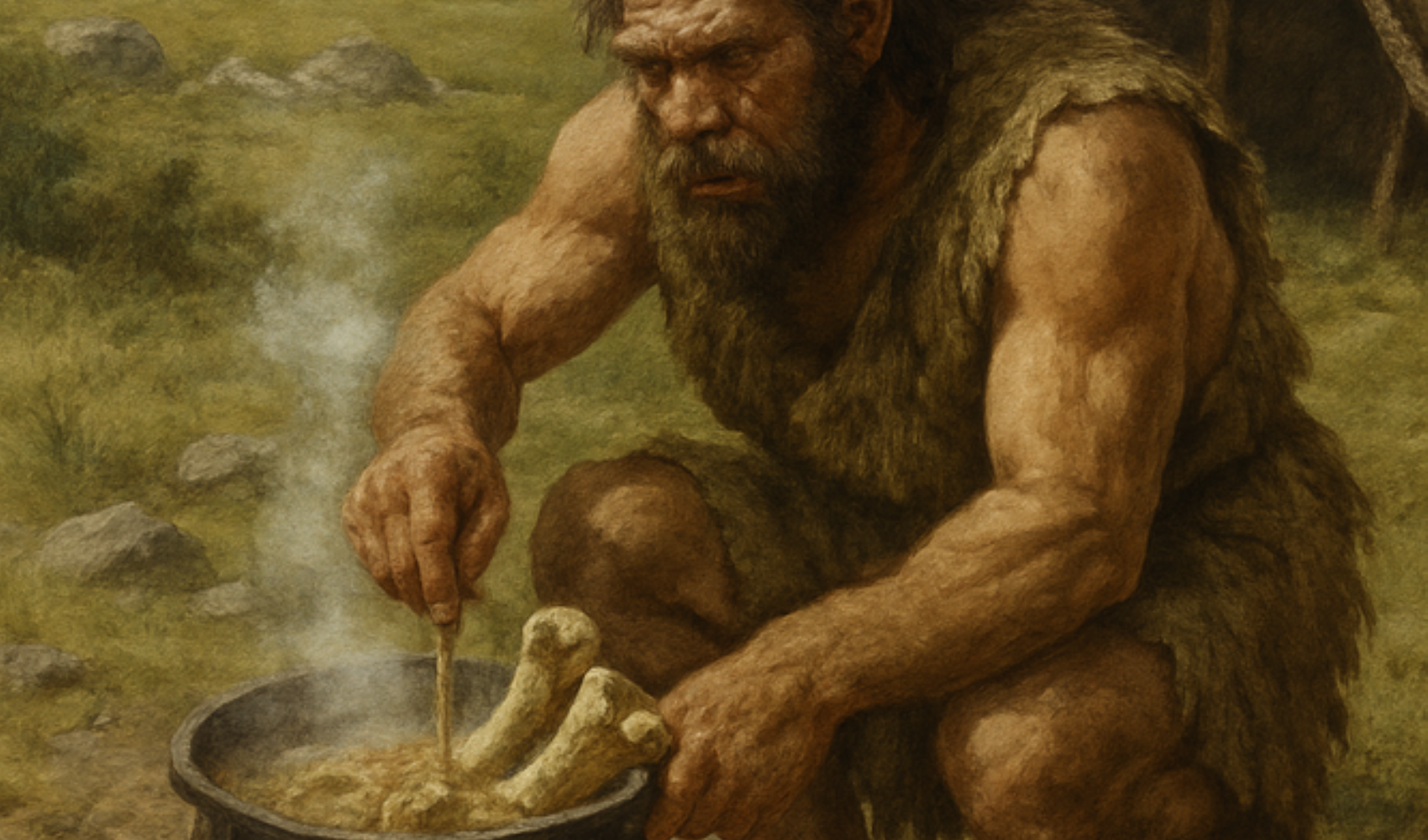
New findings unearthed at the Neumark-Nord archaeological site in Germany are challenging conventional wisdom regarding Neanderthal dietary habits. According to research published in the journal Science, it has been determined that Neanderthals living 125,000 years ago did not merely consume the meat and bone marrow of the animals they hunted; they also processed bones using various methods to extract their fat.
Detailed analyses of over 2,000 large mammal bones brought to light at the excavation site show that these bones were systematically broken and boiled. The research team determined that bones obtained from large animals, particularly elephants and bison, were heated until they crackled using various techniques even after the marrow was exhausted, in order to extract the remaining fat inside. Steps such as boiling, breaking into small pieces, and repeated heating stand out in this process.
The lead author of the study, Prof. Dr. Sabine Gaudzinski-Windheuser, highlighted the significance of the findings, stating, "We found cooking marks and fat residues on the bones. This shows that Neanderthals possessed complex food-processing techniques."
HOW DID THEY AVOID THE RISK OF PROTEIN POISONING?
Scientists remind us that communities feeding primarily on lean meat and protein can face a serious health risk known as "rabbit starvation" (protein poisoning). The body cannot rely solely on protein to meet its energy needs; a lack of fat and carbohydrates, in particular, can lead to fatal consequences.
Beyond the meat and marrow of the animals they hunted, Neanderthals managed to avoid this risk by extracting fat from the bones. Researchers assess that "this type of resource management was not just about survival, but also part of the community's long-term nutritional strategy." Fat played a critical role both because it is an energy-rich source and because it could be stored.
SIMILARITIES TO MODERN HUMAN BEHAVIOR
The findings demonstrate that Neanderthals sought to obtain maximum efficiency from the animals they hunted and possessed advanced food-processing techniques similar to those of modern humans. It is noted that Neanderthals developed complex methods for fat storage and food optimization much earlier than previously thought.
According to scientists, this discovery supports the idea that Neanderthals had much more creative and advanced nutritional strategies than previously believed. It has been proven once again that they were not just "hunters," but also communities that rationally managed their resources and developed skills in food processing and storage.
News Source: 12punto









