OpenAI has announced that its new models have delivered significantly higher results in tests aimed at migrating software written in legacy programming languages to modern ones. The company's GPT-6.1 Sol model reached a 97.9% accuracy rate in an evaluation measuring the conversion of legacy COBOL programs.
Code modernization is particularly important for critical sectors such as banking and finance. In these fields, simply translating legacy systems into a new language is not enough; calculations, business rules, and application behavior must also be preserved. Otherwise, even if the new software runs, there is a risk that it could produce different results in financial transactions.
THE CHALLENGE OF PRESERVING BEHAVIOR IN LEGACY CODE
COBOL is still widely used in financial infrastructure. According to IBM estimates, COBOL supports more than 40% of online banking systems, 80% of in-person credit card transactions, and 95% of ATM transactions.
Reasons for the difficulty of transformation in such systems include the lack of old technical documentation and the fact that some fundamental business rules exist only within the existing code. For example, in COBOL, behaviors such as truncating extra digits in decimal places when explicit rounding instructions are not provided can directly affect calculation results.
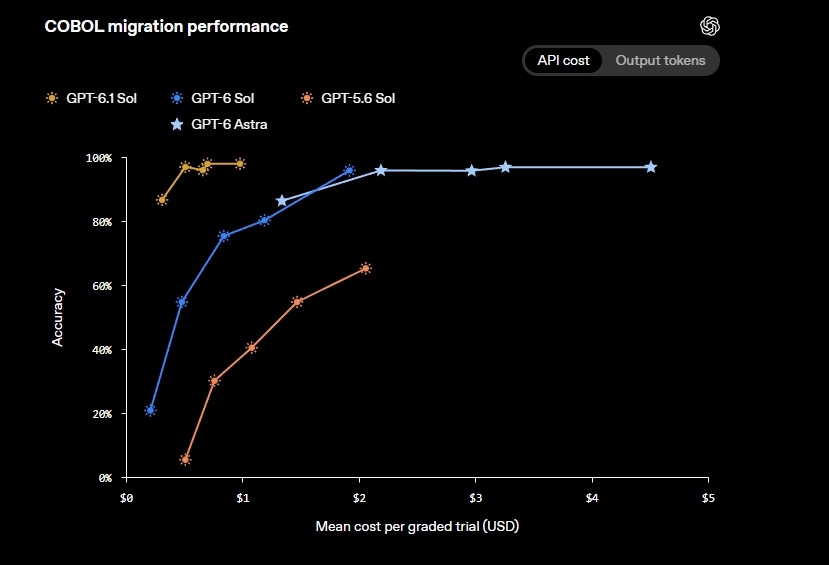
OpenAI's evaluation measures whether converted programs exhibit the same behavior as the original software after legacy COBOL programs are ported to languages such as C++, Java, Kotlin, Python, or Rust. To be considered successful in the tests, the new code must pass hidden tests and its observable outputs must be compatible with the original version.
INCREASE IN MULTILANGBENCH TEST
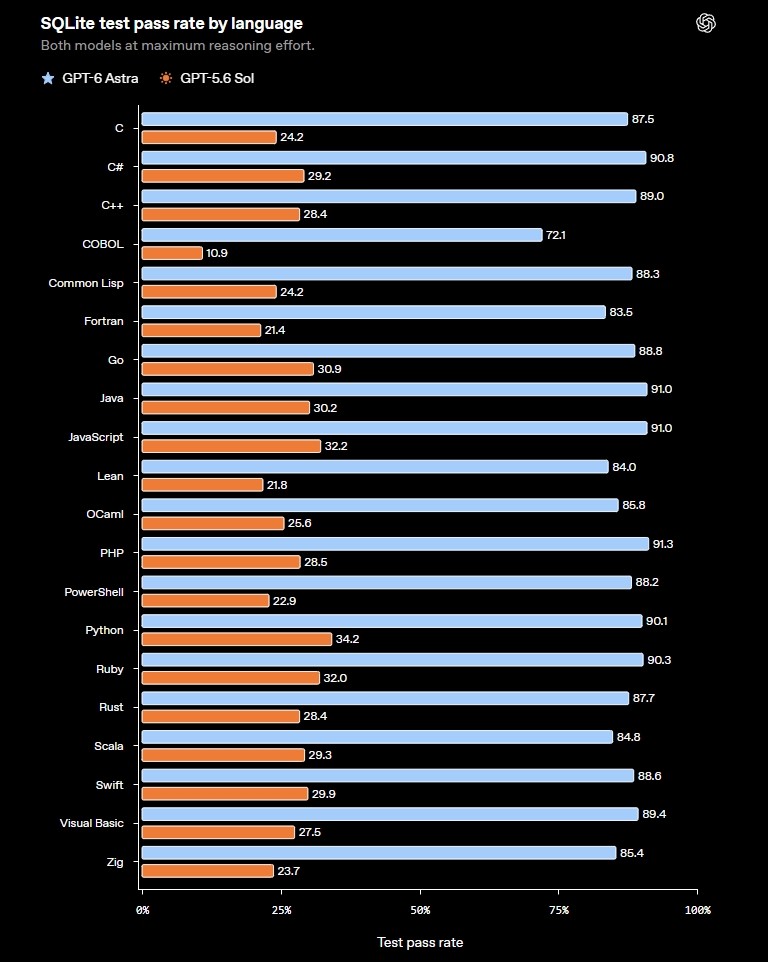
The company also tested its models in a separate evaluation called MultiLangBench. This test measures the ability of models to develop a database engine compatible with SQLite using 20 different programming languages.
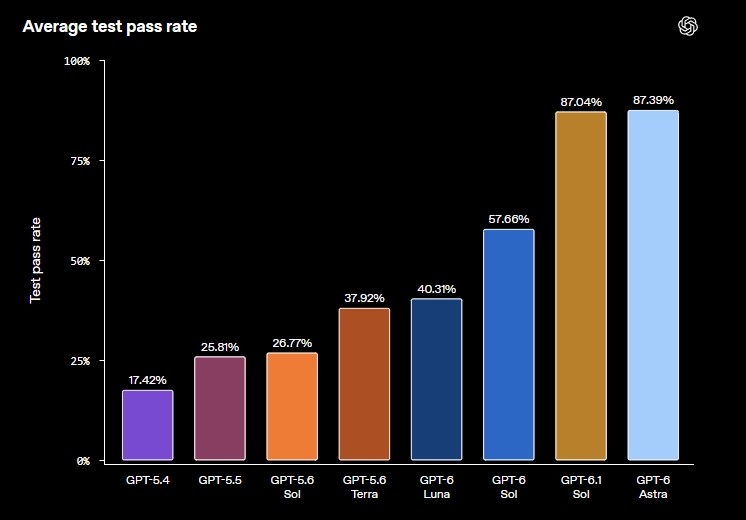
According to MultiLangBench results, GPT-6 Astra reached an average success rate of 87.4%. The same rate was 26.8% in the GPT-5.6 Sol model. According to data shared by OpenAI, Astra performed better than the previous model in all 20 programming languages evaluated.
The rise in legacy programming languages was also notable. The success rate in Fortran increased from 21.4% to 83.5%, and in Visual Basic from 27.5% to 89.4%. In COBOL, which remains the most challenging option among the tested languages, GPT-6 Astra's success rate rose from 10.9% to 72.1%.
OpenAI's results indicate that AI-powered code conversion could become a more powerful tool for renewing legacy enterprise software. However, in critical areas such as finance, security, and scientific computing, transformation must not be limited to automatic translation but must be supported by comprehensive verification processes.
News Source: 12punto