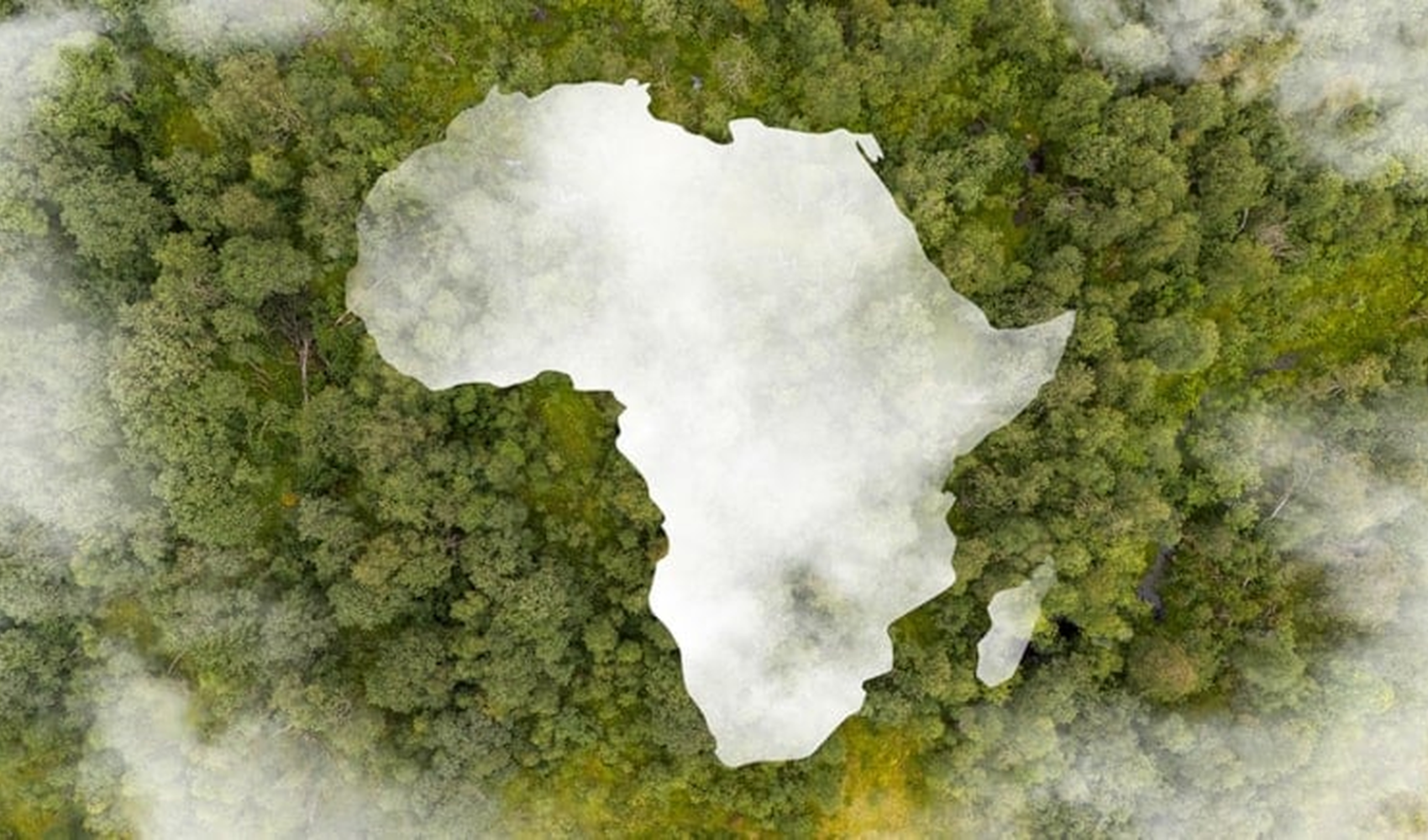
Deep within East Africa, a geological change is occurring much faster than previously known. A new scientific study has revealed striking findings regarding the interaction between climate dynamics and tectonic movements in the massive Rift Valley that is splitting the region in two. Researchers concluded that the significant decrease in lake waters in East Africa has led to a noticeable increase in the annual movement speed along the fault line.
According to experts, while it is generally thought that major geological processes such as mountain formation affect the climate, this new finding reverses that relationship. The team led by Prof. Christopher Scholz, a renowned scientist from Columbia University, documented that climate can also directly trigger tectonic activity. Prof. Scholz emphasized the importance of the research with the words, "We usually think of mountain building as changing the local climate, but our data shows that climate can also directly affect tectonic movements."
Lake Turkana, located in the heart of the region, was one of the focal points of the study. According to the research results, the lake level was 150 meters higher than it is today approximately five thousand years ago, during what is called the African Humid Period. The massive amount of water that receded over time reduced the weight on the Earth's crust, and this change caused the fault lines in the region to move an average of 0.17 millimeters faster per year.
Underground magma movements were also affected by this process. The loss of pressure due to the decrease in lake waters led to faster melting in the mantle and an increase in volume in magma chambers. This, in turn, caused an increase in the seismic activity of the region. Prof. Scholz stated, "We are observing an increase in fault formation in the region. This means that today, earthquakes occur much more frequently than they did 8,000 years ago."
Scientists are not limiting this interesting interaction to Lake Turkana alone. The team is now examining water level changes in Lake Malawi over the last 1.4 million years to understand how continental separation is shaped by long-term climate cycles. Furthermore, it is predicted that the East African block, which includes Kenya, Tanzania, Ethiopia, and Somalia, may eventually separate from the main continent to form a new island continent.
These developments are of great importance to the scientific world in terms of understanding the complex relationship between climate and geological processes.
News Source: 12punto