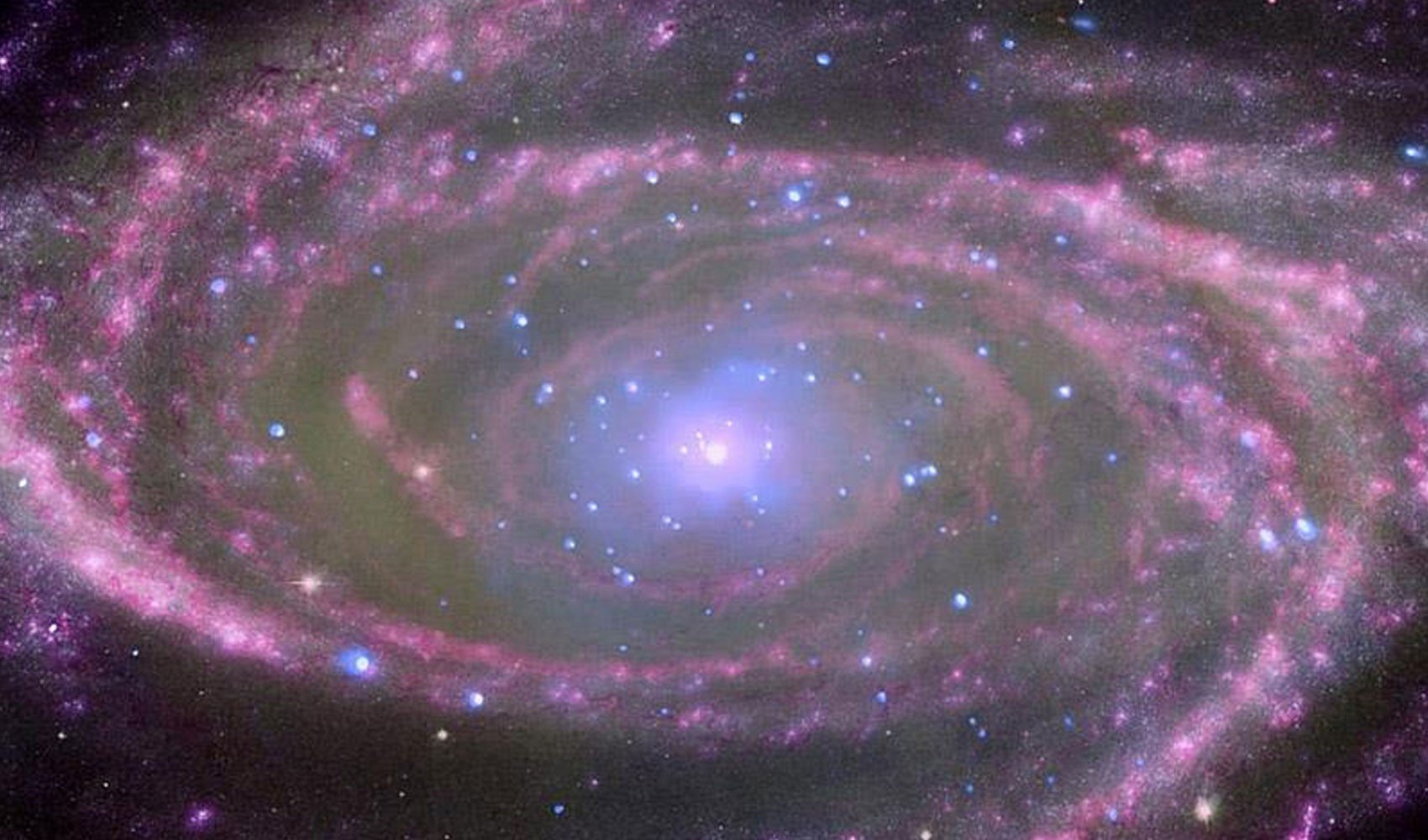
The James Webb Space Telescope has detected the merger of two supermassive black holes.
It was stated that the telescope, a joint project between the U.S. and Europe, reached findings regarding the merger of the two oldest known supermassive black holes.
Information was shared that the two black holes, one of which is 50 million times more massive than the Sun and the other of similar size, were determined to have merged 740 million years after the "Big Bang."
Scientist Hannah Ubler from the University of Cambridge stated in the article published about the discovery, "Massive black holes have been shaping the evolution of galaxies from the very beginning."
In the statement made by scientists, it was noted that this is the oldest known black hole merger to date.
It was stated that the new discovery by the James Webb Space Telescope could also be the answer to astronomers' questions about how supermassive black holes grow so large.
Launched in 2021 to replace NASA's Hubble Space Telescope, Webb continues to investigate the unknowns of the universe as the largest observatory in space, located 1.6 million kilometers from Earth.
News Source: AA