Varicose veins are a condition that negatively affects quality of life. The veins in your legs are responsible for carrying blood back toward your heart.
However, the movement of blood upward toward the heart, against gravity, occurs thanks to the contraction and relaxation of your calf muscles, which pump blood upward, and small venous valves inside the veins that prevent backflow.
Cardiovascular Surgeon Op. Dr. Ahmet Refik Turgut answered the questions, "What are varicose veins, are they dangerous? How are varicose veins treated?"
WHAT ARE VARICOSE VEINS?
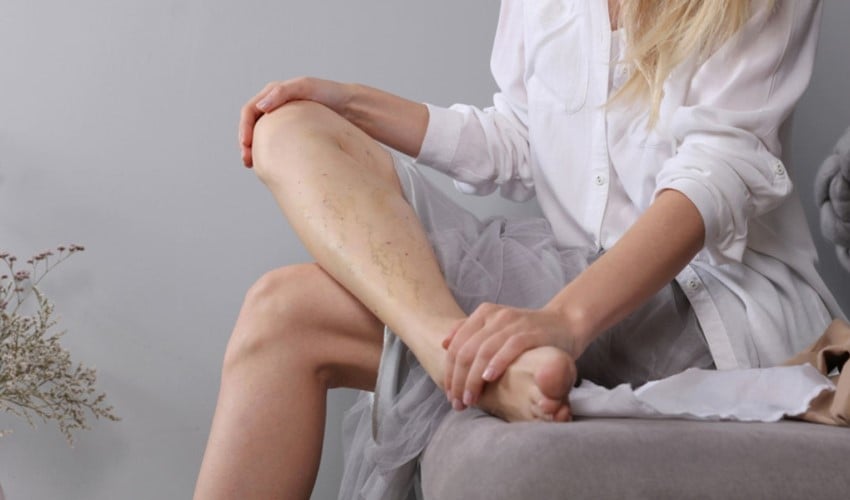
When veins struggle to carry blood back to your heart due to structural defects in the veins, a sedentary lifestyle, the inability of our calf muscles to perform their pumping task, or the development of insufficiency, backflow, or reflux in venous valves—whether acquired or hereditary—spider-web-like telangiectasias first appear as superficial veins widen and become prominent.
As pressure increases, the veins expand and begin to take on a knotted, twisted, enlarged, prominent, and bead-like (varicose) shape.
Beyond being a cosmetic issue, varicose veins can cause pain, swelling, and a burning sensation in the legs, and sometimes itching. Some varicose veins can even expand to cause tissue damage, bleeding, infection, and thrombophlebitis. Venous insufficiency and varicose vein disease can be treated with early diagnosis before the condition progresses significantly and advanced complications arise.
ARE VARICOSE VEINS DANGEROUS?
Varicose veins are not a dangerous condition on their own. However, in legs with visible varicose veins, it is possible that there may also be insufficiency, reflux, dilation, reduced flow, and varicose changes in the deeper vein system.
Reduced blood flow, pooling, and blockages in the deep vein system can lead to deep vein thrombosis. Long-standing varicose disease can eventually cause skin discoloration, swelling, and even hard-to-heal wounds (venous ulcers), especially in the skin tissue around the ankles.
WHEN SHOULD YOU SEE A DOCTOR?
If you feel a sense of heaviness in your legs after sitting or standing for a long time and observe swelling, especially if you see red or brown skin discoloration around your ankles; if your varicose veins are becoming increasingly painful or if they bother you aesthetically, you should consult your doctor.
HOW ARE VARICOSE VEINS TREATED?
Your doctor will first provide recommendations regarding changes you should make to your lifestyle. Elastic bandages and compression stockings will help you relieve your symptoms. There are various treatment stages in the treatment of varicose veins depending on the stage of the disease. You can use effective veno-active drugs to relieve varicose vein symptoms from the first stage of the disease to the last.
Sclerotherapy, foam therapy, laser, or radiofrequency treatment can be applied mostly for telangiectasias. In sclerotherapy and foam therapy, a special sclerosing agent is injected into the varicose veins.
In recent years, less invasive endovenous (intravascular) laser or radiofrequency treatments have been added to the surgical methods that have been applied for many years and can be used to render the above-knee saphenous vein dysfunctional.
The form of treatment may vary depending on the location of the venous insufficiency, the degree of reflux, the extent of the varicose clusters, and the diameter of the saphenous vein. Hybrid treatment protocols can also be applied depending on the prevalence and progression of the disease.
Endoscopic varicose vein surgery is the latest and most advanced treatment method. Since there is a single entry point, it has a great advantage in terms of aesthetics. Additionally, in cases of insufficiency in the perforating veins that connect the deep and superficial vein systems, subfascial ligation can be performed as an additional treatment protocol to provide ideal varicose vein treatment, thus significantly reducing the probability of the varicose veins recurring.
DO VARICOSE VEINS RECUR AFTER SURGERY?
After an evaluation with a good examination and proper testing, if the problem is identified completely and accurately, and if the problematic areas causing the varicose vein formation are intervened upon correctly, and if lifestyle changes are ensured with necessary supportive treatment, the chance of varicose veins recurring after surgery is low.
WHAT CAN WE DO TO PREVENT VARICOSE VEINS?
- Engage in sports that will develop foot and leg muscles.
- Take regular walks.
- If we work by sitting or standing still in an office, frequent walks within the office are beneficial.
- We should prefer shoes with medium-height heels.
- Rest our feet at a level higher than our heart.
- Avoid excessive heat.
- Avoid gaining excess weight and lose excess weight.
- Use compression stockings regularly.
News Source: 12punto