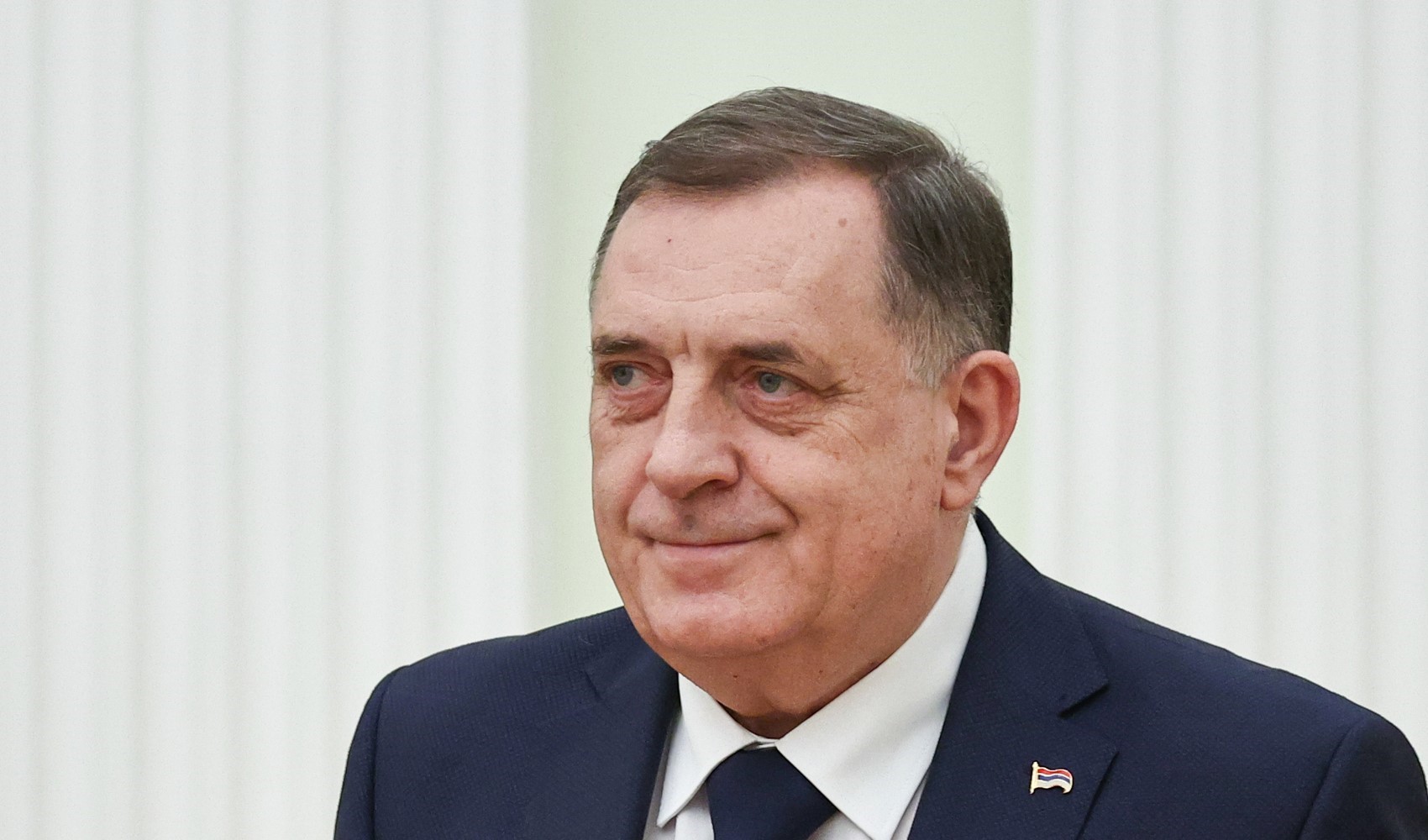
The Court of Bosnia and Herzegovina announced that Serb leader Milorad Dodik, who had an outstanding arrest warrant against him for refusing to testify to the prosecutor's office since March, went to the prosecutor's office voluntarily accompanied by his lawyer and provided testimony as a suspect.
Serb leader Dodik was released under judicial control after testifying as part of an investigation launched on charges of separatism. In a statement issued by the Court of Bosnia and Herzegovina and the Prosecutor's Office of Bosnia and Herzegovina, it was stated, "Suspect Milorad Dodik voluntarily came to the Prosecutor's Office of Bosnia and Herzegovina on July 4, accompanied by his lawyer, and provided testimony as a suspect within the scope of the investigation." It was announced that Dodik was released under judicial control, that he must report to authorities regularly to sign in, and that a new arrest warrant would be issued against him if he failed to do so.
Serb politician Dodik, who serves as the President of the Republika Srpska (RS) entity, an administrative unit in Bosnia and Herzegovina where Serbs live in large numbers, said in a statement, "This is as important for me as it is an important step against those who act with bad intentions and want to escalate instability and problems in Bosnia and Herzegovina through this case."
Reports in the Bosnian press claimed that the unexpected development regarding the lifting of the arrest warrant against Dodik occurred as a result of negotiations that had been ongoing for some time among the country's politicians.
WHAT HAD HAPPENED?
Republika Srpska (RS) President Milorad Dodik was sentenced to 1 year in prison and a 6-year ban from political office in February in a case where he was tried for refusing to implement the decisions of the High Representative for Bosnia and Herzegovina. The Serb leader's lawyers appealed the first-instance court decision, prolonging the judicial process. Furthermore, in reaction to the decision of the Court of Bosnia and Herzegovina, regulations were adopted in the RS entity banning some state-level institutions of Bosnia and Herzegovina from operating. These regulations, which caused a new crisis in the country, were suspended by the Constitutional Court of Bosnia and Herzegovina. Due to these steps that posed a threat to the constitutional order of the state, an investigation was launched against Dodik and some other Serb leaders, but Dodik, who denied the authority of the Court of Bosnia and Herzegovina, did not go to testify. Following this, detention and nationwide arrest warrants were issued against them. The local police of the RS entity refused to execute the arrest warrants against the Bosnian Serb leaders, and Dodik was able to make international trips to Serbia, Russia, and Hungary during this process.
The actions of Bosnian Serb politicians led by Dodik to ban the activities of security institutions, including the state-level police force, within the RS entity had caused concerns of conflict and civil war between the Republika Srpska and state institutions in Bosnia and Herzegovina. The crisis experienced during this period was described as the deepest crisis since the war between 1992 and 1995.
News Source: İHA