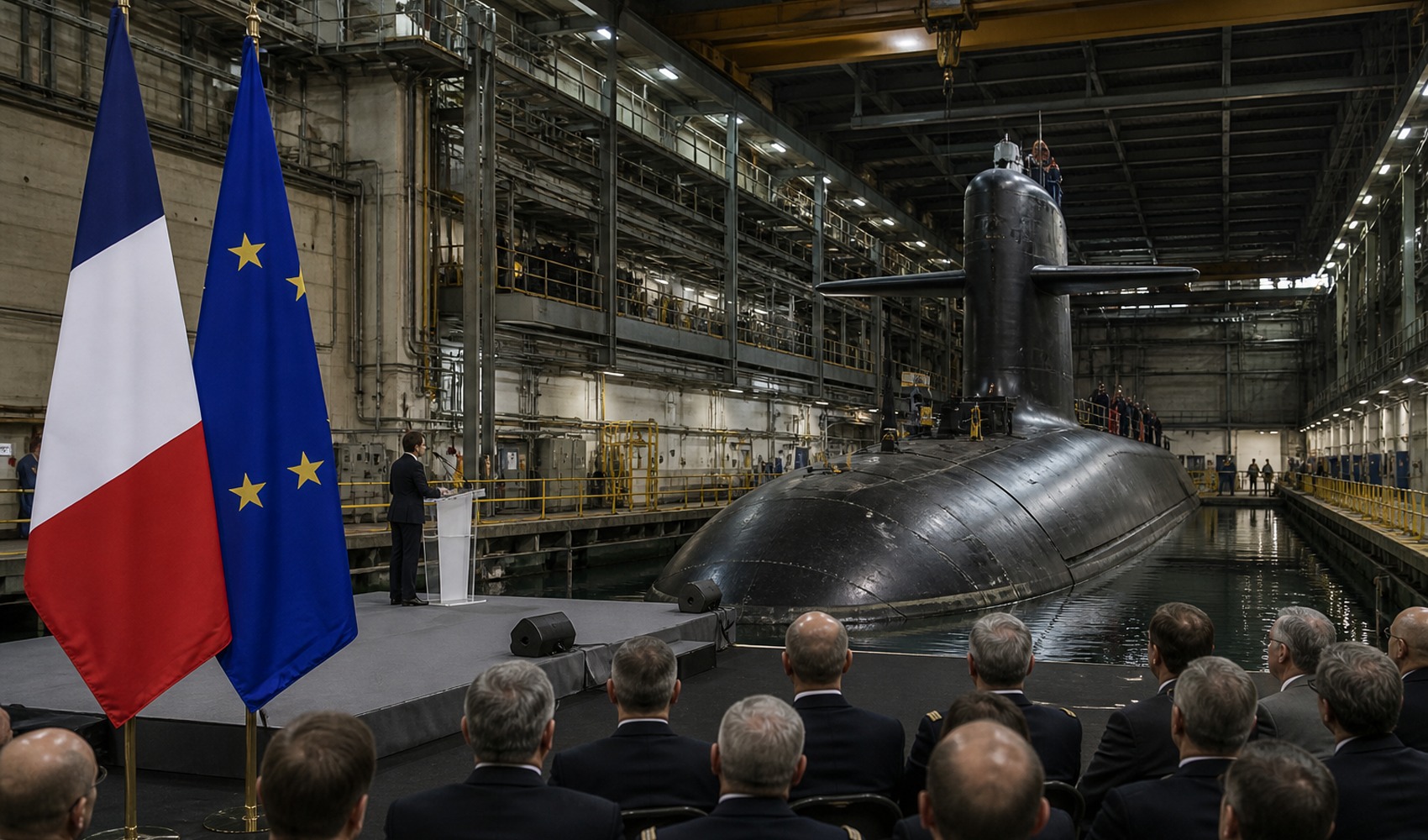
France's nuclear deterrence cooperation with its European allies has begun to find broader resonance on the continent. However, according to experts and European officials, the initiative is not seen as a mechanism that could replace the US nuclear security guarantees within NATO.
The plan, which President Emmanuel Macron calls "forward deterrence," envisions the deployment of Rafale fighter jets capable of carrying nuclear weapons to other European countries when necessary. The project aims to develop secure communication lines, early warning systems, intelligence sharing, and the necessary infrastructure investments.
Countries participating in the initiative at various levels include the UK, Germany, the Netherlands, Belgium, Poland, Greece, Finland, Norway, Sweden, and Denmark. While the Baltic states have not yet joined the group, Italy has refused to participate in the project.
Vipin Narang, an MIT professor who managed the Pentagon's nuclear policy during the Joe Biden administration, described France's move as "better than nothing"; however, he emphasized that it cannot be considered an alternative to the US extended deterrence. Narang noted that the French side has also been clear on this matter.
Norwegian Foreign Minister Espen Barth Eide similarly stated that the plan is complementary in nature. According to Eide, the initiative does not replace existing American nuclear guarantees; it is considered an additional element that supports them.
DECISION-MAKING AUTHORITY REMAINS IN PARIS
France continues to keep the decision to use nuclear weapons entirely under its own monopoly. French nuclear doctrine allows the arsenal to be used to protect the country's "vital interests"; however, the geographical scope of these interests is deliberately left ambiguous.
The Paris administration has not provided a direct and automatic defense guarantee to the participating countries. According to sources, instead of establishing a joint nuclear alliance, France is creating separate coordination mechanisms with participating countries and conducting bilateral contacts.
Speaking at a security conference in Warsaw, Macron's strategy advisor Xavier Chatel said the plan creates a new layer of uncertainty for Moscow. Chatel stated that this situation creates an additional element that Russia must factor into its calculations.
Finnish President Alexander Stubb said that there are no plans to station nuclear weapons in his country during peacetime, but that they aim to create a "strategic dilemma" for Russia. Stubb also noted that the development of the initiative could take 10 to 15 years.
Macron announced in October 2025 that France was working on renewing its nuclear doctrine, and he presented the new approach to the public in March of this year. Paris reiterates that the doctrine maintains its defensive nature and that the final decision belongs solely to the French president.
News Source: 12punto