



The presidential election, which was moved up by one year following the death of President Ebrahim Raisi in a helicopter crash on May 19, will be held tomorrow.
Since the campaign period for the candidates running in the election ended 24 hours before the vote, all forms of propaganda activities were banned as of 08:00 this morning.
In Iran, the president serves for a 4-year term and can be elected for a maximum of 2 consecutive terms. Candidates must receive 50% + 1 of the votes to be elected in the first round.
If no candidate exceeds 50% + 1 in the first round, the two candidates with the most votes will advance to a runoff, and the winner of the second round to be held on July 5 will become the country's 9th President.
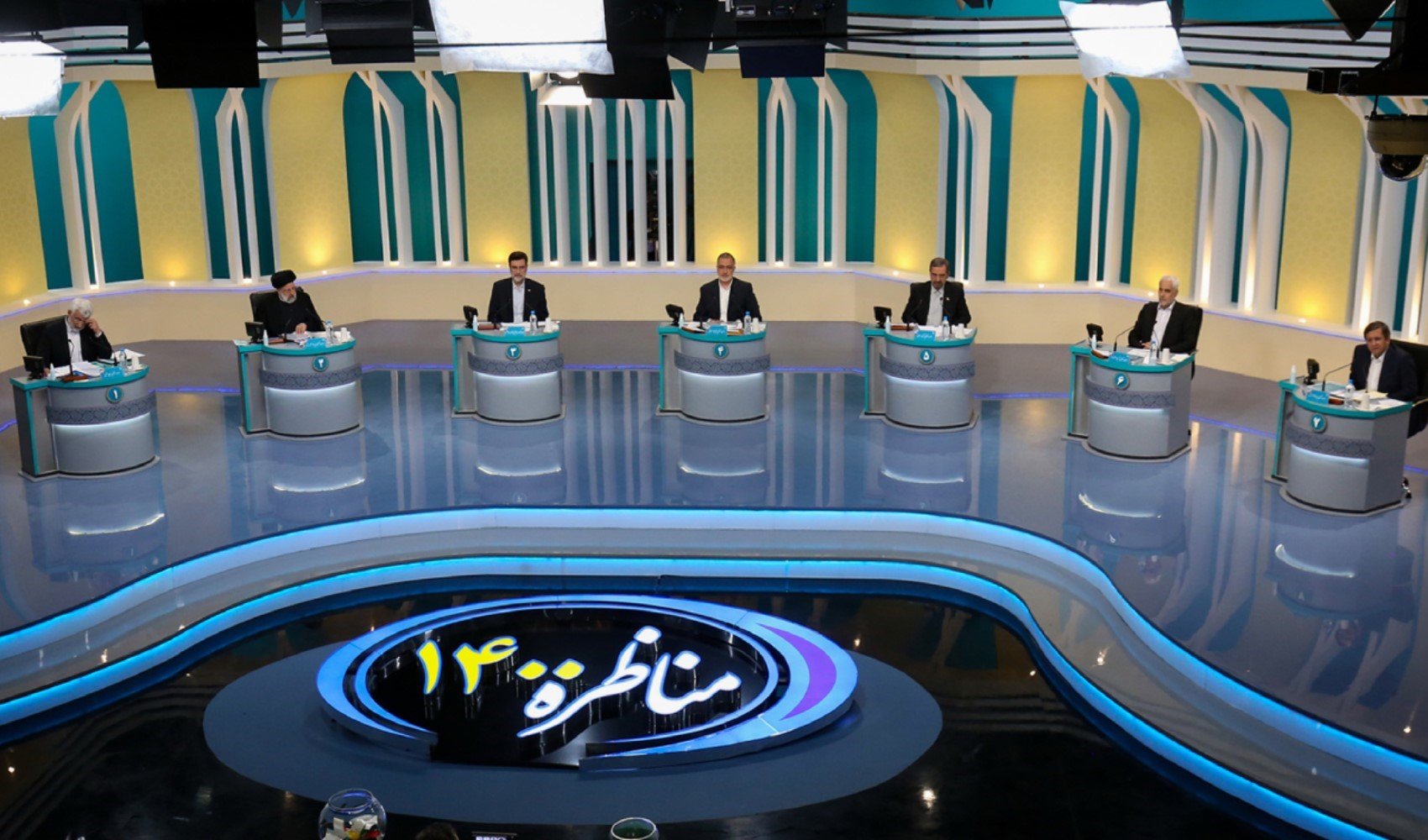
The candidates competing in the election are reformist candidate Masoud Pezeshkian, and conservative candidates Parliament Speaker Mohammad Bagher Ghalibaf, former Secretary of the Supreme National Security Council Saeed Jalili, and former Interior Minister Mostafa Pourmohammadi.
62 MILLION PEOPLE WILL VOTE
In Iran, which has a population of 88 million, approximately 62 million voters will be able to cast their ballots at more than 59,000 polling stations.
According to the current election law, voters must have turned 18 by the date of the election. Accordingly, those born on or before June 29, 2006, have the right to vote.
Voting will begin tomorrow at 08:00 local time and end at 18:00. This period may be extended for a few more hours if necessary by the decision of the Election Center affiliated with the Ministry of Interior.
Of the 6 names whose candidacies were approved by the Guardian Council, conservative candidates Tehran Mayor Alireza Zakani and Amir-Hossein Ghazizadeh-Hashemi withdrew from the race hours before the election "to ensure unity in the conservative camp."
CANDIDATES ANNOUNCED THEIR PROMISES
Just as the economy is the most important agenda for the public in Iran, the candidates also made promises prioritizing the economy in debates and election campaigns.
The sole candidate of the reformists, Pezeshkian, and moderate conservative Mostafa Pourmohammadi expressed the negative effects of sanctions and the resulting lack of interaction with the world on economic problems in their campaigns.
Other conservative candidates Saeed Jalili, Amir-Hossein Ghazizadeh-Hashemi, and Alireza Zakani stated that the economy should not be dependent on external developments.
Parliament Speaker and conservative candidate Mohammad Bagher Ghalibaf, while advocating for more moderate views than the other three, emphasized that sanctions have an impact, that he would focus on lifting sanctions if elected, and highlighted the importance of lifting sanctions "step by step."
STATEMENTS REGARDING THE MANDATORY HIJAB POLICY
Sensitive and chronic issues in the country, such as internet bans, the mandatory hijab policy, and ethnic and sectarian discrimination, also came to the agenda in the candidates' campaigns.
On these issues, reformist candidate Pezeshkian, in particular, made serious criticisms of the current government. Pezeshkian stated that if he becomes president, he will lift most of the internet bans, end the pressure on women regarding the hijab, and cleanse the government of ethnic and sectarian discrimination.
While Pezeshkian, Pourmohammadi, and Ghalibaf developed rhetoric advocating for openness in their election campaigns and debates, Jalili, along with Zakani and Ghazizadeh-Hashemi, who withdrew from the race in favor of the conservatives, stated that they intended to maintain the status quo.
After some candidates, and especially Pezeshkian's advisor, former Foreign Minister Mohammad Javad Zarif, criticized the Raisi government on sensitive issues such as nuclear negotiations and displayed what conservatives called a "capitulatory approach to the West," the warning-like statements from Iranian leader Ali Khamenei on this matter drew attention.
"THE ELECTION MAY GO TO A RUNOFF"
The atmosphere in the country suggests that the election will witness a competition between Ghalibaf-Pezeshkian or Jalili-Pezeshkian, but it remains a question mark whether Pezeshkian has generated enough excitement among the public to draw the disgruntled voters needed to win the election. A significant portion of Iranians in Tehran still state that they will not vote.
PEZESHKIAN MOVED AHEAD IN THE LATEST POLL
Conservatives have still not reached an agreement on entering the election with a single candidate. If Jalili and Ghalibaf choose to continue separately, the possibility of Pezeshkian winning the election, if not in the first round, then in the second, is not low.
On the other hand, polls conducted in the country show different results. While Ghalibaf appeared to be in the lead previously, currently, Jalili is ahead in some polls and Pezeshkian in others.
Finally, in a public opinion poll conducted face-to-face nationwide by the Iranian Students Polling Agency (ISPA) on June 26, Pezeshkian took the first place in the race with 33.1%, Jalili took the second place with 28.8%, while the other conservative candidate Mohammad Bagher Ghalibaf took the third place with 19.1%.
According to the polls, it is observed that Pezeshkian has a higher vote share than other candidates in regions where Turkish, Kurdish, and Baluch citizens are concentrated.
News Source: AA









