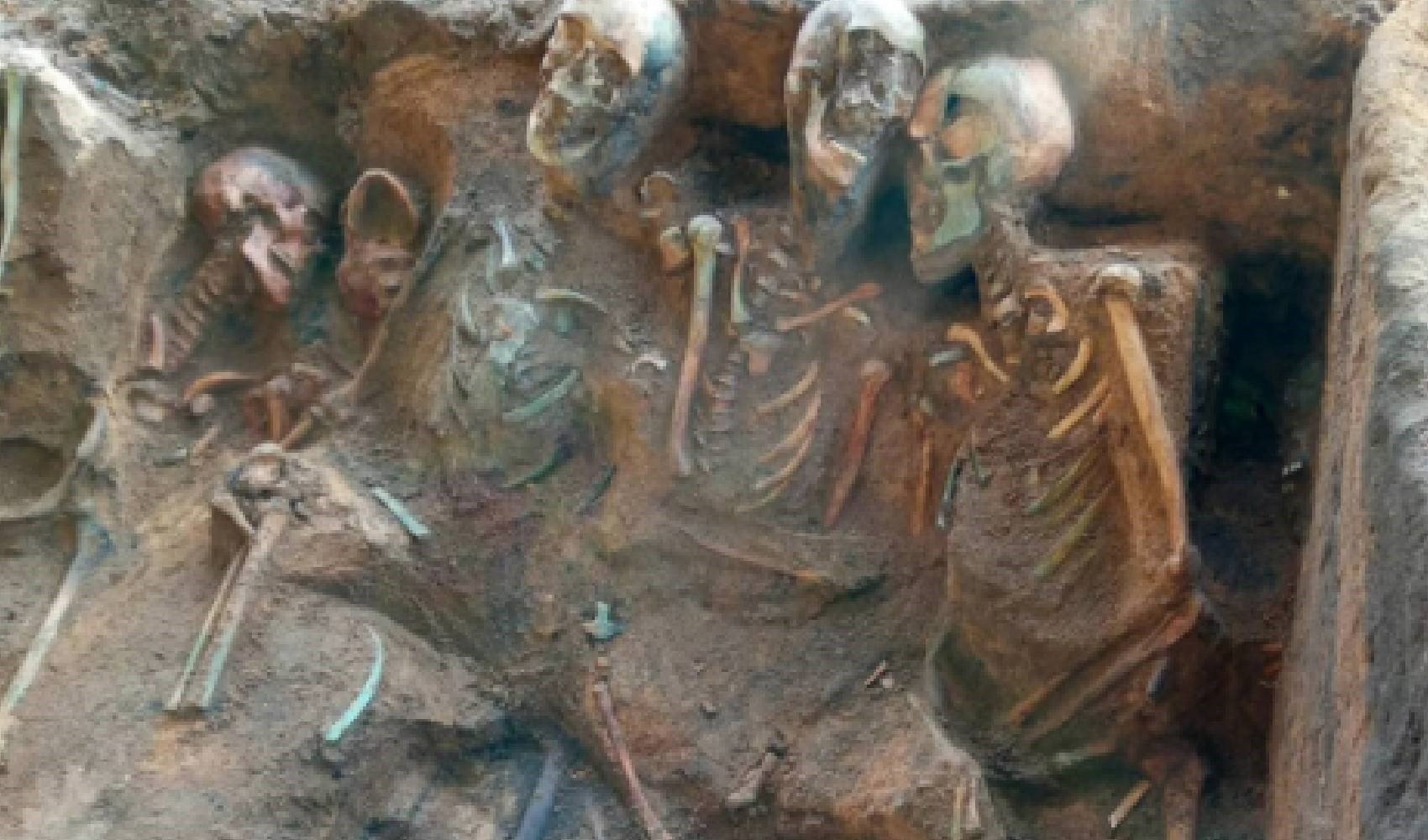
It has been reported that a large mass grave containing a thousand skeletons was discovered during archaeological excavations in the city of Nuremberg, in the Bavarian state of Germany.
In a statement, it was said that they were astonished when they first encountered the mass grave and initially thought the area might be a cemetery dating back to World War II. However, archaeologists determined that the skeletons in the mass graves were the result of the plague epidemic that occurred in 1632-1633.
Scientists also found a note dating back to 1634 during the excavations. It was stated that this note described the devastation caused by the plague, which killed 15,000 people.
Melanie Langbein from Nuremberg's department for the protection of historical heritage stated that the bodies of at least 100 people were found in 8 separate pits.
Langbein explained that the city had struggled with epidemics every decade after the 14th century and that these mass graves might have been buried in haste, without time to arrange them according to Christian burial traditions.
Langbein emphasized that the epidemic intensified due to the impact of the Thirty Years' War, which took place between 1618 and 1648, and that the residents of Nuremberg lived under very difficult conditions during that period.
Decker, meanwhile, stated that he estimates the number of identified skeletons could reach up to 2,000. The official pointed out that in this case, the burial site in question could become the largest mass grave in Europe.
News Source: 12punto