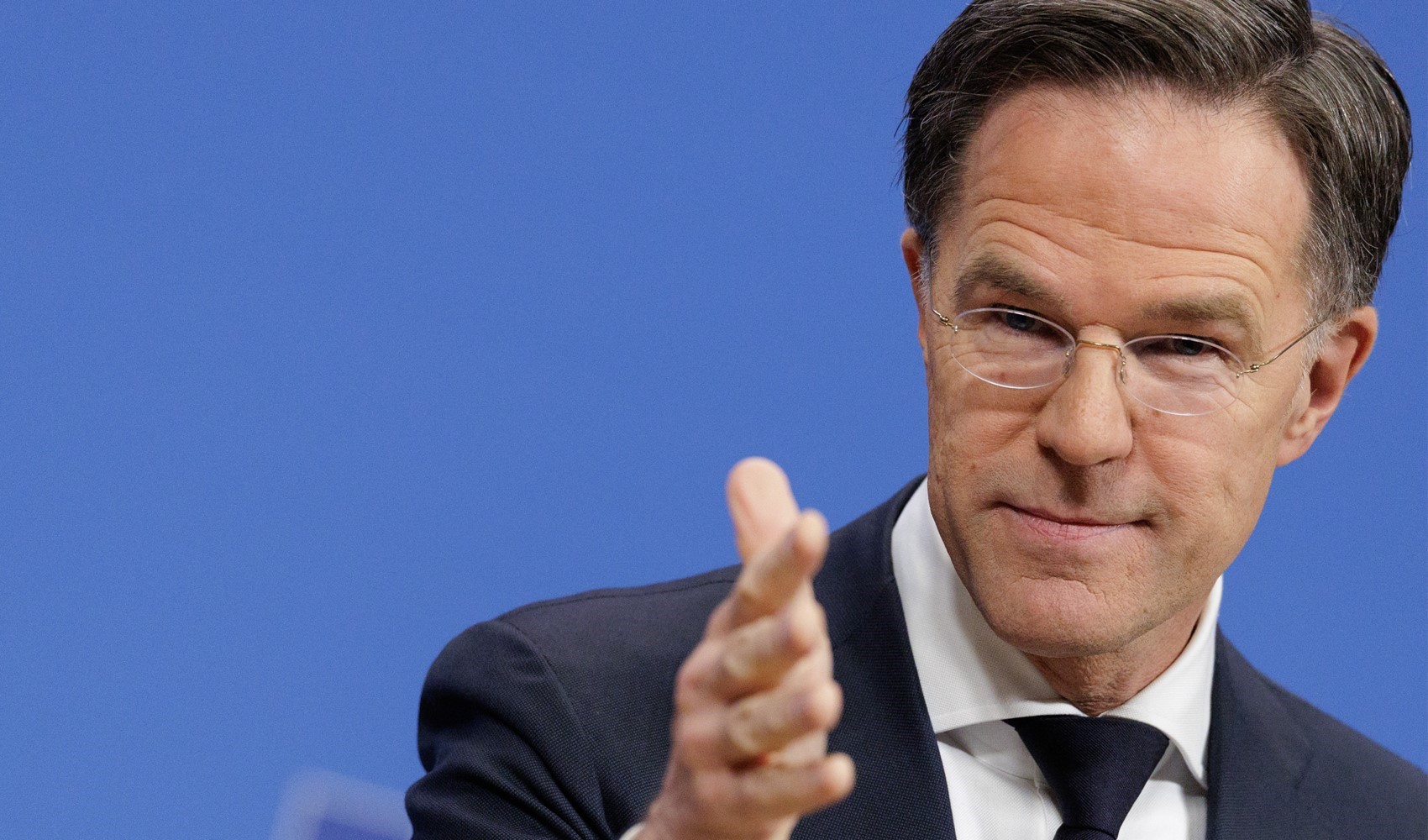
NATO Secretary General Mark Rutte held a press conference at NATO headquarters in Brussels on the occasion of the publication of NATO's 2025 annual report. Stating that the 2025 report is essentially a summary of the discussions held, decisions made, and actions taken within NATO, Rutte said, "2025 was a pretty good year. We clearly see that our world is changing, and we are adapting to this situation to remain prepared."
Expressing that countries such as Iran, China, North Korea, and Belarus continue to support Russia in the war in Ukraine and that Russia's actions against NATO territory continue, Rutte said, "The threat landscape has shown that we need to do more to be able to respond to all kinds of threats."
Stating that NATO entered a new era in 2025 and that allies reached an agreement at the summit in The Hague to commit 5% of GDP to defense, Rutte said, "In 2025, for the first time, all allies reached the target of allocating at least 2% of GDP to defense, which was agreed upon in 2014. Many have gone beyond that. We have seen that Europe and Canada recorded a 20% increase in defense spending in 2025 compared to 2024. Maintaining this critical trend will be a priority in the coming years."
"2025 was a turning point for NATO"
In his speech, where he also mentioned Europe and Canada reducing their dependence on the US for defense and NATO's support for Ukraine, Rutte said, "2025 was a turning point for NATO. We have documented this in the annual report that I am proud to share with you today."
When asked at the press conference how it could be claimed that NATO is stronger than ever, given the US ambitions regarding Greenland and US President Donald Trump referring to NATO members as "cowards," Rutte said that NATO has become stronger thanks to the steps taken by US President Trump. Rutte said, "I do not believe we could have reached the 2% target in defense spending in 2025 without the US President. All allies have reached the 2% target."
Rutte said he also believes that reaching an agreement on the 5% target would not have been possible without Trump's pressure. In response to a question about US President Trump criticizing European NATO allies regarding Iran and whether Iran is a NATO issue, Rutte said, "This is not a new situation. NATO has been clear on this matter for a long time. Iran cannot possess nuclear weapons. NATO has also long acknowledged the threat that Iran's missile program poses to our allies and our interests."
"Iran is becoming increasingly dangerous for allies"
Stating that the US has reduced Iran's nuclear and ballistic capabilities through attacks on Iran, Rutte said, "Let's take, for example, what happened at the Diego Garcia Base used by the UK and the US. This base was targeted by a missile capable of reaching a range of 4,000 kilometers. The logical conclusion from this launch is that Iran now possesses capabilities that are becoming increasingly dangerous for allies."
Rutte stated, "NATO stands firmly with all its allies, and we have successfully intercepted ballistic missiles aimed at Turkey from Iran on three separate occasions."
"NATO is a very strong alliance, and you saw that in the case of the three missiles aimed at Turkey"
In response to a question asking, "Is the Alliance taking or planning to take additional security measures to increase Turkey's security?" Rutte said, "As 32 allies, we will do everything we can to defend every inch of NATO territory. The shooting down of the three missiles aimed at Turkey is clear evidence of this, and we will continue to do so. We are clearly showing all our adversaries that we will do whatever is necessary to ensure our security."
Regarding a question about the threat posed by Iranian missiles to Europe, Rutte said, "Diego Garcia is 4,000 kilometers away from Iran. If a missile launched from Iran can reach Diego Garcia, this is a significant development. This means that Iran possesses capabilities that are dangerous for allies. At the same time, it means that these capabilities are becoming more dangerous for allies. Do the math yourself, 4,000 kilometers."
Stating that it is a matter that should be unanimously accepted among NATO allies that Iran should not possess nuclear capacity and missile capacity of this scale, Rutte said, "The good news is that the allies are ready and we can defend ourselves. NATO is a very strong alliance, and you saw that in the case of the three missiles aimed at Turkey."
"30 countries have come together to reopen sea lanes"
The NATO Secretary General said, "Regarding the reopening of sea lanes and ensuring they remain open, 30 countries have come together to ensure that ships can navigate safely in this region. Most of these are NATO members. Japan, South Korea, New Zealand, Australia, and the United Arab Emirates (UAE) are also participating in this process. These countries are discussing together what to do, when, and where to do it in order to ensure that sea lanes remain open."
When asked to clarify exactly what the 30 countries, most of which are NATO members, will do regarding the Strait of Hormuz, Rutte said, "These countries, most of which are NATO members, are coming together to ensure that sea lanes remain open. Of course, the question of what will happen, when it will happen, and where it will happen arises while the war continues. Countries are currently working together actively. Under the leadership of British Prime Minister Starmer and senior military officials in the UK, they are working with France and others to ensure these questions are answered. This is being done in response to President Trump's request. He would say, 'I would have preferred this to start sooner.' My answer to this was, 'Europe needed time. Because the US could not inform the allies about what would happen that Saturday morning three and a half weeks ago for understandable reasons.'"
He said that Trump's request regarding the Strait of Hormuz was responded to
Stating that US President Trump's frustration with European allies stemmed from the fact that the US did not consult with European allies about the operation against Iran "for understandable reasons" and that it took time for Europeans to organize, Rutte said, "They wanted to keep the operation secret and thought that no one should know what would happen that Saturday morning. If you inform too many people, there is always a chance that things will leak. But the downside of this was that it took time for the Europeans to organize. Initially, there were six countries, including the UK, France, Italy, Germany, Japan, and the Netherlands, and by Friday, the number reached 22. Currently, more than 30 countries have committed to coming together to ensure that sea lanes remain open and to discuss what will be done, where, and when. This is a full response to President Trump's request."
He implicitly confirmed the question of whether Russia is supplying UAVs to Iran
When asked at the press conference if he could confirm the information that Russia is supplying unmanned aerial vehicles (UAVs) to Iran, Rutte said, "We know that Russia, Iran, China, and North Korea are acting together, and we also know that Iran is among the countries supplying equipment to Russia in the war against Ukraine. When such news emerges, it tells us something."
Rutte said, "One should not be naive about this. But I cannot tell you what the intelligence is; we keep that secret."
"More defense production is needed"
In response to a question about the possibility of missile stocks running out if the war in Iran continues longer and the difficulties this would create for Ukraine, Rutte said, "The flow to Ukraine continues. We know that stocks are being used in large numbers in the Middle East. This is clear."
Emphasizing that defense production must increase for this reason, Rutte said, "Germany, Italy, the Netherlands, and others are home to some of the best defense companies in this part of the world. But they need to produce more. Additional production lines, additional shifts, and the opening of new factories are needed. The money is available."
News Source: İHA