



Suat TEKİN - 12punto.com.tr
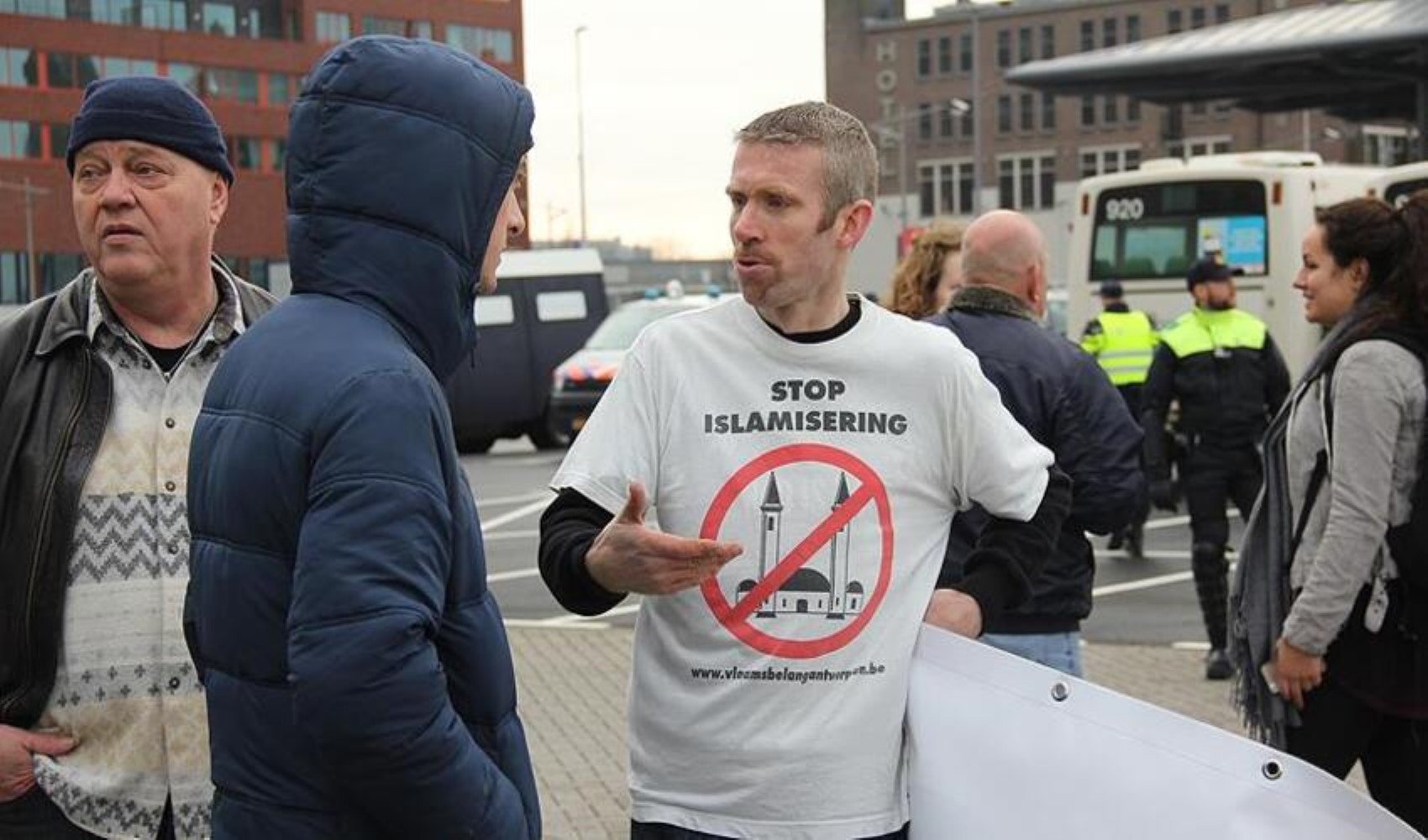
Ipsos, Ifop and BVA Xsight research firms indicate that far-right leader Marine Le Pen could win the next presidential election in France. Her party, the National Rally (RN), is outpacing other parties in all published polls. In the Netherlands, Geert Wilders, known for his anti-Islamic stance, also pulled off a surprise in recent months to secure the premiership. In Austria, Hungary, and Serbia, governments known for their authoritarian policies are in power, even if they do not share the same brand of nationalism as their western neighbors.
The rise of the far-right and nationalist movements across Europe has been a subject of debate since the early 2010s. When Macron won the presidential election in France in 2017, comments that far-right movements had entered a period of decline gained weight in the media and academia. However, by the 2020s, it is evident that the far-right has become stronger than ever before. Assoc. Prof. Fatih Yaşlı evaluated the discussions regarding the rising far-right in Europe and the future of European politics for 12punto.
Yaşlı states that European peoples are aware of the role of neoliberalism in the ongoing crises, but that there is more focus on conspiracy theories than on capitalism.
'INCOMPLETE CLASS CONSCIOUSNESS'
Yaşlı said the following regarding the reasons for the rise of nationalist movements in Europe:
"I believe that the process being experienced should be placed within the neoliberal phase of capitalism and the crisis that phase is undergoing. Since the late 1970s, Keynesian welfare state practices have been gradually replaced by the absolute dominance of the free market. To this, deindustrialization, privatizations, the retreat of the social state, and flexible and precarious forms of work were added. The crisis of capitalism that began in 2008, and which is actually still ongoing, was the icing on the cake, as it brought with it serious unemployment and poverty. Today, European peoples know that the crisis of neoliberalism lies behind the crisis being experienced, and they are blaming finance capital; in this sense, there is a 'class consciousness,' but it is an incomplete consciousness. Because instead of seeing capitalism directly as the culprit of the crisis, the focus is on certain phenomena created by capitalism. For example, there is talk of globalists, global elites, and a few families who rule the world, and we see that this is often marked by a conspiratorial perspective."
Regarding the longevity of the rise of nationalist movements, Yaşlı expressed the following:
"Right-wing 'anti-capitalism' has historically always worked this way: it does not direct the reaction of the lower classes toward capitalism directly as a system or structure; on the contrary, in order to absorb that anger, it blames 'unproductive capital,' the interest lobby, usurers, and elites. This leads to the perception of the financialized state of capitalism as a global conspiracy and inevitably brings nationalism with it. In short, the rise of nationalism must be placed within the crisis of capitalism; however, if we do not add one more thing here, the picture remains incomplete. That is the absence of a revolutionary/socialist left and a strong class movement in the West; in the absence of the left and the class movement, the right is stealing roles from the left and channeling anger toward capitalism into other channels. This is also, in my opinion, an answer to your question of 'how long will this rise last': As long as a strong class movement does not appear on the scene, the nationalist wave will continue."
THEY BLAMED IMMIGRANTS FOR THE CRISIS
One of the most frequently voiced claims is that the global migration crisis has an impact on the strengthening of nationalist movements. Evaluating the effect of the immigrant crisis on the rise of the far-right, Yaşlı emphasizes that the bill for the crises is being footed by immigrants, not the system.
"We can say that the most important of these 'other channels' are immigrants and refugees. Look, for nearly fifty years, income distribution has been turned upside down all over the world, and countries referred to as the 'periphery' have become even poorer. Especially after the withdrawal of the Soviet Union and real socialism from the historical stage, global capitalism turned the whole world into a field of plunder. Military interventions were carried out in countries like Iraq, Afghanistan, Libya, and Syria, and civil wars were provoked; the result of all this was an intense wave of migration from the countries we call the periphery to the center, that is, to the West. While this wave of migration lowers the price of labor and divides the class, rendering class politics ineffective, it also strengthens the ground for religious and ethnic conflicts. Today, the European working class has been convinced that immigrants are behind the poverty they are experiencing, and their anger is directed there. The European right also uses the immigrant and refugee issue as a lightning rod to prevent the masses from directing their anger toward capitalism as a system. In other words, the masses have started to blame immigrants for the misery they experience instead of blaming the system. Today, anti-immigrant sentiment is at the center of almost all right-wing populist and neo-fascist movements rising in both Europe and the USA; a new racist wave is rising on this ground."
'THE END OF HISTORY THESES HAVE BEEN THROWN INTO THE DUSTBIN OF HISTORY'
One of the concepts that the far-right focuses on the most is globalization. Globalization was once the most popular concept, especially in the West. In Turkey, opponents of the nation-state also frequently defended globalization. So, is globalization still effective in the West? Has it been shelved? Yaşlı evaluates it as follows:
"Globalization continues in the sense of deepening the integration of capitalism on a global scale; capitalism today carries an 'international' character more than ever before. As for globalization as an ideology, things are a bit more complicated there. The belief that globalization would carry humanity toward a more prosperous, fairer, and freer world has long since disappeared. That is, for example, the 'end of history' theses written by Fukuyama in the intoxication of the victory of liberalism have been thrown into the dustbin of history; we live in a much more unequal and chaotic world than forty years ago, and no liberal ideologue has the power, energy, or face to give good news to humanity in the name of globalization anymore. However, the class that is the carrier of the globalization ideology, namely financial capital, continues on its way extremely strongly. We can see Biden and the Democrats as the primary actors of globalism, and the world politics they are currently pursuing presents an appearance consistent with this. Globalists or globalizationists see Russia as their main rival in the short term and China in the long term, and we know that they are even taking the risk of war to stop China's rise and are making projections about this. However, they do not have the power to control everything; Trump's step-by-step march back to power shows this very clearly."
NAZISM HAS REVIVED
Despite their traditional anti-Russian stance, the European right is more reluctant to support Ukraine than the Democratic parties. Evaluating the effect of the Ukraine war on nationalism, Yaşlı stated that a wave of sympathy for Nazism has begun. Yaşlı expressed the following:
"Actually, there is a dual situation here. Yes, on one hand, right-wing populist parties see the Ukraine war as an intervention by the globalists, led by American Democrats, into Europe, and for this reason, they do not stand behind the war. Putin's Russia, just like the US playing into Russia through 'democracy' rhetoric, is playing into Europe through anti-globalism. However, on the other hand, because there is a very serious concentration of neo-fascist paramilitary forces on the Ukrainian side in the Ukraine-Russia war, this war has practically revived Nazism across all of Europe. While liberal democracies display an attitude that openly opposes Russia and communism, European neo-fascist movements have tried to create a wave of sympathy for Nazism by putting symbols like the swastika, the black sun, etc., back into circulation. What is not surprising here is the existential relationship between capitalism and fascism. Capitalism is inclined to call upon fascism as a savior during periods of crisis; now a multi-dimensional crisis is being experienced, and capitalism is once again calling fascism for help."
YOUNG GENERATIONS REACTING TO THE AKP...
Evaluating the reflections of rising nationalism in Europe on Turkey, Yaşlı emphasized that this new nationalist wave has not yet turned into a social movement.
"There is no right-wing movement in Turkey with the intellectual capacity to read political developments and ideas in the West and want to bring the rising wave there to here; in this respect, our right is truly 'domestic and national.' However, there is a situation like this: Turkey is experiencing the same process as the West, both economically and socially. That is, on one hand, there is a very serious distribution crisis and impoverishment, and on the other hand, there is a very serious immigrant/refugee issue. This brings with it a new phenomenon in terms of Turkish nationalism: the 'other' and the 'survival problem' of Turkish nationalism are putting immigrants and refugees at the center for the first time, and migration is seen as the primary survival problem. Because it is believed, or told to society, that migration is part of a global plan to de-Turkify Anatolia. Here, the coming together of crisis and migration makes a new nationalism similar to the one in the West, with strong racist motives and secular nationalism due to anti-Arab sentiment, a new actor on the political scene. Especially young generations who are reactive to the AKP, with the effect of the weakness of the socialist left, are rapidly following this new racist nationalism as if it were a fashion trend. They find new heroes and new enemies from history for themselves and bring them to the present. However, for now, we see that this rising nationalist wave has not moved outside the internet and turned into a real political and social movement. In my opinion, it will not be surprising to see this nationalist wave having moved outside the virtual world in the coming period, depending on the scale of the crisis."
News Source: Suat Tekin









