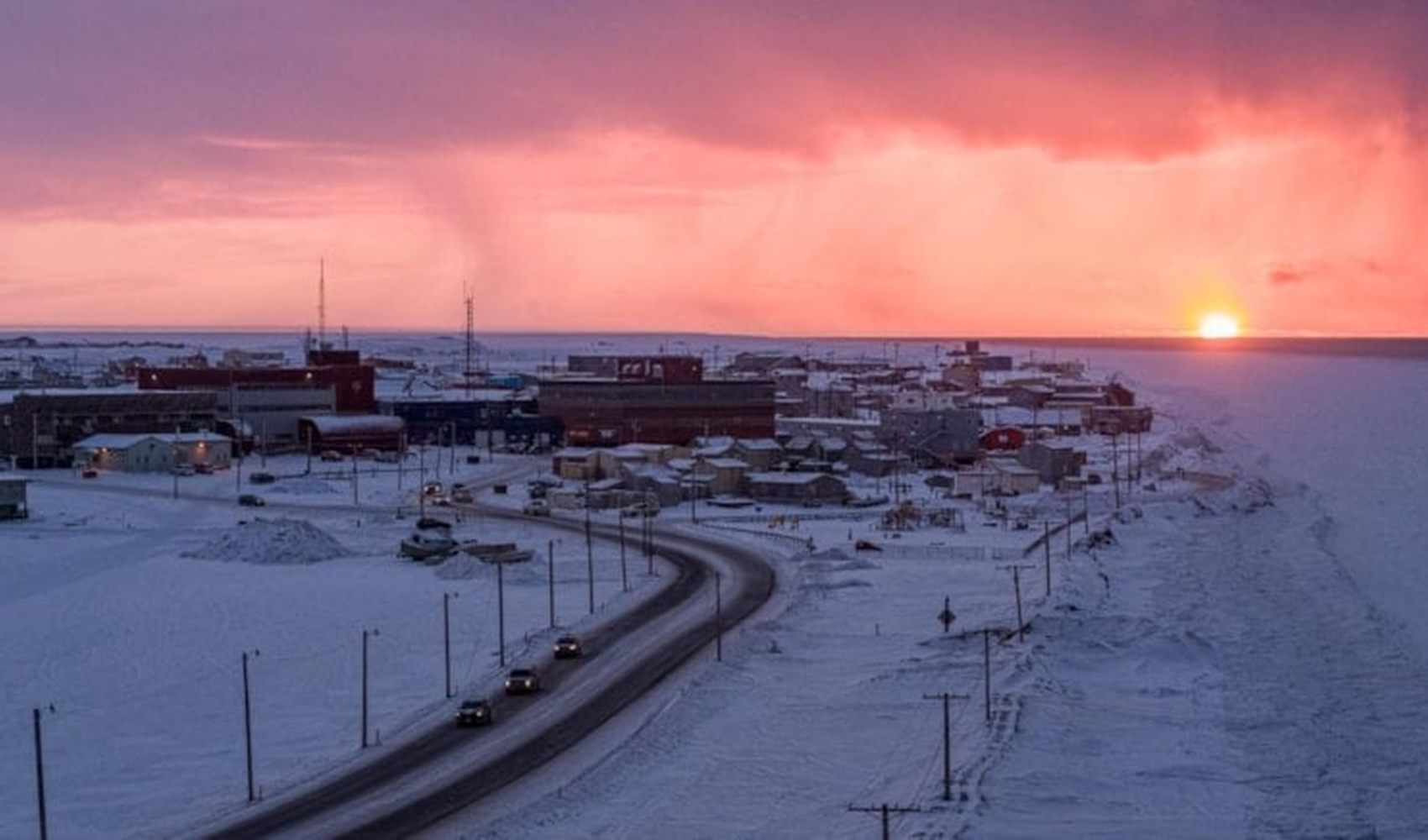
The polar night, which began on November 18, is affecting life in the northernmost town of Alaska, Utqiagvik. This settlement, home to approximately 4,600 people, will be deprived of sunlight for the next 65 days. The next sunrise will occur on January 22, 2026.
Utqiagvik is located approximately 483 kilometers north of the Arctic Circle and is known as one of the most extreme points in North America. Due to the Earth's axial tilt, sunlight cannot reach this region during the winter months, which causes days to shorten and leads to the darkest period in December.
Throughout the polar night, the town's only light sources are the faint twilight appearing on the southern horizon and the occasional Northern Lights (Aurora Borealis). During this period, when temperatures drop below zero, the absence of the sun directly impacts daily life.
This dark period ends in the spring months. From mid-May onwards, the sun does not set at all, and Utqiagvik enters a period of continuous daylight that lasts until the beginning of August. The local population views this as a natural counterpart to the polar night.
A similar cycle occurs at the South Pole; however, the polar night lasts much longer there. In the southern hemisphere, a single night can last for nearly six months. This contrast highlights the effect of the Earth's axial tilt on light cycles.
News Source: 12punto