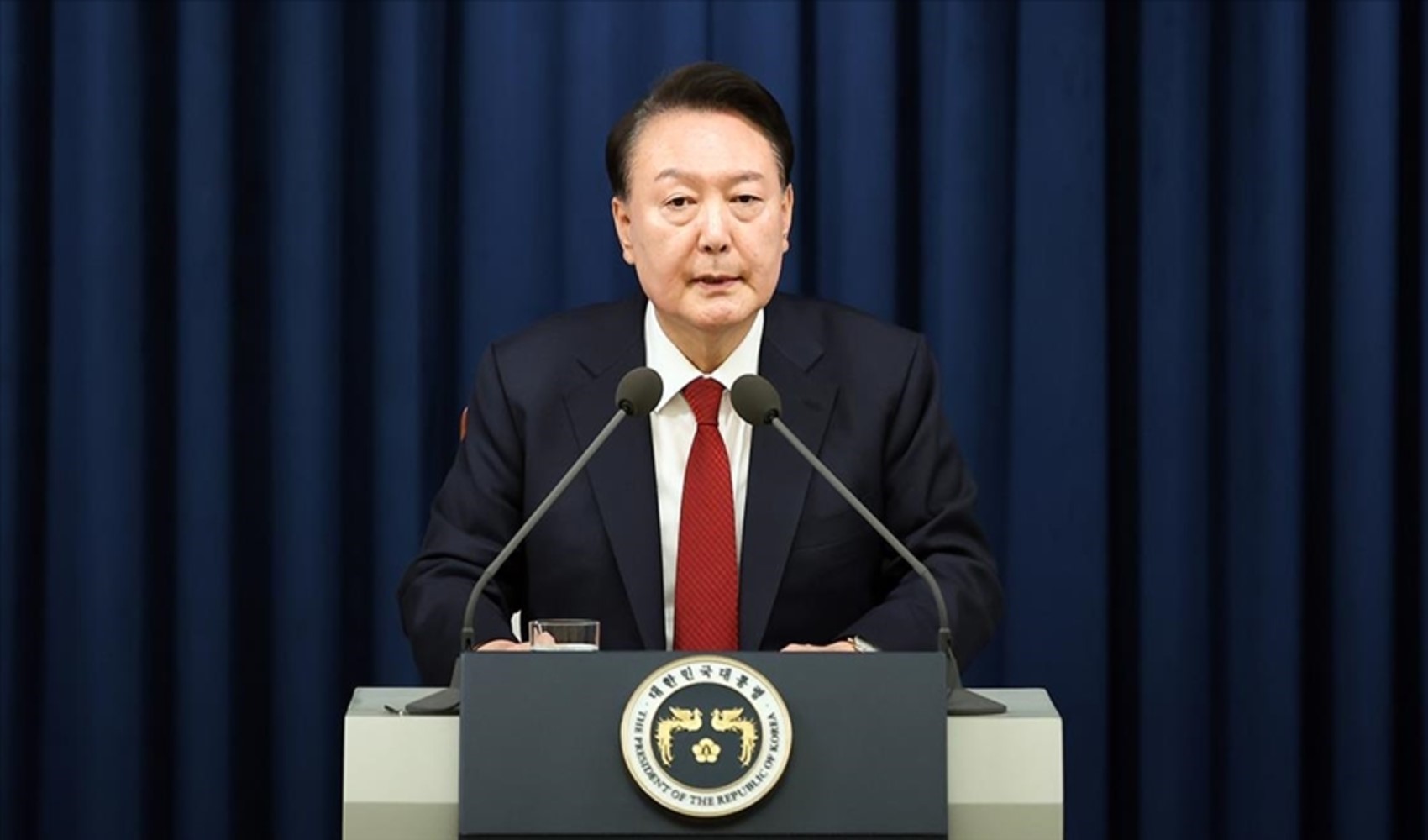
South Korean President Yoon Suk Yeol expressed his belief in liberal democracy during the impeachment trial at the Constitutional Court, rejecting the charges of 'insurrection' and 'abuse of power.' While underscoring his commitment to liberal democracy, Yoon accused the opposition of 'dragging the country into chaos.'
Yoon stated, 'Since the duty of the Constitutional Court is to defend the Constitution, I ask the judges to evaluate me positively from various perspectives.'
South Korean President Yoon Suk Yeol, whose powers were suspended due to the 6-hour martial law he declared in South Korea, appeared before a judge for the first time at the 3rd hearing of his impeachment trial.
Brought to the Constitutional Court from the Seoul Detention Center in the city of Uiwang under heavy security measures taken by the Presidential Security Service (PSS), Yoon entered the courtroom at 14:00 local time and waited for the 8 judges to arrive.
Requesting permission to speak at the beginning of the hearing, Yoon said, 'I am attending for the first time today, so I will make a short speech,' and emphasized that he has 'believed in liberal democracy' since he came of age, especially during his public service.
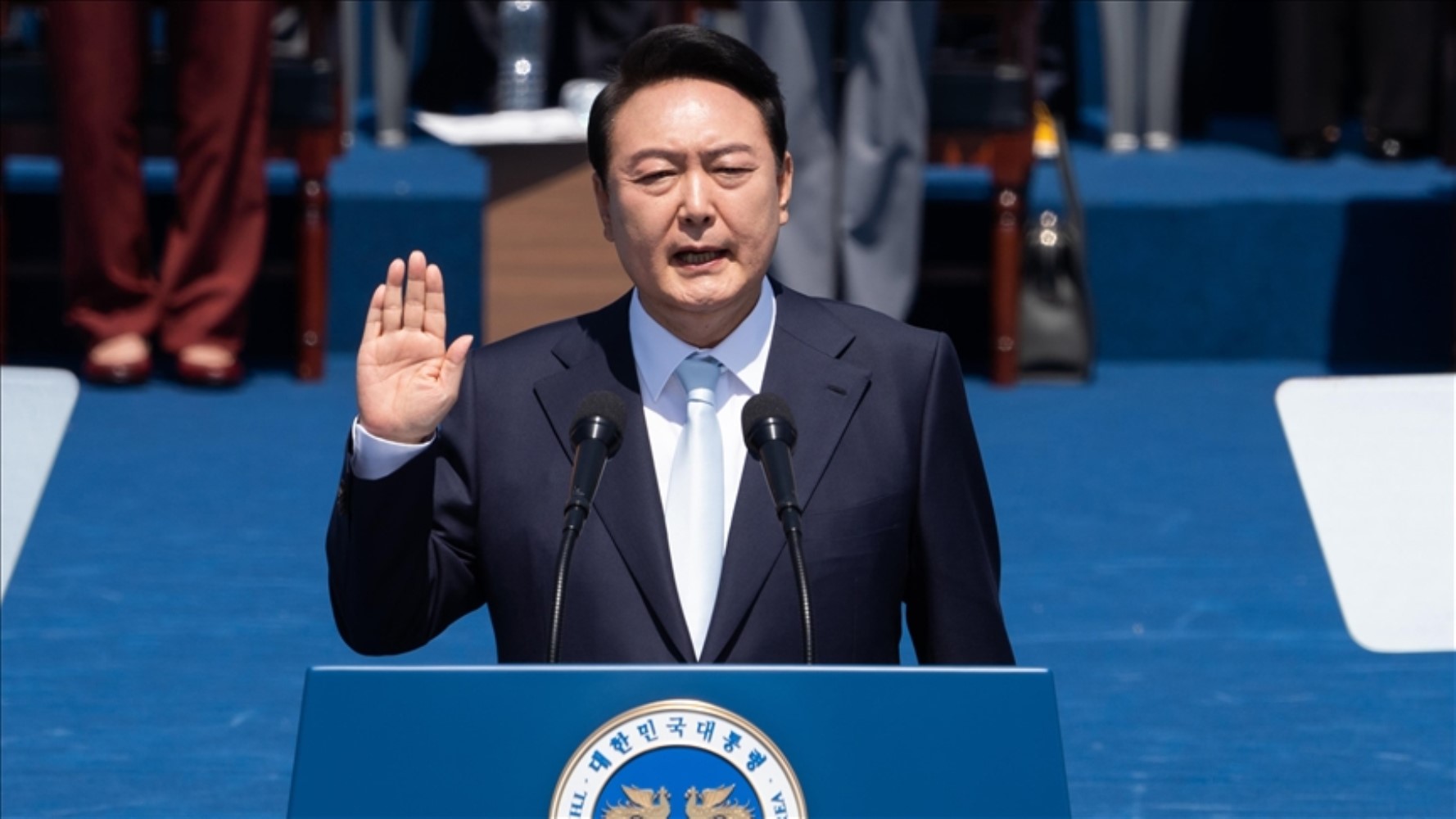
Yoon had apologized to his citizens for declaring martial law at the beginning of December
YOON DENIED THE CHARGES
Yoon stated that the special forces units sent to the National Assembly on December 3 were not there to disable the legislative body or to disrupt attempts to block martial law.
The South Korean President made his defense with the following words:
'...Because I know that such an action would lead to an unavoidable crisis. In this country, the parliament and the news media are in a much more powerful, much superior position than the president. If I had tried to block the decision to lift martial law, it could have been carried out somewhere other than this National Assembly.'
Yoon's defense team argued that the 'insurrection' and 'abuse of power' charges directed at their client were unfair, claiming that the opposition's actions had paralyzed the government and brought the country's democratic and constitutional order to the brink of collapse.
One of Yoon's lawyers, Cha Gi-hwan, also argued that the statements by military commanders involved in the declaration of martial law, which claimed that 'Yoon and his senior aides ordered the arrest of certain parliament members who were in political conflict with Yoon,' were not true.
PROTEST MARCH BY YOON'S SUPPORTERS
Yoon supporters gathered outside the Constitutional Court protested the impeachment process against Yoon with slogans and banners.
While heavy security measures were taken in the area, it was reported that 1 female protester who attacked the police was detained.
The South Korean press also announced that 4 thousand people attended a rally in support of Yoon held near the Constitutional Court.
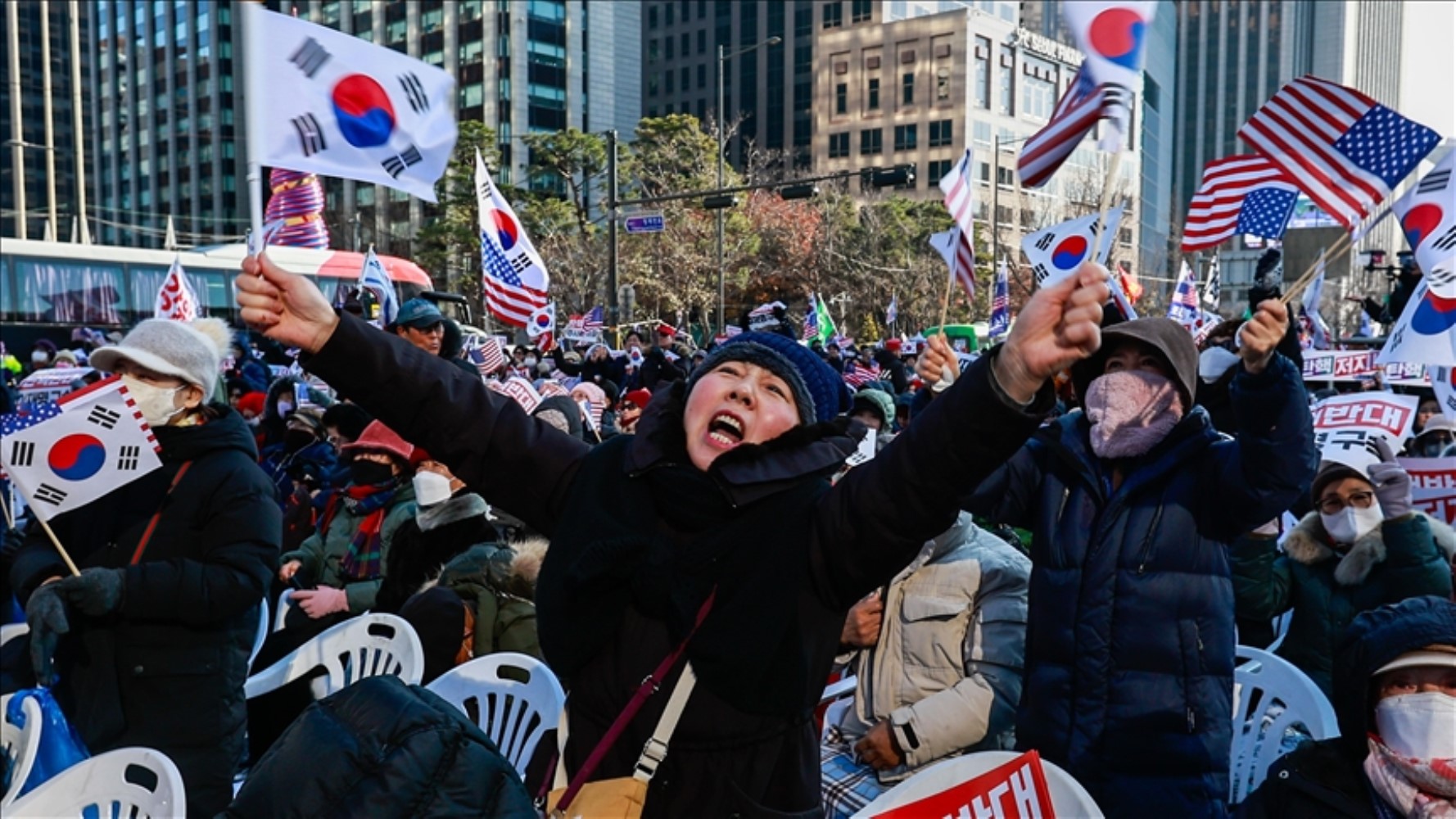
A scene from the protests organized by Yoon's supporters
WHY WAS THE IMPEACHMENT PROCESS STARTED?
South Korean President Yoon Suk Yeol had declared a 6-hour martial law, alleging that 'the opposition was engaged in anti-state activities,' and an impeachment process was initiated against Yoon with a vote in the National Assembly.
While an investigation was launched into Yoon, whose powers were suspended, Yoon had left the investigation commission's calls to testify unanswered.
Yoon, who was arrested and taken to testify last Wednesday, described the investigation against him as 'illegal' and stated that he cooperated with investigators to 'prevent bloodshed' in a potential clash between the police and the Presidential Security Service (PSS).
SOUTH KOREA MAY GO TO EARLY ELECTIONS
It is known that the Constitutional Court, which will make the final decision on whether Yoon will be removed from office, has 180 days for evaluation.
If the Constitutional Court approves the impeachment decision taken in the National Assembly, the country must go to elections within 60 days.
The next impeachment trial hearing is expected to be held on January 23.

The South Korean Parliament often makes headlines with heated debates and fights between ruling and opposition lawmakers. The tension in the parliament had also risen while Yoon's impeachment process was being discussed.
News Source: İHA