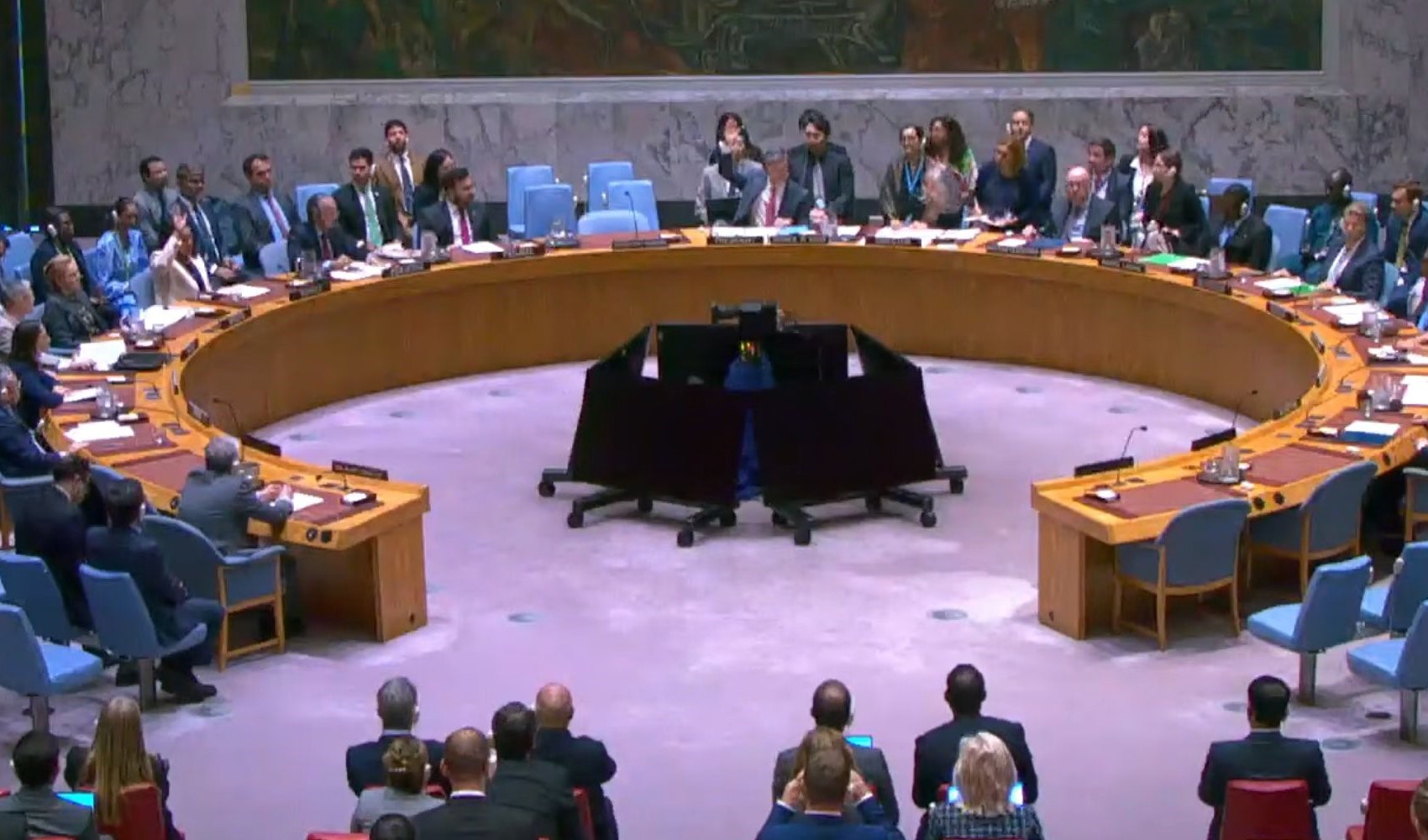
The UNSC has rejected a draft resolution that confirmed Iran's commitment to its nuclear obligations and provided for the permanent lifting of UN sanctions against the country. With this, the process for the re-imposition of sanctions against Iran has officially begun. In the vote held at the Council, only China, Russia, Pakistan, and Algeria supported the resolution, while the UK, France, the US, Sierra Leone, Slovenia, Denmark, Greece, Panama, and Somalia voted against it. Guyana and South Korea abstained.
On the other hand, if an agreement is not reached between Iran and the "E3" countries—consisting of the UK, France, and Germany—by September 28, the "snapback" mechanism that would trigger UN sanctions will be activated.
Iran's Permanent Representative to the UN, Amir Saeid Iravani, reacted to the decision. Emphasizing that the E3 countries have failed to fulfill their obligations under the nuclear deal, Iravani said, "The steps they have taken are contrary to international law and directly against the UNSC. The three countries have themselves destroyed the framework they claim to defend."
Stressing that any attempt by the UK, France, and Germany to reinstate sanctions is a "direct attack on international law," Iravani stated that Iran's nuclear program would never deviate from its peaceful path. The Iranian representative said that the UNSC had lost an opportunity for dialogue and compromise, adding that the three European countries would be responsible for any tension that arises and any crisis that may follow.
The E3 countries notified the UN Security Council on August 28 that they were triggering the snapback mechanism under the 2015 nuclear deal signed between Iran and world powers. With this step, the possibility of UN sanctions against Iran coming back into effect within 30 days was brought to the agenda. The sanctions in question allow other parties to re-impose all international sanctions if Iran fails to comply with the nuclear deal.
In 2015, Iran signed the Joint Comprehensive Plan of Action (JCPOA) with the UK, China, France, Germany, Russia, and the US. Under the agreement, Iran had agreed to limit its nuclear program in exchange for the easing of sanctions. The US's unilateral withdrawal from the deal in 2018 and the re-imposition of sanctions led Iran to gradually reduce its compliance with its nuclear commitments.
News Source: İHA