Suat TEKİN - 12punto.com.tr
The 3rd anniversary of the war in Ukraine is approaching. In the war that began on February 24, 2022, according to Trump's claims, 1.5 million people have died so far. While neither the Kremlin nor Kyiv has made a clear statement regarding casualty numbers, nearly 4 million people in Ukraine have been forced to leave their homes. While regions in eastern and southern Ukraine have come under the control of Russian forces, Russia's Kursk region has been occupied by Ukraine. The Ukraine War has become the largest and longest-running military struggle on European soil since World War II. Until November 2024, the US-led NATO claimed that the war would continue until Russia was defeated, that Ukraine's preservation of its territorial integrity was a prerequisite for peace, and that if Russia were not defeated, it would attack the Baltics and Poland.
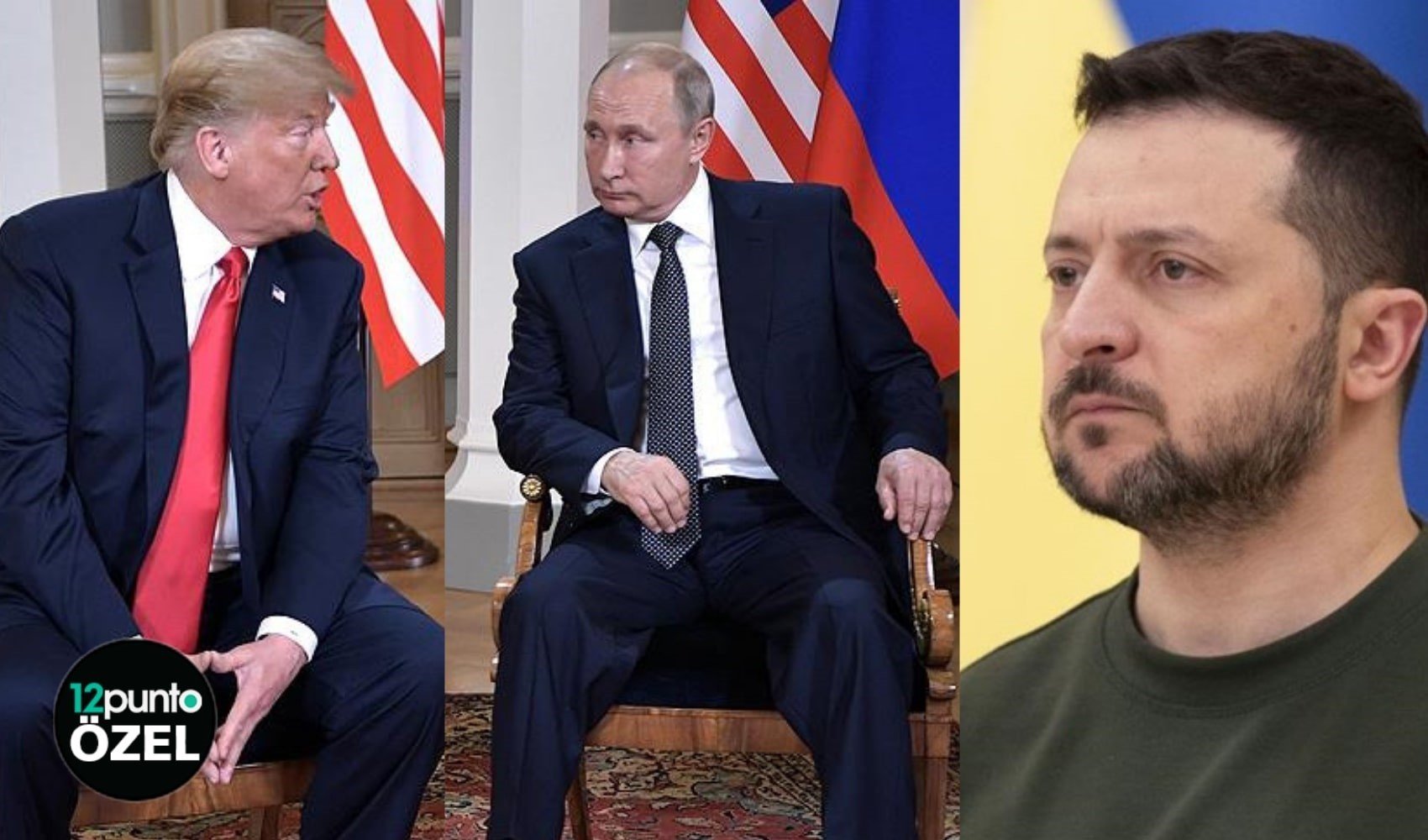
Trump, who took the US Presidential seat on January 20, declared that he was 'determined' to end the war. While reports of talks beginning between the US and Russia have surfaced in the press, Trump reported that he had held a phone call with Putin. A few days after Trump's statement, the Kremlin confirmed the call. All these developments have brought the question 'Is the Ukraine War ending?' to the agenda. The possibility of the war ending has also brought with it the question of what kind of future awaits Russia and the world. We discussed the current state of the Ukraine War and how the region might be shaped in the future with political scientist and author Onur Sinan Güzaltan.
RUSSIA'S APPROACH TO THE PEACE PROCESS
Noting that there is a positive atmosphere in Russia following the spread of news that talks have begun between Trump and Putin, Güzaltan also pointed out that the process is open to provocations. Güzaltan also noted that there are 'too many unknowns' regarding the future of the process.
Stating that the economy has been trending positively in Russia alongside the rumors of peace talks, Güzaltan evaluated the process with the following expressions:
''Already in the recent period, with the arrival of Trump, there were signs of a consensus, or at least the beginning of a negotiation, between Russia and America not just on the Ukraine issue, but in general terms to resolve crises in regions where both countries are active.
This, of course, followed Trump's statements and finally, the statements from the American side regarding the phone call, the phone call held between Trump and Putin. The Russians also confirmed this. In fact, with this confirmation, the ruble in Russia gained nearly 10 percent in value.
There is a very positive atmosphere in the Russian press right now. The assessments of experts here are that Putin and Trump will sit at the table. The atmosphere on the street is also in that direction. Of course, the primary issue here is the Ukraine issue. Trump had already made many statements before he was even elected that he would resolve this issue at the table with Putin. With the start of these talks, at least with the public announcement of this phone call, it has become clear that the matter has become quite serious.''
Kremlin Spokesperson Dmitry Peskov had initially stated that he could not confirm reports of the two leaders speaking following the news. The Kremlin announced earlier this week that the call had taken place.
On the other hand, Güzaltan pointed out that there are groups and countries within Europe and the US that would want to 'sabotage' the peace process, stating the following:
''It must be underlined that this is a process very open to provocations. Because no matter how much Trump is elected President of the American state, his influence and power are still debated. That is, there are many problems within the US. What will be the future of Zelensky in Ukraine is not clear. Zelensky and those around him may engage in provocations against peace talks.
There are many forces in Europe that do not want normalization between Russia and the United States, first and foremost the United Kingdom. Again, provocations from them may come. However, as I stated, I can say that the face-to-face meeting between Putin and Trump, which is said to be held in Saudi Arabia, is now finalized unless there is a very big surprise.''
HOW WILL THE MAP OF UKRAINE BE SHAPED?
Güzaltan emphasized that the military situation in Ukraine is progressing in the way Russia wants. Sharing the view that the territories of Ukraine seized by Russia will not be returned, Güzaltan drew attention to the fact that Ukraine's underground resources have also largely come under the control of Russian forces.
Reminding that Trump's foreign policy goals are decisive in his approach to Russia, Güzaltan used the following expressions:
''Russia has already taken what it wanted in Ukraine. That is, all of (Ukraine's) underground resources, vast wheat—you know, Ukraine is a very important grain storehouse for the world. The Russians have now established control in these regions. It has already passed into Russia's constitution that these are now Russian lands. Therefore, it does not seem possible for Russia to leave the lands it currently holds.
There is no reason for the Russians to leave these lands anyway, because when you look at the general situation, despite all the sanctions of the West, and even the implicit sending of soldiers there, etc., Russia has managed to keep its head held high both militarily and economically on the field and has taken what it wanted in Ukraine. Therefore, Russia is actually sitting at the table as the winning side. The question here is whether Trump will accept this situation, and if he does, what he will ask for in return.
Actually, one must also evaluate Trump's global strategy here. That is, the Ukraine issue is one of the details here. Actually, you know, (Trump) has a strategy towards China. That is, Trump has a strategy that isolates China and puts China at the number one spot on the target board. Therefore, I do not think Trump will ask for very large concessions from Russia regarding an agreement with Russia. Frankly, he is not in a position to ask for them either.
Because as I said, the forces supported by the United States have failed militarily on the field. This has caused very large crises in Europe, and there are deep crises within NATO as well.''
''SANCTIONS AGAINST RUSSIA HAVE FAILED''
Arguing that NATO, which implements isolation policies against Russia, has failed, Güzaltan provided information that Russia has not been shaken economically by the sanctions. According to Güzaltan, news such as the attack on Chernobyl could be operations organized for the purpose of 'provocation' to sabotage the peace process.
Stating that the process in the Ukraine War is progressing in favor of Russia, Güzaltan made the following statement:
''On the other hand, the sanctions have failed. The Russian economy grew by more than 4 percent in the last quarter. When you observe daily life in Moscow and other regions, it has not managed to create a major crisis in Russia regarding daily life, that is, issues such as the supply of basic food items.
Therefore, I frankly do not see a chance for Trump to extract very large concessions from Russia here. It is obvious that there will be provocations. Today, this Chernobyl incident is also the number one news in the press now. This is a very clear provocation. This is one of the deception operations that they call 'false flag' in English terms. Now, Russia has no reason to attack any nuclear power plant, that is, to sabotage this whole process.
Russia is already, as I said, going to sit at the table as the winning side, and the process is currently progressing in its favor. Here (in the Chernobyl attack), Ukrainian intelligence most likely has a role. One should not forget the British, likewise the anti-Trump forces within the American state. These are also forces that are against an agreement with Putin. These kinds of provocations from them are possible.
Other than that, Russia's advance towards Europe, etc., these are somewhat disinformation-oriented news from the Western press. But of course, there is such a reality now: the fundamental reason in the Ukraine issue was actually just the issue of NATO's settlement in Ukraine, which the Western side persistently scratched.
Because both for geographical reasons and Russia's energy resources and the transfer of this to Europe, etc., it was progressing in a very efficient way for Russia.''
The Nord Stream 1 pipeline located in the Baltic Sea played a key role in Russia's energy exports to Europe. The line was rendered unusable as a result of a sabotage attack by 'unidentified persons' in September 2022.
POSSIBILITY OF PEACE IN EURASIA AND THE MIDDLE EAST
Güzaltan reported that Russia emerging from the Ukraine War having largely achieved what it wanted could bring about major changes in Europe. Stating that governments close to the 'Atlantic Pact' in Europe could fall into a difficult situation with the war ending in this way, Güzaltan underlined that a normalization process could begin between Russia and Europe.
Stating that possible peace talks will have an effect beyond just Eurasia and Eastern Europe, Güzaltan noted the following:
''With the Ukraine issue, let's say the Atlantic Forces have cut the ties developing between Russia and European countries. In fact, physically, it is not just the Ukraine war, this sabotage carried out on the Nord Stream is also a part of this. Now, if relations normalize and an environment of peace and stability is established in Ukraine with an agreement to be made between Russia and America, I am of the opinion that relations between Russia and Europe will return to their old track in a short time.
If this whole process continues in this way, it seems possible that power changes will be experienced in Europe in connection with this, that is, political parties that defend ideas and foreign policies outside of this Atlantic Pact in countries like Germany and France becoming strong in Europe in the coming period.
Let us hope that these provocations like Chernobyl come to an end. Because these are not just issues that will affect Russia, Ukraine, or America; they are issues that will affect all of humanity, the world. I hope that a climate of peace will flourish in Eurasia and likewise in the Middle East as well.''
You can visit the 12punto Youtube channel to watch the entire interview: 'Is the Russia-Ukraine War ending? Political Scientist Onur Sinan Güzaltan evaluated'
News Source: 12punto