


The historical significance of the Republic


We should not evaluate the proclamation of the Republic merely as a decision taken on October 29, 1923, nor should we consider it independent of the historical development of the Turkish Revolution. The Republic is not a thought that emerged in a single day, but a result achieved through nearly half a century of political quests, struggles, and ultimately, the National Struggle.
The experience of constitution-making, which began with the proclamation of the Kanun-ı Esasi (Basic Law) in 1876, was an important stage in terms of limiting power in the Ottoman Empire and realizing the idea of representation in governance. However, about fourteen months after the proclamation of the constitution and the opening of the parliament, Sultan Abdulhamid II closed the parliament indefinitely. The basis for his decision to close it existed in the constitution. The decision was in accordance with the law, but it is clear that a constitution that gave the Sultan the authority to close the parliament recognized the Sultan as the holder of the right of sovereignty, and that the Sultan remained the absolute sovereign.
During the 30 years leading up to the 1908 Revolution, the quest for the reinstatement of the Constitutional Monarchy, a constitutional order, and the sharing of sovereignty did not end. However, the existence of constitutional institutions alone was not enough to guarantee freedom, the rule of law, and most importantly, the sovereignty of the national will.
With the dissolution of the Empire as a result of wars and the occupation of Anatolia, the problem had gone beyond how the existing administration would be organized: how would the independence of the state be protected, and how would the nation take ownership of its own future?
In my opinion, the First World War, in which we suffered defeat, and the subsequent War of Independence, which ended in our victory, are the most important events that accelerated the proclamation of the republican regime. The legitimacy sought to bury the old regime was our national war of independence, which ended in victory.
The historical importance of the National Struggle, led by Mustafa Kemal Atatürk, emerges here. With the opening of the Grand National Assembly of Turkey on April 23, 1920, the principle that sovereignty belongs to the nation ceased to be merely a thought and transformed into the founding will of the new state. Our War of Independence was conducted through congresses and the parliament. We are a nation that made a constitution while fighting a war of independence. The 1921 Constitution was put into effect under occupation conditions.
The Republic transferred the source of sovereignty from the dynasty to the nation. The subsequent revolutions in the fields of law, education, and social life were the continuation and complement of this profound transformation.
Today, when evaluating the Republic, what we should focus on is not only the conditions under which it was founded but also the principles upon which it was built. Secularism, equal citizenship, and the liberation of the mind are the foundations of the Republic that cannot be thought of separately from one another.
It is obvious that it is not possible to speak positively about the conditions we are in and the "general situation and landscape" as Atatürk used in his Nutuk (Speech). Our problem is not limited to the possibility that the proposed changes to the Constitution might lead to a regime change. We are facing large and complex problems such as injustice in distribution, the devaluation and exploitation of labor, the looting of natural resources, and the spread of practices that contradict the principle of the rule of law.
The republican regime proclaimed 103 years ago was the result of a great revolutionary will. Under the leadership of Atatürk, we achieved one of the greatest revolutions of the 20th century. What falls to us today, beyond commemorating our founders, especially Atatürk, with gratitude and respect, is to fulfill the requirements of revolutionism—one of the six arrows—and to work to replace what we have lost with something better.
Happy 103rd anniversary of the Republic of Turkey, or in other words, happy birthday to the Turkish nation.
Would you like to get notifications about new developments and save news?
- NotificationsNew developments and breaking news
- SaveNews is stored in the app
Most Read

Two high-speed trains collide in Spain!
New formula for indefinite alimony regulation

Can Yayınları Editor-in-Chief Cem Akaş has passed away
Surprise results emerge from the ballot box in Israel

Allegations involving Turkey in the case of 748 kilos of cocaine seized in Ecuador
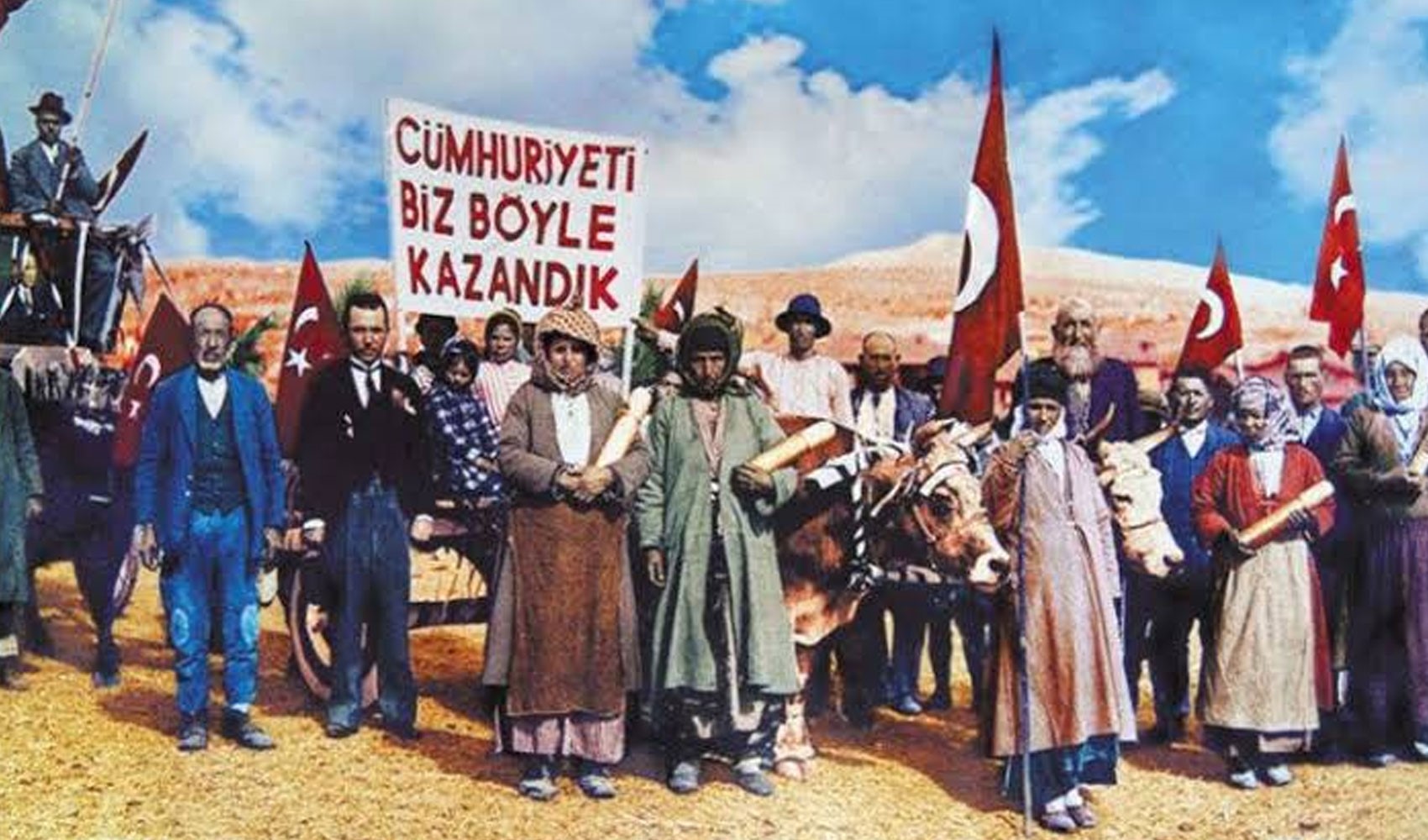
With the Republic, sovereignty was taken from the palace; it cannot be returned to the palace!

The digital era for IDs begins

NEW Party decision from Mustafa Sarıgül!
Striking claim regarding the Erdoğan-Aliyev meeting!
Social media move from Oktay Saral following his resignation