


Neither the Turkic Republics listen to us, nor is anyone asking for our opinion in Syria



US President Donald Trump had made promising remarks to Turkey at the NATO summit held in Ankara last month regarding the lifting of CAATSA sanctions, paving the way for the sale of F-35 fighter jets to Turkey, and the supply of engines required for the domestically produced Kaan aircraft. He has not yet kept his word.
This is a characteristic of Trump. He is not a reliable or predictable leader. He views diplomacy like a merchant. When negotiating, he starts with the highest possible demands. He does not favor inter-institutional meetings, negotiations, relations, or classical diplomacy; he prefers personal relationships, bilateral talks, and leader-to-leader diplomacy. He is inconsistent. One day he praises someone, and the next day he drags them through the mud, belittles them, scolds them, or even insults them.
THE US'S STEPS IN THE MEDITERRANEAN
The US, which has not kept its promises to Turkey, softened and partially lifted the arms embargo it had imposed on the Republic of Cyprus (ROC) since 1987 in 2020, and completely lifted it in 2022. Not content with this, the US signed a military cooperation agreement with the ROC in 2024 and hosted its leader at the White House. The ROC, which was granted the path to purchase weapons from the US in 2024, has also been further developing its relations with France recently. While there are two British bases in the southern part of Cyprus and the US uses these bases when necessary, the US and France have signed separate base agreements with the ROC. The ROC's relations with Israel are also quite good, as they are with Qatar. Relations between Greece and France have also been quite warm in recent years.
While all these concrete developments are evident, Turkey has largely lost its sensitivity regarding the "Blue Homeland." Drilling ships and seismic vessels have been withdrawn from the Eastern Mediterranean.
Among these developments, the most distressing one is that the four Turkic states in Central Asia (Kazakhstan, Uzbekistan, Turkmenistan, Kyrgyzstan), which do not officially recognize the TRNC as a state, have developed relations with the ROC and opened embassies in exchange for financial support from the European Union. By this recognition, since they recognized the Republic of Cyprus as the representative of the entire island, they rejected the existence of the TRNC, even if they claim otherwise.
No matter what anyone says, no matter how you look at it, the attitude of these four friendly and brotherly states cannot be explained solely by their disloyalty or disrespect toward Turkey's sensitivity on this issue. Besides this, one must also see the failure of Turkish foreign policy. If Turkey has not been able to convince others, let alone the Turkic states, on a subject where it is most justified and legitimate—like the Cyprus issue—and if it has not been able to prevent these states from developing relations with the ROC and opening embassies, this is a major failure on behalf of Turkish foreign policy.
Moreover, the failure in the Mediterranean is not limited to Cyprus. There is more.
WHO ARE THOSE EXCLUDING TURKEY IN SYRIA?
Turkey is persistently excluded from meetings organized by Europeans regarding Syria. Turkey's opinion is not asked. So much so that even Qatar, our closest ally in the Arab world, where we have established bases and sold significant assets, does not hesitate to be part of moves that exclude Turkey in Eastern Mediterranean energy projects and to cooperate with Greece and the Republic of Cyprus.
Much has changed in Syria since the days when former Prime Minister, former Foreign Minister, former AKP Chairman, and leader of the now-dissolved Future Party, Ahmet Davutoğlu, could not contain his momentum and said, "No bird flies in the Middle East without our knowledge," "We know the Middle East street by street, inch by inch," and "We are the owner, pioneer, and spokesperson of the Middle East being established," while aspiring to be a subcontractor on behalf of the US. The regime has changed. The government has changed.
So let us ask: Have we been able to get what we wanted?
Israel, which most recently attacked the Abu al-Duhur Military Airport located east of Idlib in northern Syria, Israel, the supporter of the PKK-PYD-YPG terrorist organization, Israel, which has seized the Golan Heights—which is Syrian territory—and which attacks Syria and rolls its tanks whenever it pleases, Israel, which wants to divide Syria into four (Kurdish, Alawite, Arab, Druze); has gotten what it wanted. It is still getting it.
Does Israel, which uses very harsh words against Turkey, has the great support of the US behind it, and also has the backing of the three major powers of Europe (Germany, UK, France), get this courage only from the imperialist countries behind it? Or does Turkey's ineffectiveness in the Turkic world and the Arab world, alongside this support, also embolden Israel?
If we take into account the level of Israel's relations with Azerbaijan while answering this question, we will have a more accurate answer.
Would you like to get notifications about new developments and save news?
- NotificationsNew developments and breaking news
- SaveNews is stored in the app
Most Read

Video response to Kim Jong-un claims

Murat Ağırel’s police statement has been revealed
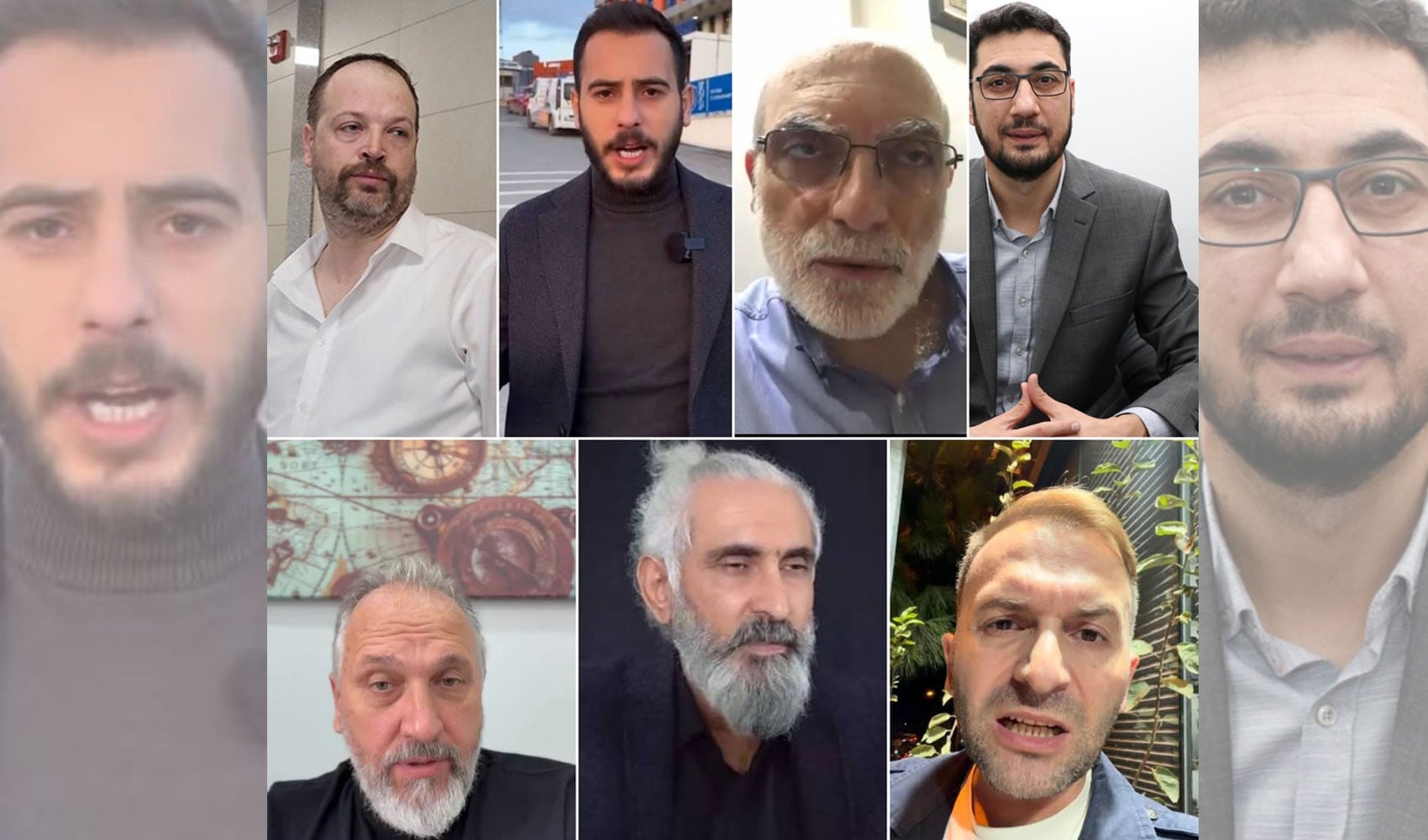
Azerbaijan issues arrest warrants in absentia for 7 people living in Turkey

The Orionid meteor shower will be visible from Turkey!
The penalty for Ronaldo, who left the national team camp, has been announced

Fatoş Seğmen reveals the cause of her daughter's death

Latest status in the race between AKP and YENİ Party revealed

Injury shock at Liverpool: He may miss the Fenerbahçe match

Who authorized the concert held in a parking garage?

From brotherhood to a distant partnership...