


'Food terrorism': We are hungry while 'full'!



Imagine walking through a supermarket. You are browsing the shelves. The overwhelming majority of the shelves are filled with packaged ''food''. Most of these ''foods'' are sugary products. There are supplier companies that place those products on the shelves. These companies also supply other products in the market. Almost all products pass through the hands of these supplier companies. Let's say you care about society. You are aware of oil companies, pharmaceutical companies, and arms companies. But what about these food companies... What about these supplier companies? What is written about these companies? What fraction of all articles is devoted to this subject? How many parliamentary questions have been submitted to the Parliament?
So, what are the problems experienced by people who consume these companies' products and what are the social consequences of this consumption? Are these unimportant? We have mentioned this before; the consumption of these products brings with it metabolic syndrome, low quality of life, weakening of cognitive skills, even a tendency toward crime, and finally criminal activities, an increased burden on the health system, and many other problems.
There is an even more fundamental problem that is overlooked. Let's look at Article 25 of the Universal Declaration of Human Rights: ''Everyone has the right to a standard of living adequate for the health and well-being of himself and of his family, including food, clothing, housing and medical care and necessary social services, and the right to security in the event of unemployment, sickness, disability, widowhood, old age or other lack of livelihood in circumstances beyond his control.''
Our people, especially our poor, cannot get proper nutrition. And it is not just because of a lack of money. They cannot get proper nutrition because of the ''food''-like items offered to them as ''cheaper'' alternatives. Metabolic syndrome is, in essence, also a result of the body not receiving the nutrients it needs despite eating enough food to feel full. People are being kept metabolically hungry by force and deception, and what's more, they are being charged money for it and given a temporary feeling of fullness. People's right to nutrition is being violated. Although the state has the obligation to inspect these ''food''-like items under various laws, primarily the Public Health Law, people cannot benefit from the state's protection. The damages resulting from the consumption of these foods are borne by the entire society, especially the poor.
A news item: In Ankara's Yenimahalle district, fake food with a market value of 35 million liras was seized by teams from the Provincial Gendarmerie Command and the Provincial Directorate of Agriculture and Forestry. According to the news, some of these substances were fake margarine. While we are on the subject, is margarine really a food? Margarine is a poison that looks like food. However, the state, which shows sensitivity to fake margarine, is unfortunately insensitive to this poison that keeps the poor ''full'' instead of real fats. This operation is proof that there is a legal basis for the state's responsibility. However, the state keeps its responsibility regarding these companies' ''food''-like items out of mind.
It is necessary to wage a legal and political struggle against these poisons and foods that are not ''food''. Since we import everything from the USA, I would like to give a few examples from the USA on this subject.
It is useful to mention a few lawsuits filed against junk food companies in the USA:
1) Pelman v. McDonald's Corp. (2002)
Parents claim that McDonald's products caused their children to become obese and face various health problems. At the end of the trial, it is ruled that the company engaged in misleading advertising.
2) Kellogg's Frosted Mini-Wheats (2009)
Kellogg's is sued for its advertisements claiming that this product increases children's attention by approximately 20 percent, and eventually, a settlement is reached by paying 4 million dollars. Meanwhile, the advertisement is also changed.
It is not just companies that have been sued. Institutions that do not properly inspect harmful foods, especially junk food products, have also been sued. Let's recall a few:
1) Center for Science in the Public Interest (CSPI) v. U.S. Food and Drug Administration (FDA) (2004)
The Center for Science in the Public Interest (CSPI) sues the U.S. Food and Drug Administration with the request to ban foods containing artificial trans fats. As a result of the lawsuit, the FDA requires that a type of fat found in most of these products, which is the main source of artificial trans fat, no longer be presented without the label ''generally recognized as safe''.
2) Organic Consumers Association v. U.S. Food and Drug Administration (FDA) (2016)
Upon the Organic Consumers Association filing a lawsuit against the FDA for allowing the use of synthetic ingredients in organic foods, the FDA had to mandate higher standards. However, the necessary policy changes were not implemented.
3) The Humane Society v. U.S. Department of Agriculture (2018)
The Department of Agriculture was sued as a result of compromising standards regarding the conditions of animals in organic farming. The lawsuit is still ongoing.
The lawsuits and the struggle continue. But we are late. While generations are being wasted as a result of malnutrition and inadequate nutrition, we are trapped in an agenda woven with ordinary events. We must remember and remind that the essence of political struggle is to be able to make progress on the issues of the ordinary person's livelihood, survival, and ideally, living a human life.
Would you like to get notifications about new developments and save news?
- NotificationsNew developments and breaking news
- SaveNews is stored in the app
Most Read

Video response to Kim Jong-un claims

Murat Ağırel’s police statement has been revealed
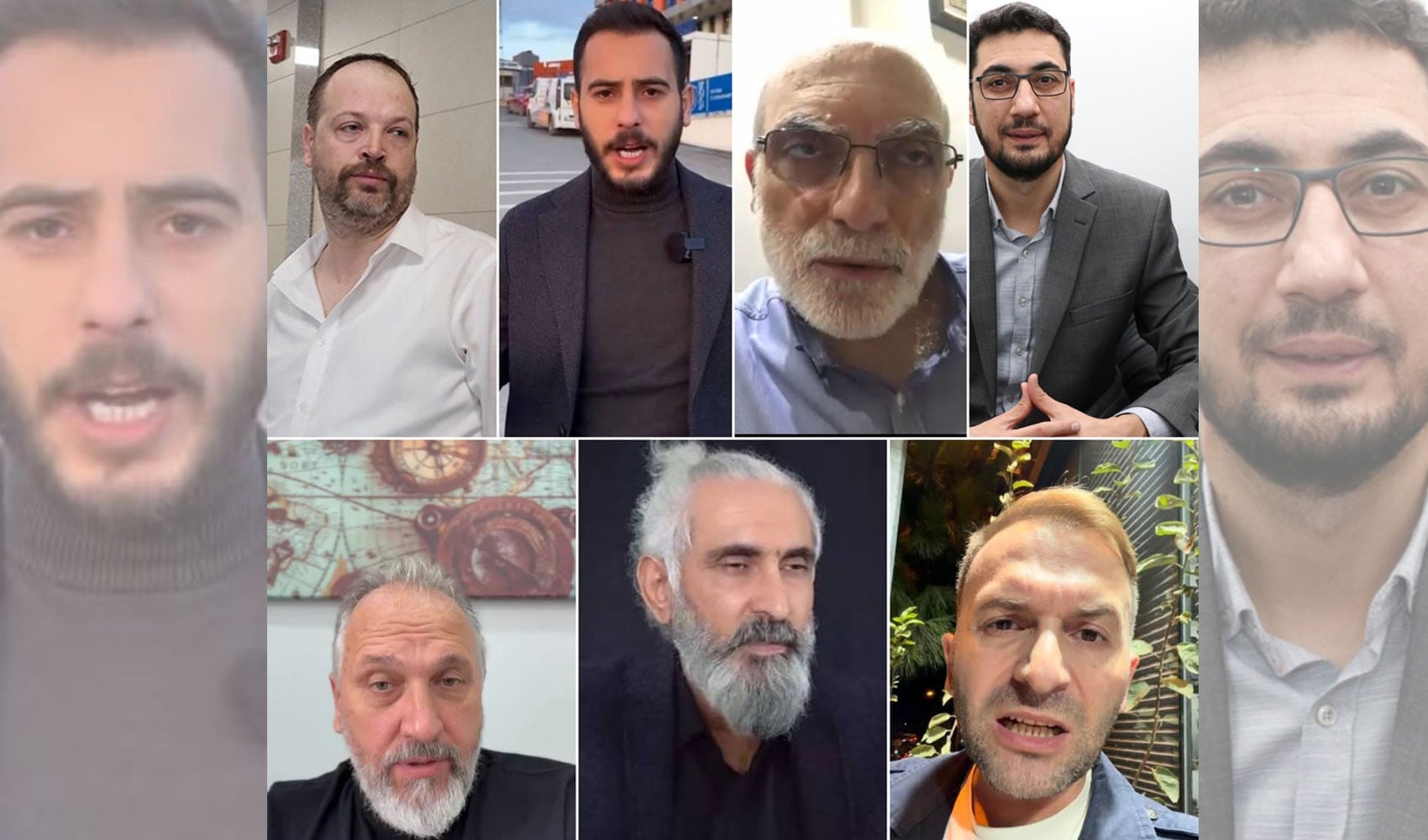
Azerbaijan issues arrest warrants in absentia for 7 people living in Turkey

The Orionid meteor shower will be visible from Turkey!

Fatoş Seğmen reveals the cause of her daughter's death

Latest status in the race between AKP and YENİ Party revealed

Injury shock at Liverpool: He may miss the Fenerbahçe match

Who authorized the concert held in a parking garage?

From brotherhood to a distant partnership...

Acting mayor of Üsküdar has been determined