


Children, the window dressing of politicians



The peak of the media using images of children and babies as “window dressing” was the earthquake coverage. Disaster news was made even more traumatic with images of children and babies.
Given this, it was natural that the mainstream media paid no attention when the then-Minister of Transport and Infrastructure, Adil Karaismailoğlu, pulled back the hood of one of the children lined up in front of the podium while President Erdoğan was speaking in the earthquake zone. They simply broadcast the child's face becoming visible as if it were a normal image.
At the time, I criticized Karaismailoğlu’s behavior, describing it as the “instrumentalization of children.” I reminded that publishing their images violates the privacy of children and babies; I drew attention to the dangers created by digitalization; and I warned that the “digital footprints” created would follow them for life.
Unfortunately, children were also used as political material before these local elections. At the opening of the Çekmeköy-Sultanbeyli metro line, children were lined up on the podium alongside Istanbul Metropolitan Municipality Mayor Ekrem İmamoğlu and CHP Chairman Özgür Özel, and their images were broadcast. Images of children were also used in the promotion of the Municipality’s “Support for Children” project.
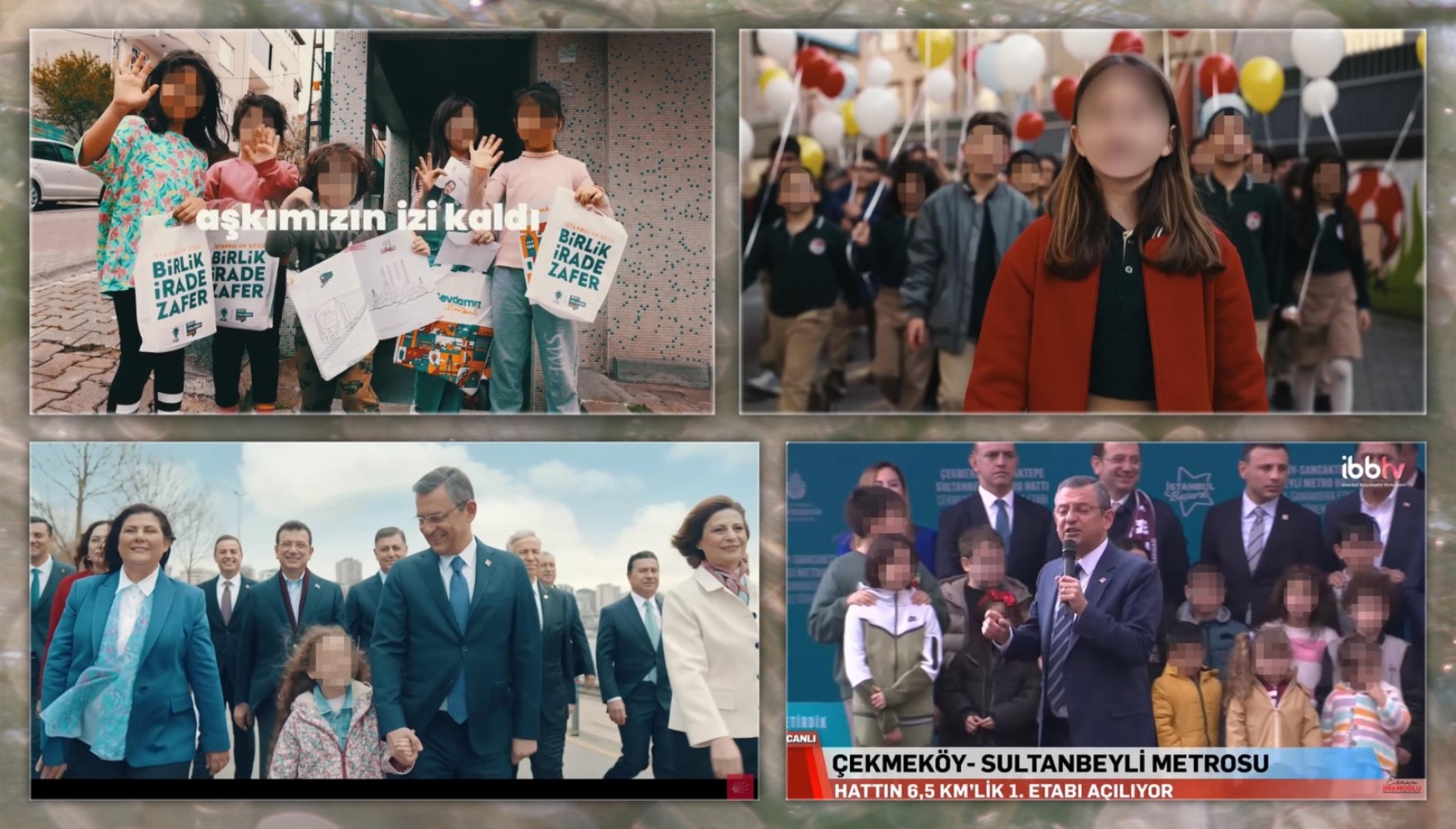
Children are also in the leading roles in the campaign videos of Özgür Özel and the AKP’s Istanbul Metropolitan Municipality mayoral candidate Murat Kurum. It is very sad that both political lines see no harm in using the innocence of children as political material and do not feel the slightest concern about the negative consequences these images will create for those children in the future.
I suppose they are not aware that we are in the digital age and how widespread child pornography is in the world. I guess they have also not seen the news reports about photos and videos produced with “artificial intelligence” pouring in from all over the world in the media.
WHAT WE CAN LEARN FROM THE “MEDIA FREEDOM ACT”
The European Parliament passed two laws last week that are also of close interest to the media. One of these laws, which the Turkish media did not show interest in, is about “Artificial Intelligence.” This law, which has the distinction of being a “first,” brings text, photos, videos, and all data used in artificial intelligence applications under the scope of copyright law. Furthermore, deepfake photos, videos, or audio produced by artificial intelligence will be labeled as “manipulated.”
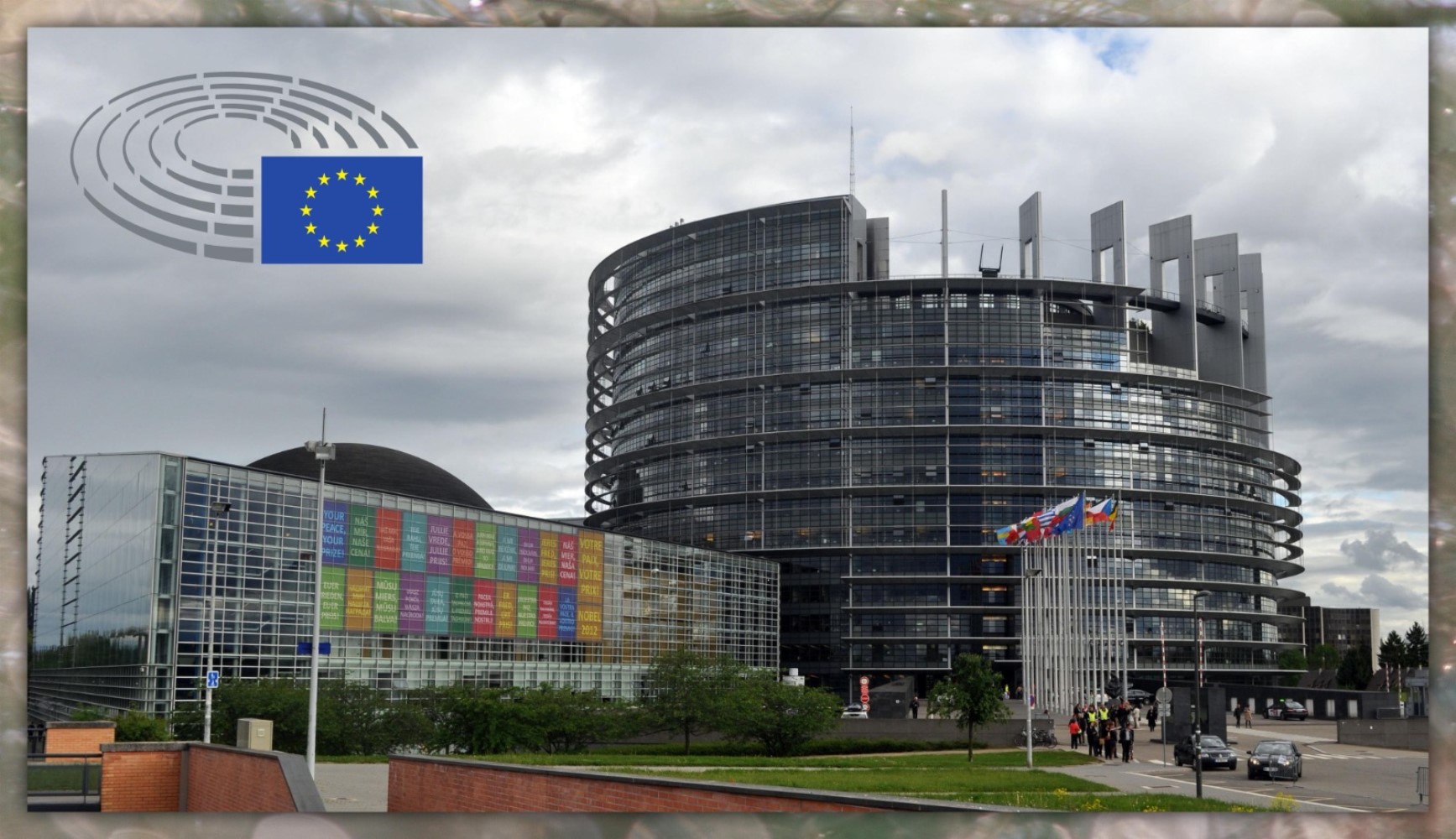
The other regulation that the EP has put into effect is the “European Media Freedom Act.” This law also aims to protect journalists and their sources, prevent political interference in editorial decisions, and prevent the arbitrary surveillance of journalists with spyware. According to Arzu Çakır Morin’s report on VOA, the important innovations included in the law are as follows:
Transparency will be ensured regarding the owners of all media outlets, including state-owned institutions, to ensure the public knows who controls the media.
Media organizations will disclose the funds they receive from public advertising and state financial aid, including those coming from other countries.
It will be mandatory for the state to publicly disclose its annual advertising expenditures and their distribution according to media organizations.
International platforms such as Facebook, X, or Instagram will not be able to arbitrarily delete content in the media. They will notify the media organization of their intention to remove or restrict content. They will be able to delete or restrict access only after a response is provided within 24 hours.
In fact, these regulations are exactly the innovations that would remedy the flaws in the media order in Turkey. Especially the transparency of the distribution of public resources and media ownership, as well as obtaining a response from the media before blocking access, are essential provisions for media freedom.
I wish the preparatory reports, the discussions on the reports, and the entire law could be examined and taken as a model for a new law in our country....
DOES THE FOOTBALL MEDIA HAVE NO FAULT AT ALL?
I do not think the Trabzonspor-Fenerbahçe match and the subsequent events were a surprise to anyone following the football world.
It was clear that the problems of football in Turkey were becoming blatant, violence in stadiums was becoming increasingly widespread, government interventions were politicizing football management, the hostile language of club managers was also affecting fans, and the federation was remaining inadequate. Ankaragücü president and former AKP MP Faruk Koca punching referee Halil Umut Meler and the events at the Bursaspor-Amedspor match were the manifestations of all these problems.
While alarm bells were ringing in football, the football media was in the position of an ineffective element. The vast majority were integrated with club managers; they were busy being partisan. Instead of seeing and reporting the problems, they had turned into football elites who watched matches while eating and drinking in private boxes and never stopped limiting their journalism to making technical comments on the matches, even if the world were burning.
To understand how much this style dominates the football media, it is enough to look at the sports pages and football programs on TV. The confrontational styles of some football commentators are paving the way for violence in the stadiums. For example, Rasim Ozan Kütahyalı’s speech and hand gestures in the program on Beyaz TV before the Trabzonspor-Fenerbahçe match were provocative.
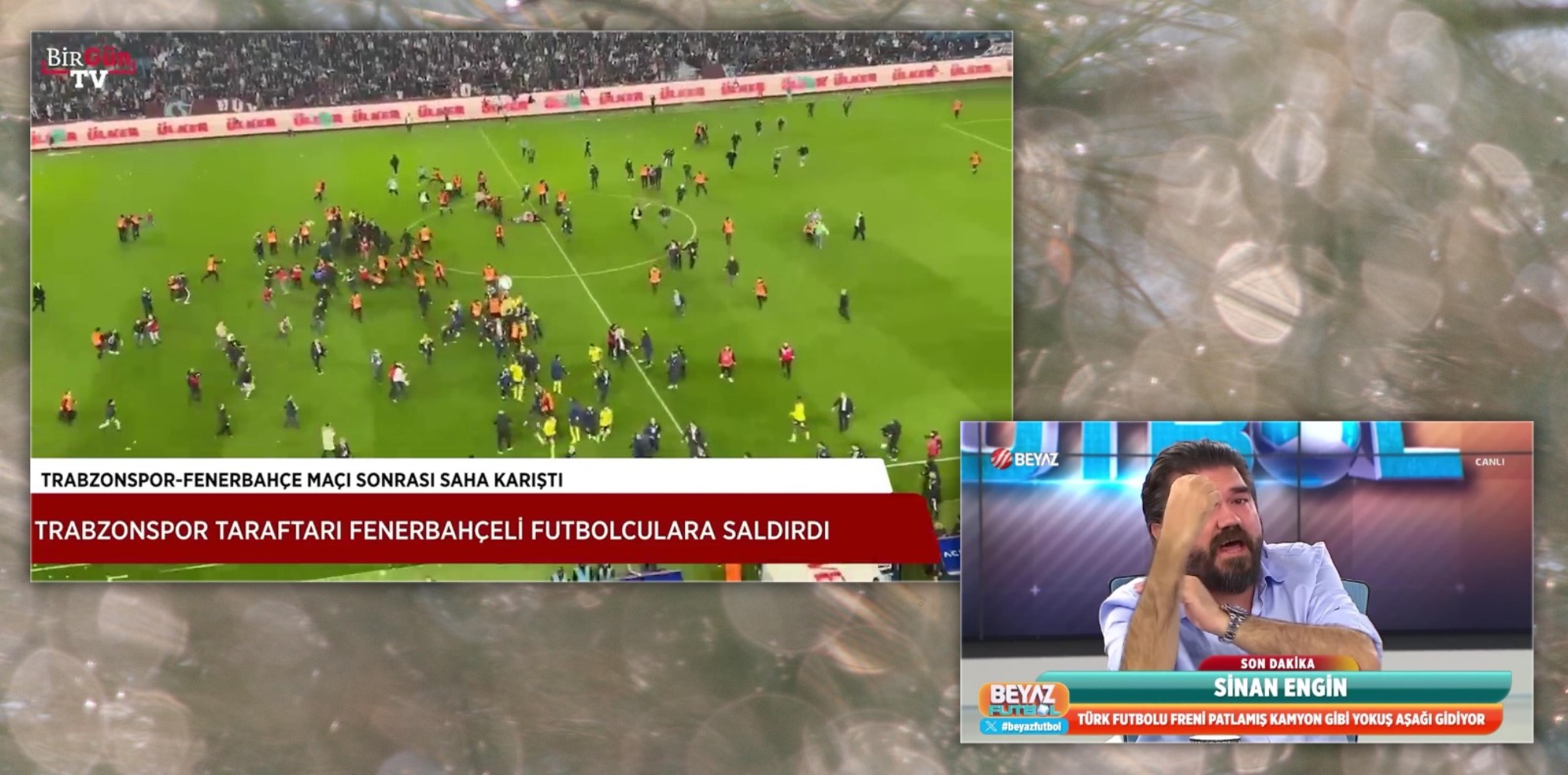
Moreover, it was clear that incidents occurred in almost every match Fenerbahçe played in Trabzon. But the football media, which said there were insufficient security measures on the field after the match, did not make any warning broadcasts about security before the match. They were as negligent as the Trabzon police.
The attacks during the match were also viewed with partisanship; like the team fans, the football media also took positions according to the team they supported/followed. Galatasaray President Dursun Özbek’s words, “It is time for self-criticism,” also apply to the football media... And without much delay...
DHA STOPS USING “TELEF OLDU” (PERISHED)
It caught my attention in the news story “Barns flooded: Five sheep died”; the Demirören News Agency (DHA) has stopped writing that animal deaths “telef oldu” (perished/were lost).
I still encountered the phrase “telef oldu” in some recent news, but still, their writing that the sheep “died” in the news about the flood disaster in Şırnak is an important change. Because it means that DHA has moved away from the understanding that views animals as objects and property.
I looked at the news from Anadolu Agency and İhlas News Agency, and unfortunately, the use of the term “carrion” (leş) as well as “telef oldu” continues there. I hope they also accept that animals are “living beings” and stop writing that animal deaths are “telef oldu.”
If the language of news agencies changes, the language of the media will also be cleaned up. Because most media outlets publish agency news exactly as it is without changing the language. Journalism that views animals as wasted property cannot contribute to the love of animals; it cannot defend the right to life of animals.
THE NONSENSE OF “TRAFFIC ACCIDENT APPEARANCE”
“Traffic accident appearance” (trafik kazası süsü) is one of the unchanging cliches of our media. Its use has become even more widespread recently. This cliche most recently caught my attention in the news about the murder of AKP Develi District Deputy Chairman Eyüp Arslantürk. When the news reported by AA and DHA said “traffic accident appearance,” media outlets also used that phrase for this murder news.
It is possible to encounter dozens of “traffic accident appearance” news stories on the internet. Just in the last two months, news stories such as “She killed her husband and gave it the appearance of an accident!” (Habertürk), “Murder given the appearance of an accident solved after 5 months” (NTV), and “Chronology of a murder given the appearance of an accident” (Bianet) have been published.
I wonder how a “traffic accident appearance” is given, how do they decorate the vehicles? Do they attach colorful ornaments here and there on the overturned vehicles? I wish the journalists who write these news stories would think about these questions; they would realize how ridiculous the “accident appearance” cliche is.
The correct way is to write “traffic accident look” (trafik kazası görünümü). Because those vehicles are not being decorated; they are being made to look like they had an accident; that is what is being done. Indeed, Milliyet internet wrote “traffic accident look” in its second news story about the Eyüp Arslantürk murder.
Besides the responsibility we journalists must feel toward the truth, we also have an obligation to use our language correctly. Unfortunately, our Turkish mistakes do not stay within our circle of friends; they spread to the whole society. Therefore, instead of writing news with such commonplace cliches, we should process our news like embroidery, paying attention to every single word...
In a single sentence:
Yeni Şafak writer Ali Saydam asked, “Why did we reject the project proposed by world-famous director Oliver Stone, who signed the extraordinary work titled ‘The Putin Interviews’, under the name ‘Erdoğan Interview’?”
Cengiz İnşaat took reporters from Akşam, Dünya, Hürriyet, Milliyet, and Sabah as guests to the ceremony for the completion of the excavation work of the Karavanke Tunnel it built in Slovenia; in return, they published extensive promotional “news” in their newspapers.
The half-page promotional text titled “Kocaeli’s dream has come true” by the AKP municipality was published by Hürriyet, Posta, Sabah, and Takvim with the warning “This is an advertisement,” while Akşam, Aydınlık, Ekonomim, Milliyet, Türkgün, Türkiye, Yeni Akit, and Yeni Birlik published it without a warning.
Yeni Akit pushed the boundaries of journalism and decency by hurling insults at the late Cumhuriyet writer Sirmen in the news story “He was an enemy of Islam: The junta members bid farewell to Ali Sirmen.”
Sabah titled the news about a murderer who killed two people 20 years apart “Platonic brutality” and based the murders on the excuse of “platonic love.”
DHA, Hürriyet, and Sabah hid the name of the private hospital in Kayseri accused of causing the death of a woman named Ahu Gültekin in the news story “Rhinoplasty killed.”
Türkiye newspaper discriminated in the news story “My duck was killed lawsuit” by writing “The Armenian-origin owner of the duck...” and confused filing a complaint with filing a lawsuit.
Türkiye newspaper, which does not write the gender of those who fight in traffic when they are men, published the news “Beating from a female teacher to a female driver.”
The three-full-page worker recruitment advertisement of the TBMM Presidency was published only in Sabah.
Yeni Şafak did not grant the right of reply to Canan Kaftancıoğlu, who denied the news “Ask whoever has the manager about the money,” which it wrote as “learned from her close circle”; Yeni Akit also ignored the statement and published the news “Kaftancıoğlu... passed the buck to İmamoğlu.”
Akşam (Bağcılar/Haliliye), Hürriyet (İzmir), Milliyet (Bursa/Karatay), Milat (Karatay), Sabah (Ümraniye/Konya), Türkiye (Konya), and Yeni Şafak (Yahyalı/Haliliye) published full-page promotional texts that looked like news from municipalities.
FOR YOUR CRITICISM, COMPLAINTS, AND SUGGESTIONS: [email protected]
Would you like to get notifications about new developments and save news?
- NotificationsNew developments and breaking news
- SaveNews is stored in the app
Most Read
Video response to Kim Jong-un claims

Murat Ağırel’s police statement has been revealed

The Orionid meteor shower will be visible from Turkey!

Fatoş Seğmen reveals the cause of her daughter's death

Latest status in the race between AKP and YENİ Party revealed

Injury shock at Liverpool: He may miss the Fenerbahçe match

From brotherhood to a distant partnership...

Who authorized the concert held in a parking garage?
Acting mayor of Üsküdar has been determined
Good news from Izmir, may Istanbul be next