


Journalists who tweet for money



If the İhlas Group hadn't learned about the investigation into Cem Küçük in advance, they likely wouldn't have terminated his employment at TGRT Haber and Türkiye just four days before he was taken into custody.
Then they erased him so thoroughly that they didn't even report on Cem Küçük's arrest. Figures he used to host programs with, such as Fuat Uğur, Fatih Atik, and Tuna Öztunç, have also stopped mentioning his name.
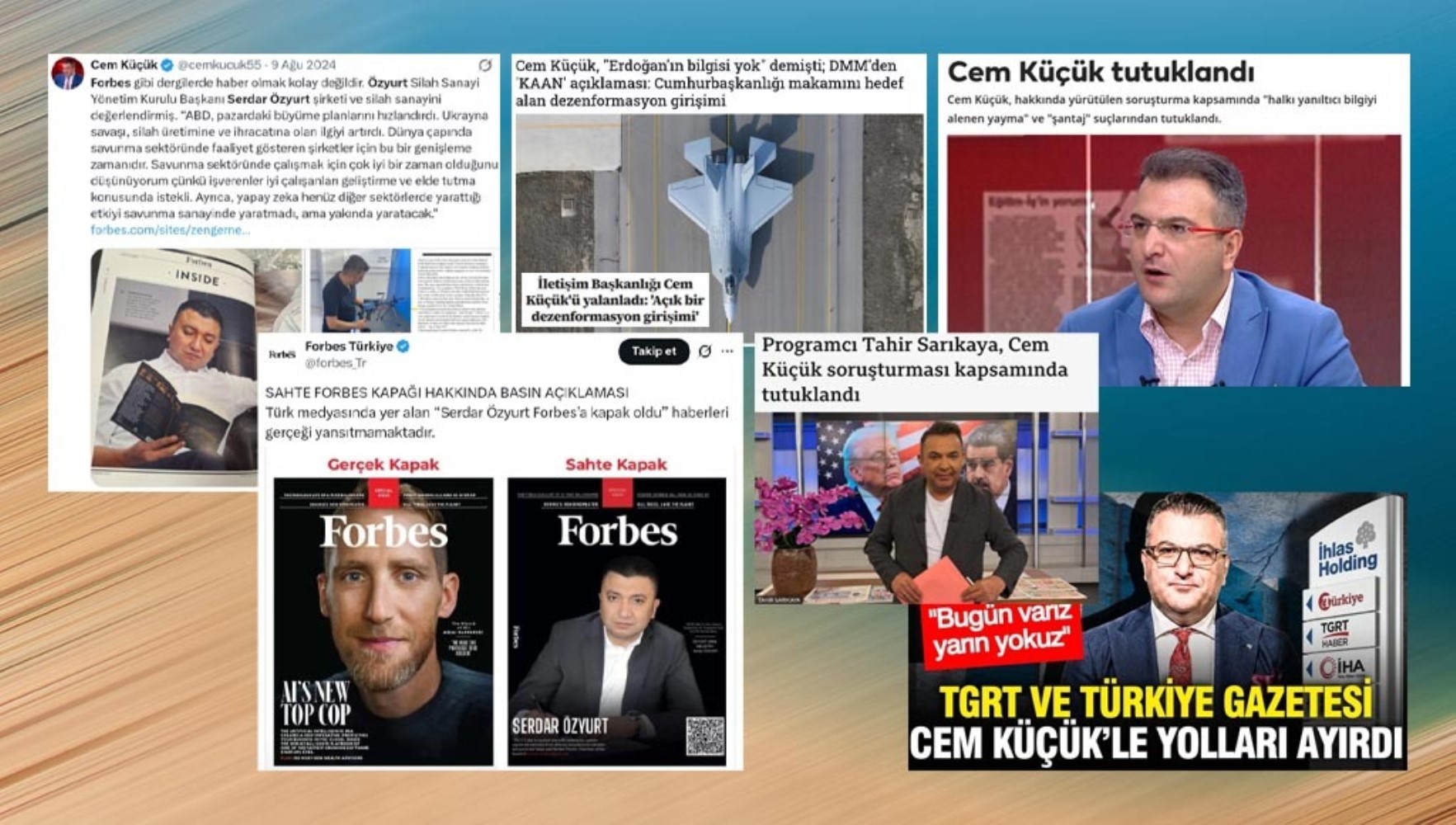
Since they haven't even attempted to defend him, they must believe that Cem Küçük is guilty or at least at fault. In that case, they need to be held accountable for the wrongs committed in the name of journalism. Not mentioning his name does not absolve them of their obligations to their readers and viewers.
In the pro-government media, only Ahmet Hakan wrote about him, and while it was negative, he described the sight of him being led between two gendarmes as a “walk of shame.” Cüneyt Özdemir also characterized the release of this footage as “discrediting”; however, he repeated the mistake by broadcasting the very footage he opposed. No one taken into custody, not just Cem Küçük, but also Deniz Göktaş or CHP mayors, should be paraded in such a manner.
Cem Küçük denied the accusation in his statement that he received money from business people to post on social media, but he admitted he hadn't read the indictment or the MASAK report when he said, “2 million dollars in cash was found in Fatih Keleş's house, bundles of cash, and the man isn't even denying it,” and “MASAK reports show nearly one million transferred from the Istanbul Metropolitan Municipality (İBB) to Berkay Gezgin's account.”
For some reason, the post from two years ago claiming “business person Serdar Özyurt was on the cover of Forbes magazine” was not asked about by the prosecutor's office. This error was published not only by Cem Küçük but also by Sabah, Halk TV, and Odatv, and Ahmet Hakan had praised this person in his column, saying he “appeared on the cover of Forbes.” After Forbes denied it, neither Cem Küçük nor Ahmet Hakan corrected what they had written.
Interestingly, a connection emerged between Serdar Özyurt and Tahir Sarıkaya, who had financial dealings with Cem Küçük and was arrested in the same investigation. In his statement to the prosecutor, Tahir Sarıkaya admitted to receiving money from Serdar Özyurt 64 times for “promotional and PR work and Instagram posts.” Sarıkaya claimed the total of 537 thousand liras he sent to Cem Küçük “could have been payments for openings and programs they attended.” He said, “I did not send money in exchange for tweeting or making news,” but he also described introducing Cem Küçük to business people and lawyers.
Of course, the judiciary will decide whether they committed a crime, but even the money traffic that Cem Küçük and Tahir Sarıkaya admitted to in their statements is ethically grave. There are strong indications that two figures who became famous in the pro-government media used their positions for personal gain.
Although Tahir Sarıkaya is not a journalist, but a TV programmer and presenter. Cem Küçük was also a TV commentator and writer who owned a shoe company until recently; whether it is accurate to call him a journalist is also debatable. A journalist does not enter into financial relationships with news sources. They do not attend events for money, do not report news, do not use influence, and do not make posts for pay.
Unfortunately, posting for money and attending openings has become very common among journalists. Some journalists have made it a habit to act like PR agency employees and social media influencers. One cannot be a journalist if they take money to write articles, advertise, or lie.
I am monitoring the journalists who tweet for money, and I will write about them with concrete examples.
The headline that whitewashes killers
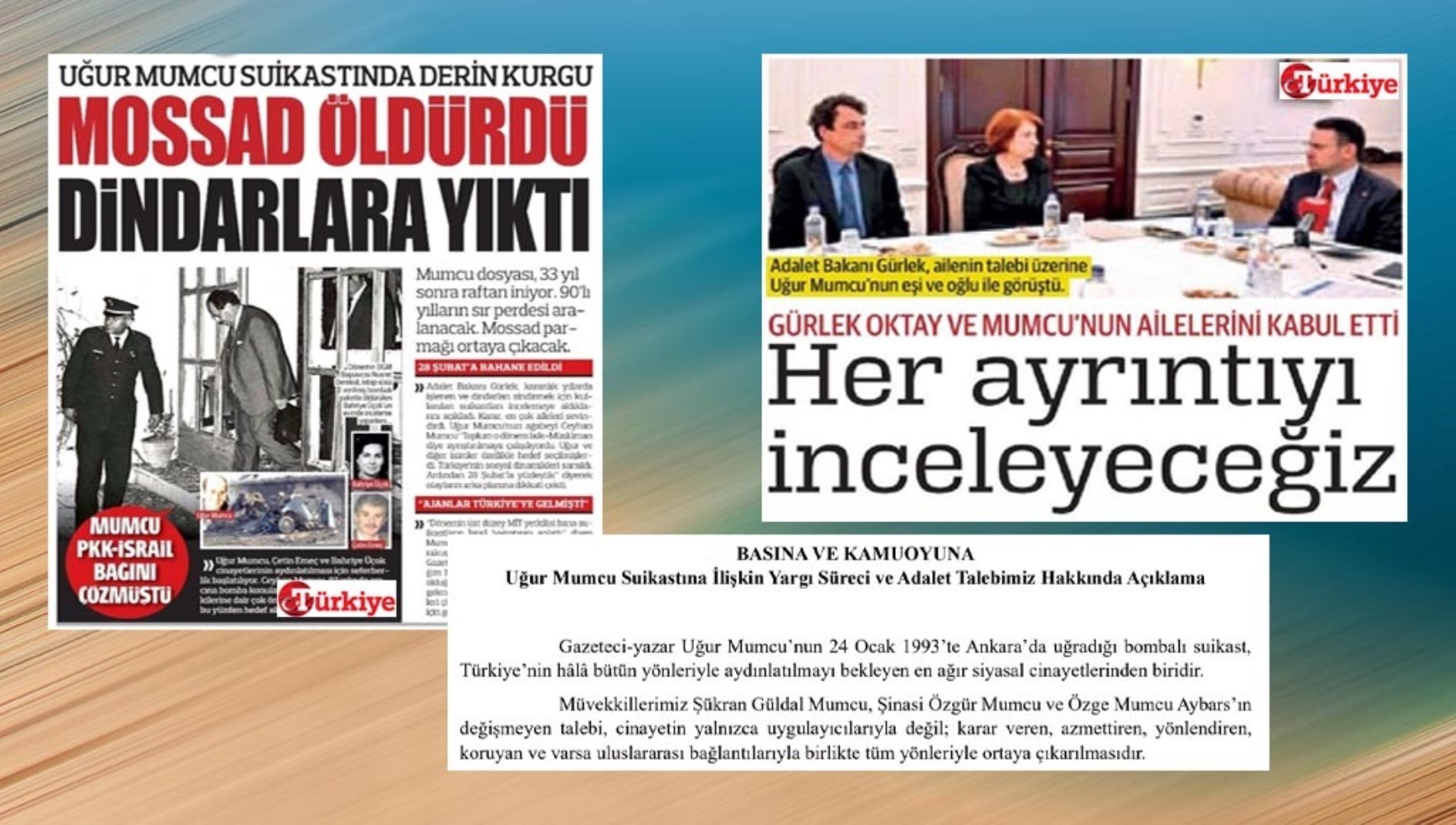
Following the Ministry of Justice's announcement that it would reopen the file on the murder of journalist Uğur Mumcu, the newspaper Türkiye ran the headline last week: “Deep plot in the Uğur Mumcu assassination: MOSSAD killed him and blamed it on the pious.”
This headline, bylined by Yılmaz Bilgen, was based on the words of Uğur Mumcu's brother, Ceyhan Mumcu, and retired Lieutenant General Erdoğan Karakuş. However, these claims were not new. Ceyhan Mumcu had been expressing the same view for years. Erdoğan Karakuş had also voiced the “MOSSAD claim” on Haber Global three years ago and had repeated it several times since.
In fact, the lawyer for one of the defendants, Ferhan Özmen, had requested a retrial based on Karakuş's words, but the court rejected this request. The court had evaluated Karakuş's claim as “personal inferences and opinions not supported by concrete facts.”
In the Türkiye newspaper report, the claim rejected by the court was presented as if new evidence had been found years later, without mentioning past debates or the court's decision, thus distorting the truth. Furthermore, language containing a verdict was used, calling it “the Uğur Mumcu assassination blamed on the pious,” and it strayed from objectivity. The report, written without providing any information about the court decisions and the trial process regarding the Uğur Mumcu murder, turned into a text that defended the defendants and tried to whitewash them.
The Uğur Mumcu murder is not an unsolved crime. The parts that remain unilluminated are those who instigated the murder and those who directed the killers. In its decision, which was never mentioned in the Türkiye newspaper report, the Ankara 11th High Criminal Court accepted that the Uğur Mumcu murder was committed by members of the Iran-linked Tevhid-Selam/Jerusalem Army; it convicted Ferhan Özmen, who prepared the bomb, and Necdet Yüksel, who acted as a lookout. The trial of Oğuz Demir, who was determined to have planted the bomb, is ongoing at the Ankara 5th High Criminal Court; he is still a fugitive and lives in Iran.
The publication of such a report by Türkiye caused concern for the Uğur Mumcu family. In the family's written statement, it was emphasized that this report “makes the responsibilities established by finalized judicial decisions a matter of debate.” Due to this concern, they met with Minister of Justice Akın Gürlek and expressed their desire for “all connections to the murder to be revealed.”
Türkiye newspaper, however, did not publish the Mumcu family's statement, nor did it correct its report. Under these circumstances, it is very difficult to say that the headline was prepared solely out of journalistic concern.
Why is that politician's identity hidden?
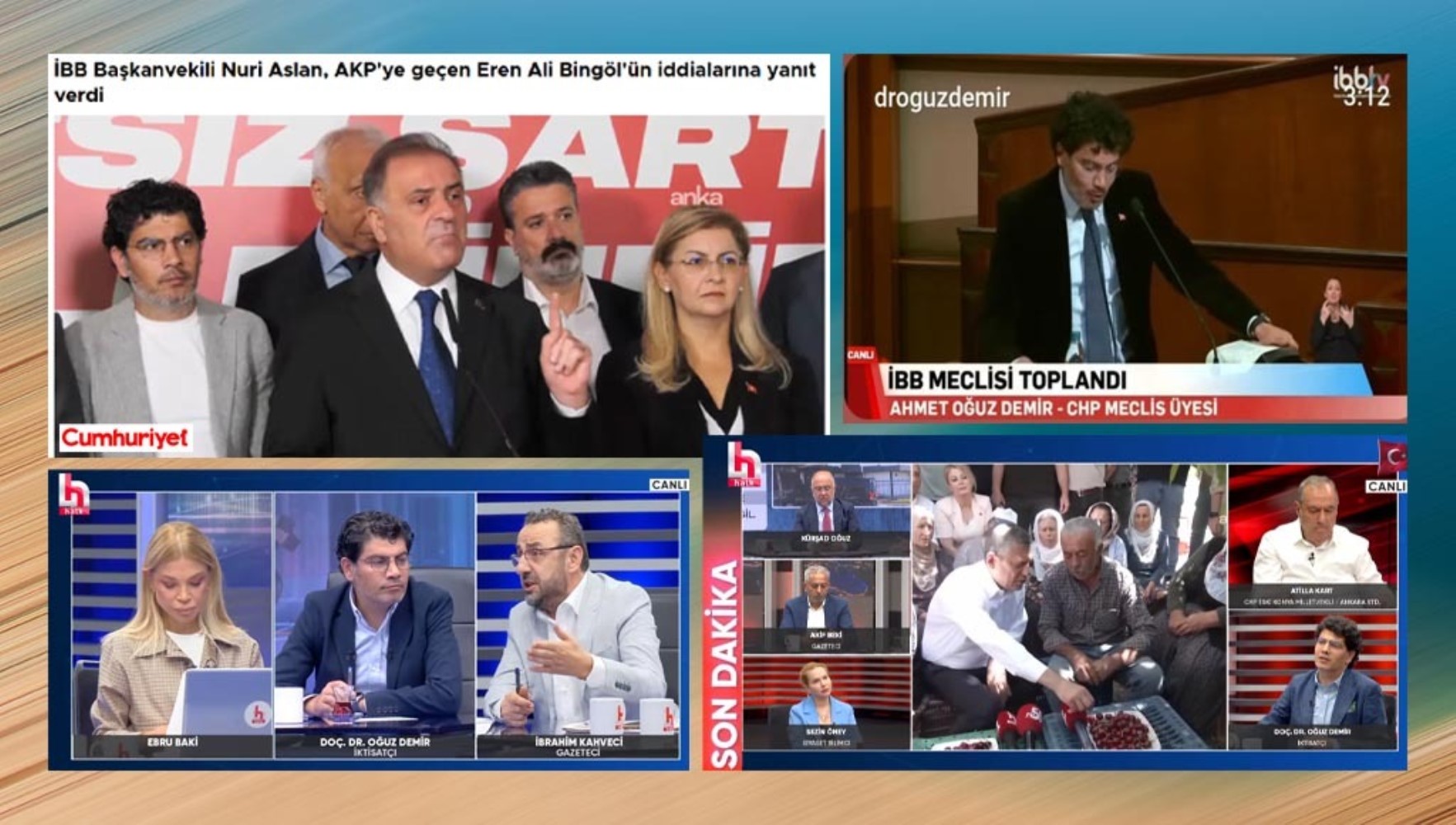
While Istanbul Metropolitan Municipality Deputy Mayor Nuri Arslan was holding a press conference, Assoc. Prof. Dr. Oğuz Demir was standing right to his right.
His presence there is natural. Because Oğuz Demir is currently the Chairman of the İBB Planning and Budget Commission and a member of the Şişli Municipal Council. He has been elected to the Municipal Council from the CHP list for two terms.
Despite having such a political role, he is presented to viewers on screens as an “Economist.” Oğuz Demir, who has previously hosted programs on Sözcü TV, continues to provide evaluations on economic and political issues on Halk TV screens.
For example, while discussing the use of extras at the CHP's membership participation ceremony and the detention of Üsküdar Mayor Sinem Dedetaş, the screen read “Assoc. Prof. Dr. Oğuz Demir / Economist.” Yet he is speaking there not as an economist, but as a politician. Writing “Economist” and hiding his political identity is misleading the viewer.
Halk TV has no right to mislead its viewers. The drawback of not explicitly stating that Oğuz Demir holds such a political office is clear: the viewers are being misled. There should be no drawback to stating it, for both Halk TV and Oğuz Demir…
We know it as “Sebte”
The migrant influx toward Spain's autonomous region in North Africa has been in the media for days. Unfortunately, the media covers this humanitarian tragedy not in terms of the hopes, disappointments, misery, and deaths of thousands of people, but in terms of its political effects and the crisis it has created.
It breaks one's heart to see people who crossed the border with hope being stoned and subjected to violence by Moroccan police while returning because they could not find food or shelter. They were neither accepted in the “European territory” they went to, nor in their own countries they were forced to return to.
The style and content were the same in the Turkish media, which gets its news from the Western media. In the copied reports, they were expressed not with human stories but with total numbers. The reports were so copied that the region was written and spoken of as “Ceuta” in our media.
However, while the current official name of that autonomous region is “Ceuta,” its name in Ottoman documents is “Sebte.” It is referred to as “Sebte” in the Encyclopedia of Islam. When writing news about that place, the most accurate thing to do is to write it as “Sebte” to remind readers of the region's history and present the settlement in the correct context, while noting its official name is “Ceuta” in parentheses.
Indeed, Anadolu Agency, Cumhuriyet, T24, and Hürriyet wrote it this way in their reports. Unfortunately, in most of the media, only the name “Ceuta” was used.
Sözcü and Süleyman Soylu
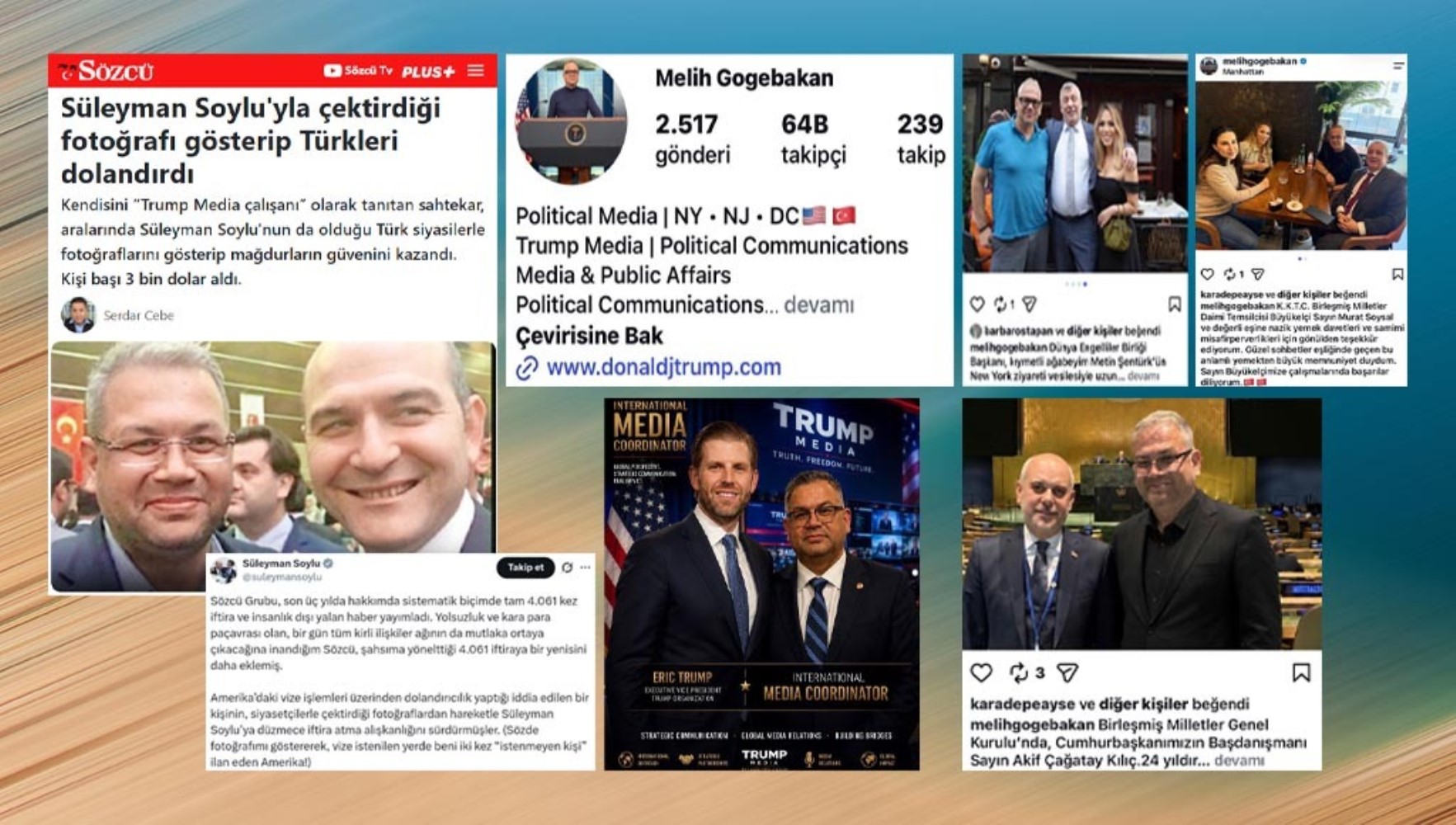
In a report on the Sözcü website, it is said, “He defrauded Turks by showing a photo he took with Süleyman Soylu”; a photo of a person named Melih Göğebakan with Soylu was included.
However, the report did not complete or even verify the information in the headline. It said, “The fraudster, who introduced himself as a Trump Media employee, gained the trust of victims by showing his photo with Turkish politicians, including Süleyman Soylu,” but no other politician's name besides Soylu was given. If photos of other politicians were also used, no information was included in the report explaining why only Soylu's name was carried to the headline.
Yet Göğebakan had put quite a few photos on his Instagram account, where he wrote “Trump Media” in his profile. He had posted photos with many people, such as Presidential Chief Advisor Akif Çağatay Kılıç, sports commentator Ertem Şener, and artists Metin Şentürk and Mahmut Tuncer. However, photos and footage creating the perception that he was closer to Eric Trump and Donald Trump were more noticeable. For some reason, the Soylu photo in the Sözcü report was not there.
Bringing Soylu's name and photo to the headline of this report was unfair. If there is concrete information to accuse him, it should be included in the report; otherwise, news should not be written with baseless implications.
Such incorrect reports also shake confidence in old reports written about Süleyman Soylu whose accuracy has been proven with data. If there is no trust, there is no news.
In a single sentence:
• This week, Hürriyet and Milliyet published news-style advertisements for the Kocaeli municipality; Akşam for Kocaeli and Esenler; Türkiye for Kocaeli and Esenler; Sabah for Esenler; Yeni Akit for Kocaeli, Esenler, and Gaziantep; and Yeni Şafak for Kocaeli, Esenler, and Ümraniye.
• In its report “Leadership staff will be excluded,” Sabah conveyed Abdullah Öcalan's message without using his name, calling it “İmralı's messages regarding the process.”
• Hürriyet coded the diving instructor whose photo it used and whose identity information it provided in the report “Defendant of the fatal dive is in the water again” as “Sunay Y.” and did not seek his opinion against the accusations.
• The pro-government media showed no interest in the report by The Guardian newspaper regarding the microplastic pollution created in Adana by plastic waste sent from the UK to Turkey.
• During the election of the Üsküdar Deputy Mayor, AKP Üsküdar District Chairman Taha Sarıcaoğlu, who wanted to prevent footage from being taken, used scandalous expressions toward Halk TV Reporter Gamze Altunay, saying, “Come, let's talk privately.”
• In Yeni Şafak's report “Clear message from Karabakh,” Azerbaijani Presidential Assistant Hikmet Hajiyev was written as “Presidential Advisor.”
• The word “kareografi” in the headline of Nefes's “Social media liked this choreography” was incorrect; the correct spelling is “koreografi.”
YOUR CRITICISMS, COMPLAINTS, AND SUGGESTIONS
Would you like to get notifications about new developments and save news?
- NotificationsNew developments and breaking news
- SaveNews is stored in the app
Most Read

Video response to Kim Jong-un claims

Murat Ağırel’s police statement has been revealed
Azerbaijan issues arrest warrants in absentia for 7 people living in Turkey

The Orionid meteor shower will be visible from Turkey!
The penalty for Ronaldo, who left the national team camp, has been announced

Fatoş Seğmen reveals the cause of her daughter's death

Latest status in the race between AKP and YENİ Party revealed

Injury shock at Liverpool: He may miss the Fenerbahçe match

Who authorized the concert held in a parking garage?

From brotherhood to a distant partnership...