


Our media brought a non-existent car giant to Turkey



The good news titled “German car giant is coming to Turkey” (Halktv), “German car brand is coming to Turkey” (Haber 7), “Signal for Turkey production from Siegfried Marcus Automobile” (Cumhuriyet), “Turkey signal from German car brand” (GZT), “Automotive giant sets its sights on Turkey” (Sözcü), and “BYD backed out, giant brand is coming to Turkey” (Yeni Akit) had covered every corner of digital media.
These reports spoke of “European type approvals obtained” and “thousands of vehicles produced and delivered to customers.” However, in reality, let alone such an “automotive giant” or thousands of produced vehicles, there is no car brand called “Siegfried Marcus” in Germany.
Siegfried Marcus was an Austrian inventor and engineer. He built a gasoline-powered vehicle in 1870, which was a precursor to modern cars. There is an antique car museum named after him in Austria.
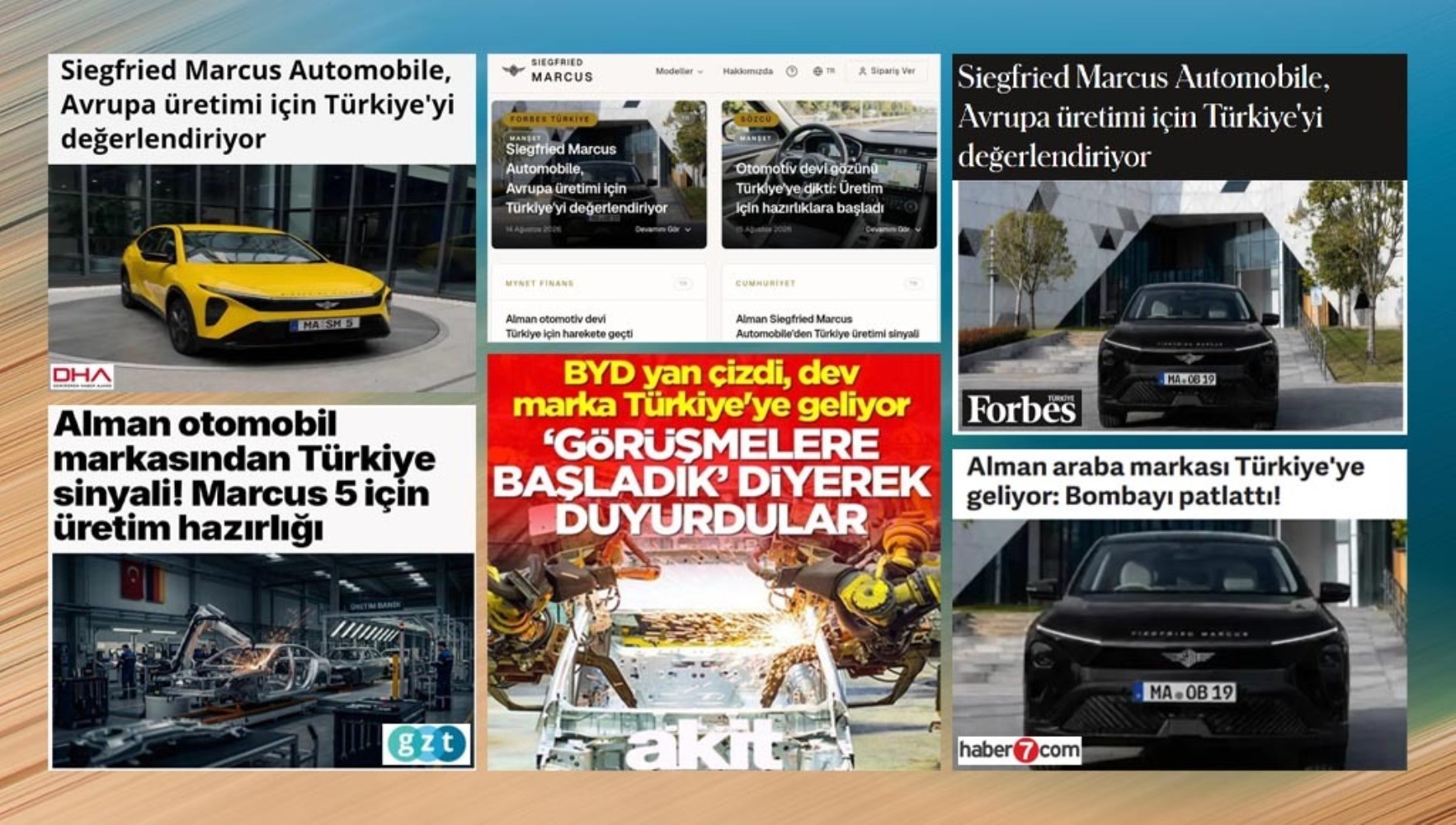
The news, which was published on dozens of sites including Forbes Türkiye, Ekonomim, Otometre, Muhalif, Türkgün, 12Punto, Yeniçağ, and Korkusuz, was first released by the ANKA and DHA agencies one after another on August 14. All of the reports include statements from a person named Özgür Baklan. Özgür Baklan is a person born in Germany who has served as an executive at the family company BAKTAT, a food wholesaler.
In these reports, he introduces himself as the “largest shareholder and co-founder of Siegfried Marcus Automobile.” He talks about investments worth hundreds of millions of euros and technical and commercial negotiations with production partners in three separate production regions in Europe and in Turkey.
According to the Trade Registry Gazette, the name of Özgür Baklan’s company in Istanbul was “Özgür Baklan Global Otomotiv,” and it was changed to “Siegfried Marcus Global Otomotiv” on August 4. Its address is an apartment in Caddebostan. When you search for the company Siegfried Marcus Deutschland GmbH in Germany, all you find is a website called “marcuscar.com.” There is no clear information about the company on this site, which was established last month, other than a relevant phone number and address. The site also features “Order” and “Test drive” buttons.
I also called the phone number on the site and introduced myself as a journalist. I said I wanted to take a test drive. They replied that they did not have vehicles on hand yet, that they would arrive soon, and that official procedures in Turkey were ongoing. They answered the question of “where the thousands of vehicles are” by saying that “five thousand vehicles produced in China are circulating in Asian countries.” To the question “Which Asian country?” I received the answer “In the Himalayas!”
Of course, there is no data regarding these vehicles that are said to be in the Himalayas. The only concrete data is these reports appearing in Turkey that “the German car giant is coming to Turkey.” Indeed, only these news reports are cited as sources on the website.
It is understood that, at best, this is an attempt to market a new project. Ultimately, the media has been used to market a car that does not exist.
I always emphasize that doubt and asking questions are essential in journalism. You cannot accept every statement, every bulletin, and every word that comes before you as the truth and turn it into news. If you report without questioning, you become a tool for someone’s initiatives, even if unintentionally.
The outlets that published Özgür Baklan’s statement did not ask any questions and did not have any doubts. Neither the company nor the car was researched. When you move away from doubt, the result is bad...
Exaggeration in the “second domestic” news
The enthusiasm for a domestic car is so widespread now that every statement and every word on this subject finds extensive space in the media. The news titled “Domestic rival to TOGG begins countdown,” published in the Economy newspaper, also spread rapidly through the media. This news was published on many sites, including Hürriyet, T24, Gazete Oksijen, Sözcü, Son Dakika, and CNBC-e.
The report stated that HABAŞ plans to introduce the domestic car it will produce at the factory it took over from Honda in Gebze to the public by the end of the year. The reason for calling it “'Ferrari' signature on the second domestic car” was that “Frank Stephenson, the designer who signed off on iconic models of giant brands such as BMW, Ferrari, and McLaren,” was involved in the project.
However, automotive writer Emre Özpeynirci approached these reports with caution. He wrote that two years ago, Habaş boss Mehmet Başaran showed him the drawings of the two cars they planned to produce, told him they were getting engines from Volvo, and that production would start at the end of 2025. Özpeynirci said, “More than two years have passed. Now, news is being made that production will start at the end of 2026, with a 1-year delay. I hope it is complete this time.”
Özpeynirci is very right to approach with caution. Let me go back a little further. HABAŞ started its domestic car project in 2021. On September 30, 2021, it was written in the Dünya newspaper that “HABAŞ is preparing to produce a domestic hybrid vehicle.”
Five years have passed and the car is still nowhere to be seen. Therefore, when writing such a story, it would have been necessary to recall this history in detail and write the information about the date based on company officials, not “according to information obtained.”
The mistake of repeating bloody footage
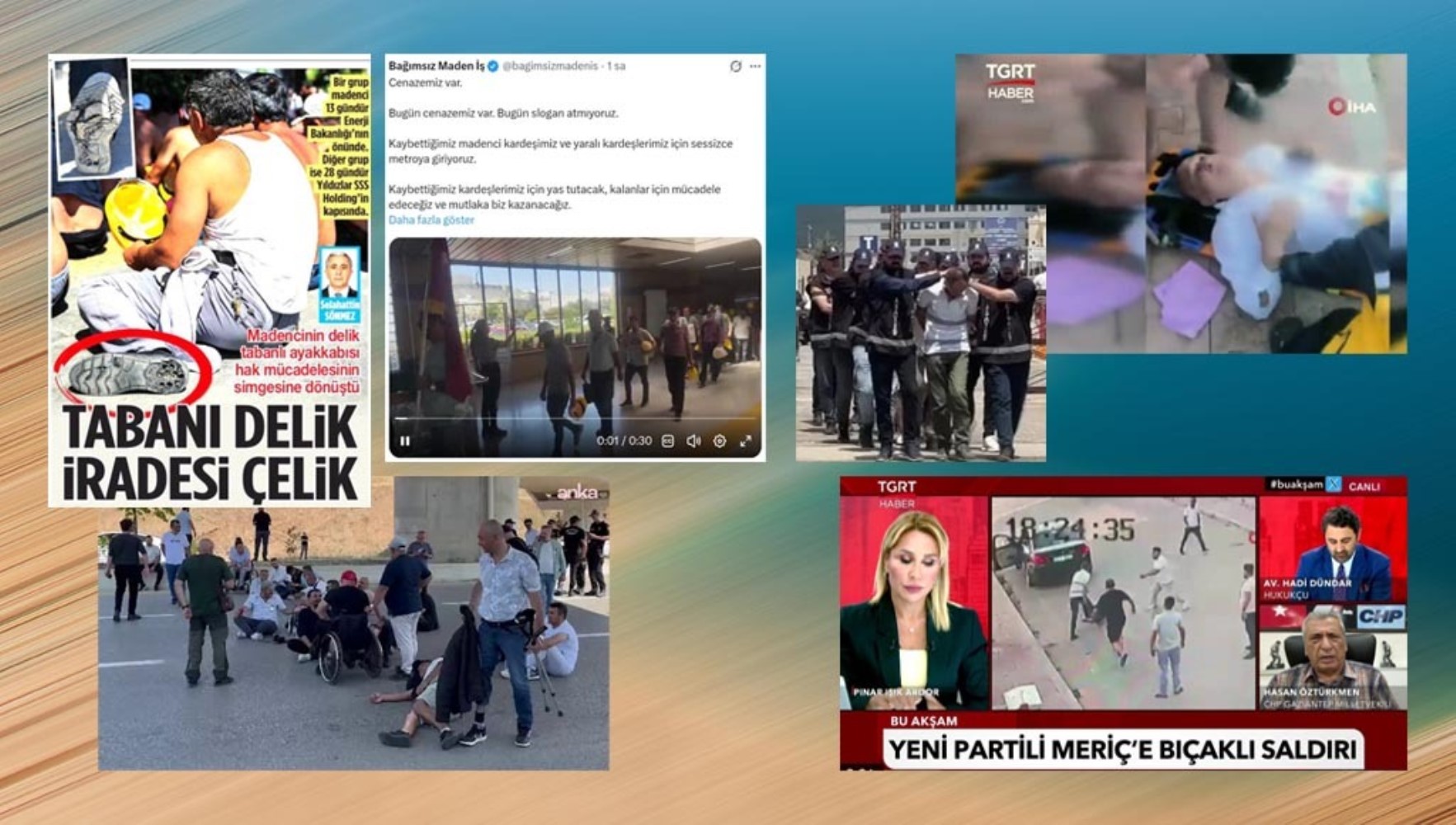
Footage of the moment Gaziantep MP Melih Meriç was stabbed was first published on TGRT Haber and social media; then it spread to news channels. In most televisions, this bloody footage was broadcast without being blurred. And this moment of violence was repeated over and over again.
Broadcasting bloody and violent footage is wrong. Such images should have been filtered out before broadcasting. Broadcasting them this way normalizes violence and creates trauma in viewers.
38 days ago, the “private veteran soldiers” who were protesting in Ankara were also gathered by the police in the early hours of the morning and removed from Güvenpark, after which they continued their resistance on a street in Bilkent. Koza TV was broadcasting live when one of the veterans climbed onto the bridge.
When that retiree shouted “I will jump,” Remziye Demirkol immediately warned the director, saying, “This footage is not appropriate, let’s take it off the screen.” Her attitude was correct. She was aware of the contagious effect of suicide footage.
Like the “private veteran soldiers,” mine workers have also been protesting in Ankara for days. However, the pro-government media ignores their protests as well. In fact, Independent Mine Workers Union Organizing Specialist Başaran Aksu reacted by saying, “Yesterday the company made a statement; NTV, Habertürk, CNN, how are you reporting this? Have the rights been paid? Did you ask the resisting workers?”
He is right in his reaction. It is not enough to just publish the employer’s statement. A journalist should not only report the news in a balanced way but should also be on the side of the victim and the one who has been wronged. Ignoring the miners’ search for rights and the police’s interventions is contrary to the spirit of journalism.
The only exception in the pro-government media was Yavuz Donat’s article “Veterans are the apple of our eye.”
Magazine journalists must be protected
I don’t think there is anyone left who doesn’t know how many times actress Aslı Bekiroğlu has been operated on. It is written and said that about two years ago, during a fibroid surgery, her intestine was perforated due to “doctor error” and she has had to be operated on constantly since that day.
The magazine media recently announced that Aslı Bekiroğlu would undergo her ninth surgery, but that her doctor wanted her to lose nine kilograms before the surgery. However, at the beginning of this month, they had made news of her bikini photos, saying, “Aslı Bekiroğlu was seen in the sea with her bikini and fit appearance after many surgeries she underwent.”
The common feature of these surgery reports is that they are based solely on Aslı Bekiroğlu’s words. When the news is being created, it is not questioned how much the actress’s words reflect the truth.
Does having to undergo consecutive surgeries really stem from a doctor’s error, or is there another reason? If it is a doctor’s error, in which hospital, whose error is it, and what is their counter-opinion? At first, answers to these questions were sought, but then they completely gave up on following up, and the answers are no longer being reported. Especially in digital media, these stories are written so sloppily that sometimes even the number of surgeries is confused.
The “Professional Ethics, Labor and Corporate Governance Constitution” of the Magazine Journalists Association, written by experienced journalist Savaş Kalafat, advises magazine reporters to “verify the news before it is published” and to “seek at least two independent sources.” The Aslı Bekiroğlu reports are, unfortunately, contrary to the constitution of magazine journalists.
In addition, it was very valuable for the Magazine Journalists Association to react to Ece Erken’s insults towards magazine journalists. Other professional organizations should also stand up for magazine reporters, who are frequently subjected to insults and attacks, and show them that they are not alone. Unfortunately, most of the time they don’t even notice…
In a single sentence:
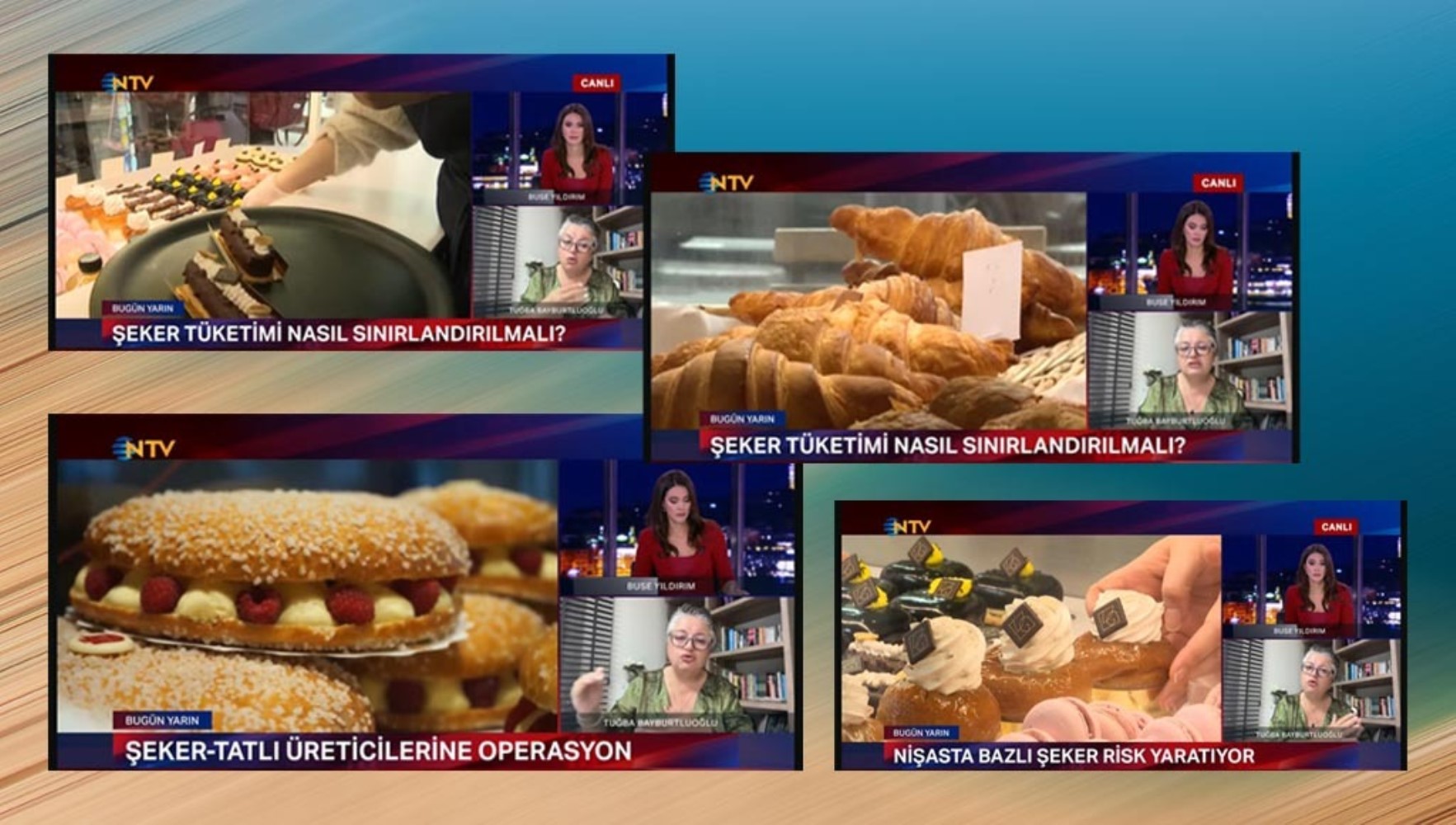
• While NTV was explaining the harm of sugar by saying “Starch-based sugar creates risk” by talking to an expert in its live news program at 23.30 in the evening, it was also broadcasting images of candies and cakes on the screen that would tempt people to eat sweets.
• Milliyet quoted the interview with the SDG Kobani official titled “We buried the weapons,” which appeared in the Türkiye newspaper on August 16, three days later on August 19, unlike other newspapers.
• While the footage of Alihan Kuriş among the police was not broadcast in the news about the operation against the Süleymancılar community, the footage of another community leader, Alparslan Kuytul, was shown.
• Milliyet, Sabah, and Türkiye published the promotional text of the AKP-run Konya Metropolitan Municipality, and Yeni Şafak published the promotional text of the Bağcılar Municipality as if it were news without putting a “sponsored” warning.
• The cabinet changes mentioned in the news titled “Lobby: Cabinet change expected, here are the names who will ask for their 'resignation',” which appeared in Gazete Pencere on August 13 and was also quoted by some sites, have not yet taken place.
• Sabah described the attempt to recruit members from the CHP as a provocation in its news titled “New provocation from the new party”; it wrote that “it was reported that it had practically entered into a struggle.”
• Nefes quoted the data in BirGün’s news titled “Dentistry, software engineering, architecture: Dozens of departments were not preferred” one day later in its news titled “There is no one choosing that department in exactly 26 universities” without citing the source.
• Yeni Akit launched a campaign against women’s freedom of dress with the headline “Streets are not bedrooms.”
FOR YOUR CRITICISMS, COMPLAINTS, AND SUGGESTIONS: [email protected]
Would you like to get notifications about new developments and save news?
- NotificationsNew developments and breaking news
- SaveNews is stored in the app
Most Read

Video response to Kim Jong-un claims

Murat Ağırel’s police statement has been revealed

Azerbaijan issues arrest warrants in absentia for 7 people living in Turkey

The Orionid meteor shower will be visible from Turkey!

The penalty for Ronaldo, who left the national team camp, has been announced

Fatoş Seğmen reveals the cause of her daughter's death

Latest status in the race between AKP and YENİ Party revealed

Injury shock at Liverpool: He may miss the Fenerbahçe match

Who authorized the concert held in a parking garage?

From brotherhood to a distant partnership...