


That Letter



April 25, 4:30 AM.
There is an hour left until dawn. Traffic is quite heavy. The reason for this unusual congestion in Sydney is the Anzac Day Dawn Services. People are flocking to areas where memorial gatherings will be held, outside of the official ceremony in the city center, either on foot or by car; the elderly, the young, and children...
Seeing so many children and young people on the roads at these twilight hours for their national duty creates a bittersweet feeling inside.
The beaches where the sea meets the sand are overflowing.
As we enter the ceremony areas, the sign on the illuminated board catches our attention: "Please Silence." There is no one talking loudly or shouting. The children, and even the babies in arms, are all silent.
As dawn breaks, the moment of silence begins. The public stands for the Anzac soldiers lost in Gallipoli 109 years ago.
An Australian general recounts what happened in Gallipoli. He dedicates the final part of his speech to Turkish-Australian friendship and concludes with that famous letter written by Mustafa Kemal Atatürk to the Anzac mothers:
"Those heroes that shed their blood and lost their lives!"
You are now lying in the soil of a friendly country. Therefore, rest in peace.
There is no difference between the Johnnies and the Mehmets to us where they lie side by side here in this country of ours.
You, the mothers who sent their sons from faraway countries!
Wipe away your tears; your sons are now in our bosom and are in peace. After having lost their lives on this land, they have become our sons as well.
They have become our sons as well."
M. Kemal ATATÜRK
My eyes well up with tears, and once again, his extraordinary genius stirs my soul.
The acronym ANZAC stands for Australian and New Zealand Army Corps. The general explains the purpose of the troops sent to Gallipoli as follows: 'To pass through the Dardanelles and besiege the Ottoman capital.' It is a straightforward, simple, uninterpreted, and honest confession...
The fact that they are still members of the British Commonwealth masks the questioning of why they were sent by the British to a country 14,000 km away during the colonial era. In artificial historical narratives where cause-and-effect relationships have not been established, the emphasis on 'protecting their lands' is brought to the fore.
Anzac Day has been declared a holiday in Australia and New Zealand to commemorate their martyrs. The historical journey of the continent's people, which began as a penal colony on 'Deadly Shores' and continued as a colony of the British Empire, filled with suffering, has united these people of different races, cultures, and languages under an Australian identity today.
However, in order to become a NATION, they also had to forget a part of their history.
Even though the colonization period has ended, their continued membership in the British Commonwealth makes it impossible for them to confront the realities of the imperialist exploitation they suffered during their time as a penal colony. To write a true history, they need to be independent. Because a true historical narrative inevitably points to the culprit: the British Empire.
Despite all the facts, what is difficult to understand is the admiration felt for Atatürk, the hero of the war that resulted in the death of 10,500 Anzac soldiers in Gallipoli.
There are Atatürk monuments in Sydney, Canberra (the capital), and Wellington, the capital of New Zealand. However, the largest, most impressive, and most meaningful one is in the city of Albany in Western Australia.
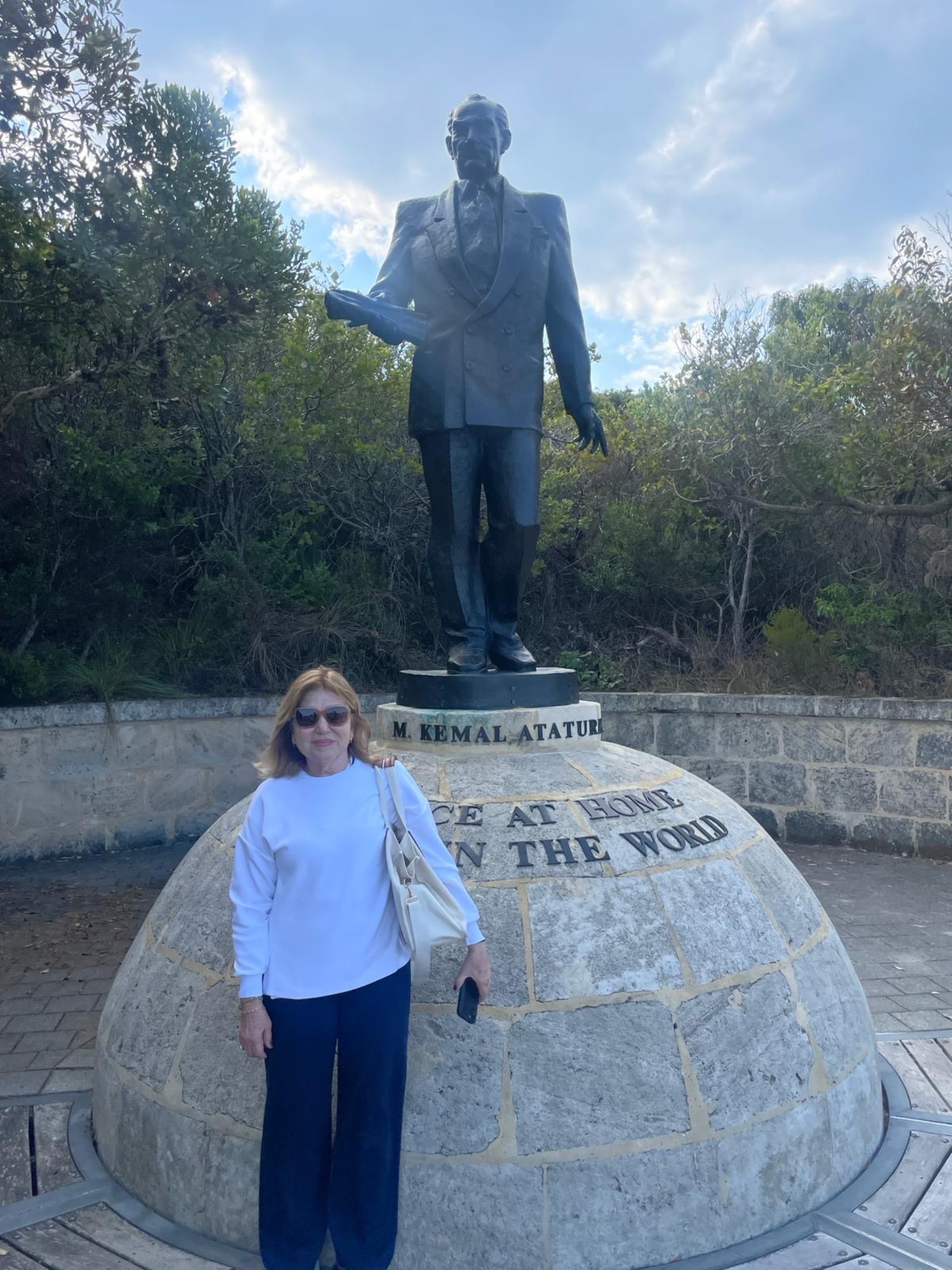
We reach Perth, Australia's 4th largest city, after a 5-hour flight from Sydney. To get to Albany, we travel for 4 hours by road.
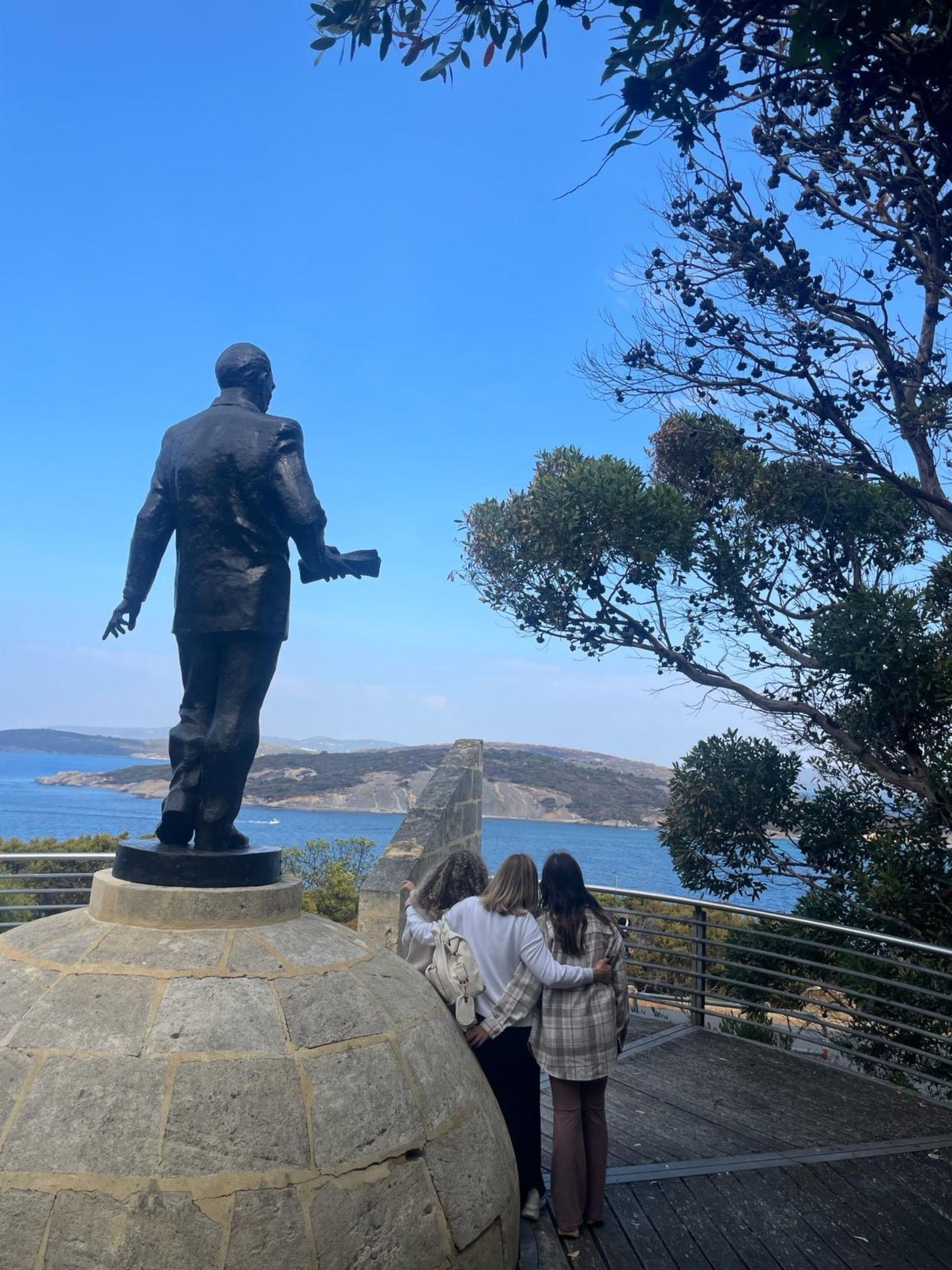
In Albany, an extraordinarily large statue of Atatürk greets us on a hill overlooking the Indian Ocean. The landscaping has been done with great care. The statue holds a rolled-up piece of paper in its hand. On the stone beneath the statue The inscription “Peace at Home, Peace in the World” is featured. As we head toward the stairs to reach the statue, we see the plaque on the wall containing the letter he wrote to the Anzac mothers. It is then that we realize the scroll in his hand is that very letter.
The statue overlooks a large bay. The name of the strait separating the bay from the island opposite is: M. Kemal ATATÜRK Strait.
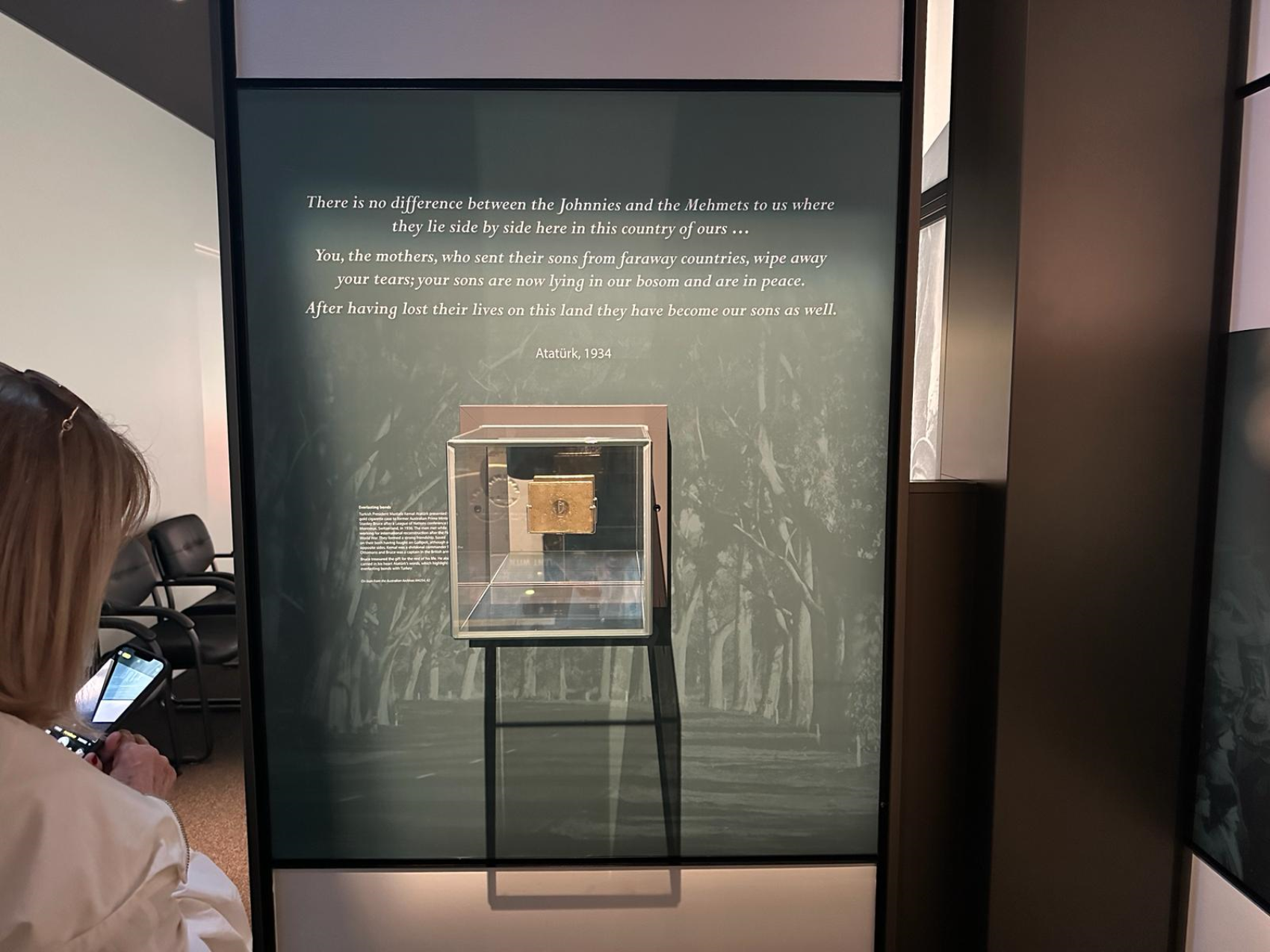
It is impossible not to wonder why they erected the statue here on the vast continent of Australia. We learn the answer to this question at the Albany Anzac Museum.
This bay is where the British fleet that transported the Anzac Corps to Gallipoli gathered and where the operation was launched. It is as if Australia is sending a message of “Peace” with the Atatürk monument.
I SALUTE YOU WITH RESPECT
An incident we experienced when we arrived at the Anzac Museum moved us deeply. When an elderly Australian staff member at the museum learned our nationality, he stood at attention, bowed his head, and said, “I salute you with respect.”
This gesture, which reflects the deep bond established through history, left us speechless.
Our hearts were illuminated in the light of Atatürk.
The museum has an Atatürk corner. Naturally, that famous letter is also on display. However, right below it, you see a gold cigarette case. The case was gifted by Atatürk to Australian Prime Minister Stanley Bruce, because Bruce was also among those who fought at Gallipoli.
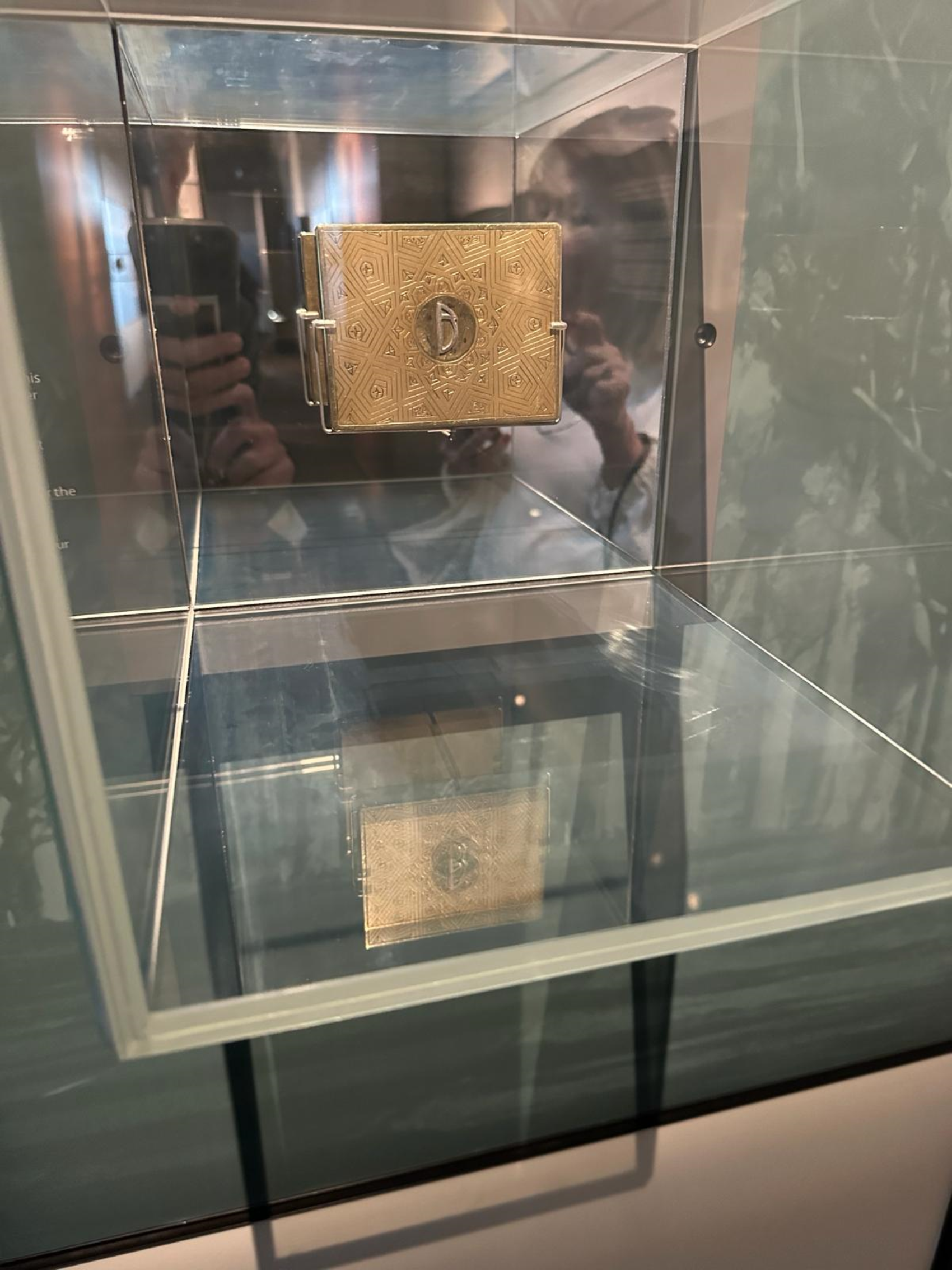
The inscription beneath it reads as follows:
"Bruce kept this precious gift with great care throughout his life. He also carried in his heart the words of Atatürk, which describe our eternal bond with Turkey."
Every time I go to Australia, I encounter an event that makes me proud to be Turkish. And I certainly know who I owe this honor to: to Mustafa Kemal Atatürk, who continues to guide our path and strengthen our hope 86 years after his passing.
To our great Leader, who conquered the hearts of people in a vast country on the other side of the world with a single letter, eased their pain, and set an example for the world with his call for PEACE...
I find the best response to the futile efforts of those in my own beautiful country who wish to erase His name from our history in a proverb:
THE SUN CANNOT BE PLASTERED OVER WITH MUD
Would you like to get notifications about new developments and save news?
- NotificationsNew developments and breaking news
- SaveNews is stored in the app
Most Read

Video response to Kim Jong-un claims

Murat Ağırel’s police statement has been revealed

The Orionid meteor shower will be visible from Turkey!

Fatoş Seğmen reveals the cause of her daughter's death

Latest status in the race between AKP and YENİ Party revealed

Injury shock at Liverpool: He may miss the Fenerbahçe match

From brotherhood to a distant partnership...

Who authorized the concert held in a parking garage?
Acting mayor of Üsküdar has been determined

Good news from Izmir, may Istanbul be next