



“How those beautiful years of mine passed by, without me even knowing.” These lines, filled with nostalgia for the past, became so popular as song lyrics in 1970 that the poet told the story of his poem to a magazine in the autumn of that same year. Throughout the 1970s, it spread across all of Turkey through the voices of Teoman Alpay, Zeki Müren, Mustafa Sağyaşar, Gönül Akkor, and others. Its impact was not limited to just one era. It reached younger generations through the voice of Tarkan as well. And even once, in a performance by Cem Yılmaz as Arif Işık, accompanied by the same voice.
***
In Arif V 216, shortly after this performance, Arif traveled at the speed of light to the year 1969. To the last possible beautiful year of someone who, in 1970, was humming those lines while feeling them. At the end of a chain of events triggered by the persistent determination of 216, a robot who came from the planet Gora to become human, and the protests of those who did not want him on Earth: “Go Home!”
In the film, Arif and 216 entered 1969 from the Yeniköy coast in Istanbul, shortly before Apollo 11 landed on the Moon on July 20. Then they appeared in Sirkeci. But “Go Home” never appeared in the film again. Especially at a time when, with the “Yankee” prefix, it covered the streets and squares more than ever. And especially when it was highly probable that they had passed through Dolmabahçe while going from Yeniköy to Sirkeci. It had been only a few months since 30 youth organizations issued a declaration against the Sixth Fleet, the symbol of American imperialism, which was moving to dock at Dolmabahçe, stating: “This is an open disrespect and an insult to our national independence. It is mocking the Turkish Nation. We believe that all Turkish Nationalists share our thoughts... This struggle will continue until only the Turkish Flag waves in Turkey.”
***
Italian writer Dario Fo also went to 1969 while he was in 1970. With a play. Accidental Death of an Anarchist. Following the “accidental” death of anarchist railway worker Giuseppe Pinelli, who was held at a police station and blamed for the 1969 bombing in Milan that caused many deaths, after he fell from the fourth floor. While the play has continued to be staged in many countries around the world, including Turkey, for decades, evidence that emerged over time pointed to neo-fascists regarding the responsibility for the bombing, and to their connections within the state regarding Pinelli’s death. From neo-fascists to Gladio, and from there to the US and NATO...
***
The youth also commemorated their friend Vedat Demircioğlu during the Sixth Fleet protests. Demircioğlu, who worked various jobs to finish Law School and lost his life after being thrown from the second floor—like Pinelli—during a police raid on the ITU student dormitory during the previous summer’s Sixth Fleet protests.
Demircioğlu did not inspire a play like Pinelli. But a folk song was written for him while the pain was still fresh. With the vocal technique of the glorious Ruhi Su from Van, who also drew from the lands of Pinelli: “In the war of independence/ Perhaps you saw it too/ Demircioğlu is not one/ He is plural, like our people”
***
The heat of 1969 spilled over into the autumn for the peoples as well. For the Turkish and Iranian peoples. While a giant leap for mankind had been taken just a few months earlier, Sadık Hüsrevşahi, the President of the Iranian Student Association studying medicine in Turkey, who had not been able to take a small step to his homeland for several years, set himself on fire. With the fire of rebellion against the pressures and threats of SAVAK, the Iranian intelligence organization that worked like an arm of the CIA, while resisting the Shah’s oppression against the Iranian people.
Yes, Rebellion. Hüsrevşahi’s poem had already been written. Like those of thousands of others. When he set himself on fire, the scent of his poem had not yet dissipated. The warmth of his poem, which spilled onto the cover of the book, was still steaming on the windows of bookstores along with the name İsmet Özel: “I am a man of the arena/ that is, the mace of earth and blood/ the thousand-year-old grave of roses is within me/ I look down upon the weapons of the masters”
***
As the shackles worn out by Arif—another Arif, Ahmed Arif—decreased, new ones were placed in the bookstore windows, for a full year until İsmet Özel’s rebellion accompanied him: “I have been milked for thousands of years/ They have torn apart with their terrible riders/ My delicate, dawn-morning sleeps/ Rulers, aggressors, bandits/ They have levied tribute upon me/ I have heeded neither Alexander/ Nor shah nor sultan”
Arif had loaded his rifle with poetry, in the words of Muzaffer Erdost. His “Anatolia” recognized neither sultan—like Hüsrevşahi—nor shah. Neither he nor those who memorized his poems ever thought of commemorating Sheikh Said.
Yet, Arif had a passionate love for feudal elements, with their pride, their bravery, and their traditions. Simply because capitalism had not yet fully taken them over. That is why he was not a mechanic’s apprentice, but a laborer of honor, a laborer of the heart.
However, just as he knew songs that had become avalanches, he also knew imperialism. And how feudal elements could be collaborators. For he had been arrested many times in the 50s, along with his friends, because of his stance against imperialism.
***
A “Hearth” (Ocak) was established in 1969. The Revolutionary Eastern Cultural Hearths. It limited the Turkishness that had the will to live together through citizenship ties to only a segment of the people. It addressed the Turkish people, the people of Turkey, in a completely different way: The peoples of Turkey. Those who considered themselves the most revolutionary immediately embraced this. They abandoned the people.
A political party was established in 1969. The Nationalist Movement Party. It didn’t have to do much. Those who stood in solidarity with the peoples of the world as Turkish nationalists began to equate their anti-imperialist concepts with chauvinism, repeating that there is no revolutionary action without revolutionary theory. They surrendered nationalism. And then the crescent-and-star flag.
***
The year 1969 did not pass by without anyone knowing. Everything was clear as day.
Most Read
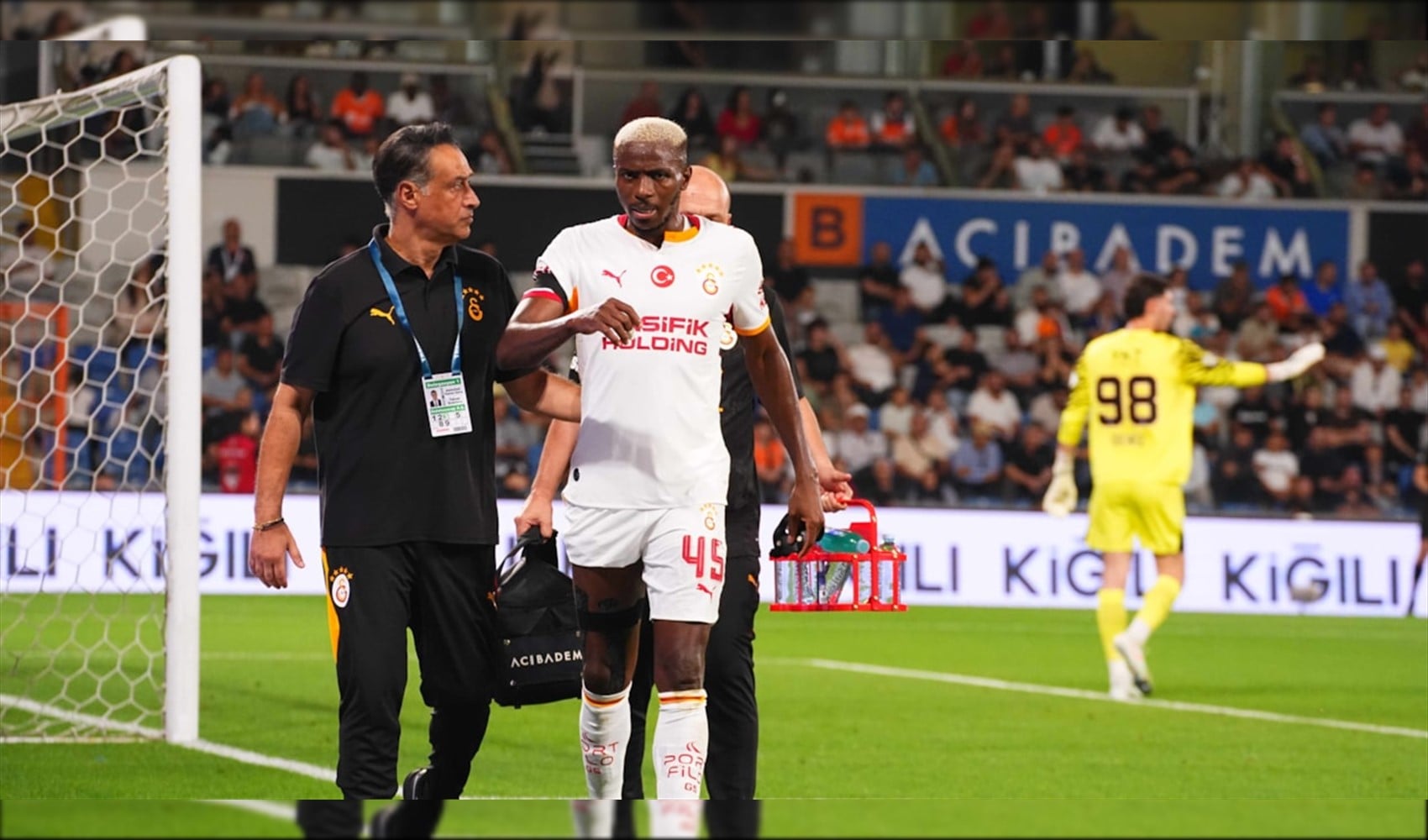
Galatasaray announces injury updates for Osimhen, Lemina, and Singo

Attention online sellers: Tax monitoring expanded
VAR for the Fenerbahçe-Beşiktaş derby has been announced!
Bridges and highways are being privatized: 15 July and FSM are also on the list

Peugeot September 2026 price list is out
Another bankruptcy in the construction sector

New details emerge in 'panel' operation targeting lawyers
First statement from Osimhen after injury in Başakşehir match
Özlem Şanver: 'He said he would change, I believed him; should I be beaten just because I didn't leave?'
Mourinho explains why he substituted Arda Güler