


The map of world trade is being redrawn



When trade routes change, especially maritime trade routes, it is not just the path of goods that changes in the world, but also the balance of power. A development highlighted last year by my dear friend, retired Rear Admiral Cem Gürdeniz, has begun to take on a completely different meaning for world trade today. With a trial voyage conducted in 2025, the Arctic Ocean (North Polar Sea) route was used between Chinese ports and Northern European ports.
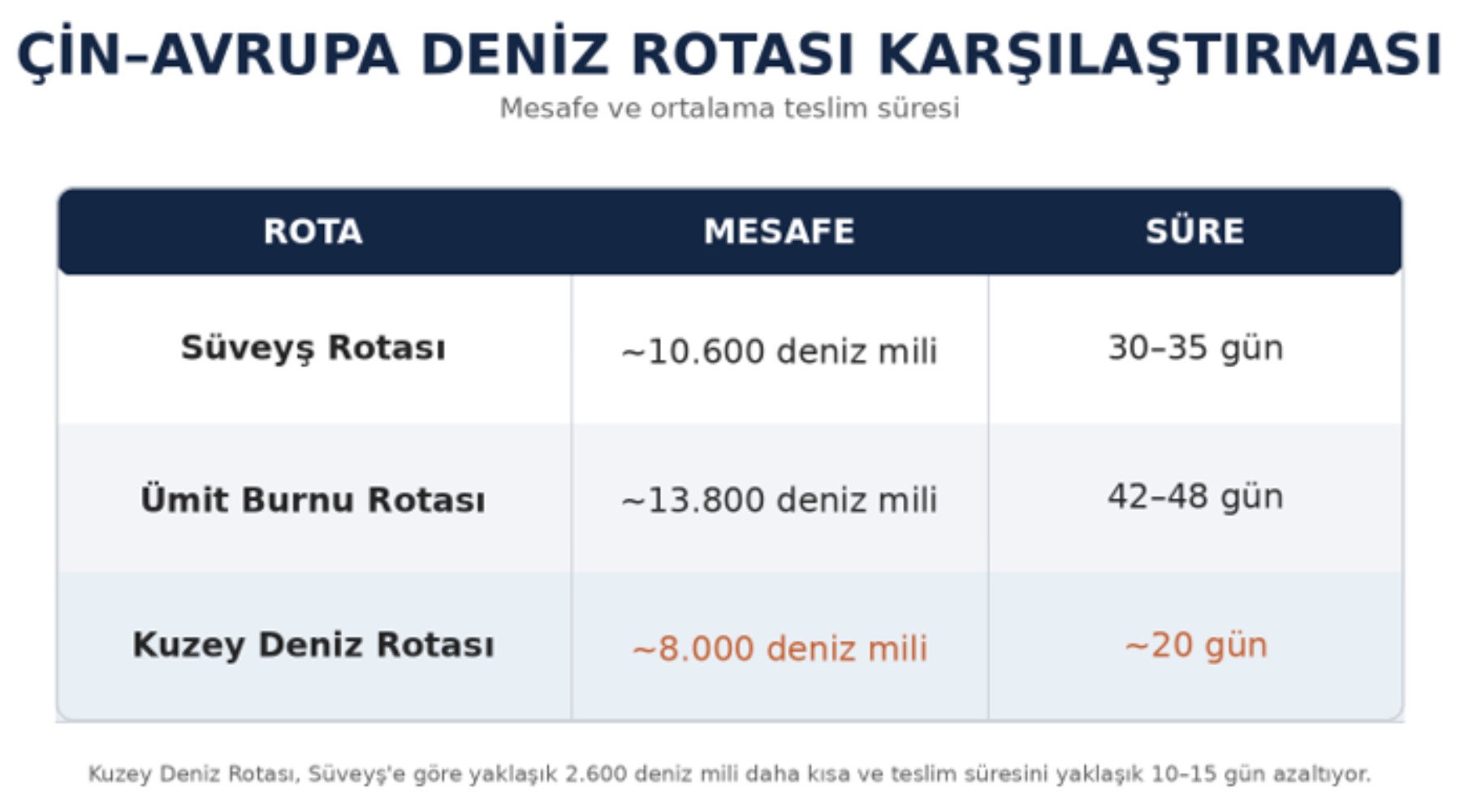
The distance and delivery times for goods between Chinese ports and European ports were being shortened by 40% to 50%. It would be very incomplete to define this issue, which Cem Gürdeniz brought to the agenda, merely as a "new maritime trade route." It was clear that the Northern Silk Road strategy would have a direct impact on all ongoing global debates, from Trump's desire for Greenland to the shaking of the dollar's throne as a reserve currency. I have frequently expressed these in my various articles and television appearances.
A few days ago, the Chinese company Sea Legend Shipping announced that it would launch the world's first regular weekly Arctic container line (CAX line) extending to Europe via the Russian-controlled Northern Sea Route (NSR) in mid-August. 8 weeks of regular voyages will be carried out in August and September. The line will operate between China's Ningbo Port and the UK's Felixstowe Port; from there, transshipment will be made to other Northern European country ports.
Actually, this development is not a surprise. In various articles published in this column over the last two years, I argued that Trump's Greenland move, the competition over the Arctic Ocean, and the freight crisis in the Red Sea were not independent events, but parts of a search for a new global balance of power. (1, 2, 3)
Today, the transformation of experimental passages into a scheduled container line shows that this geostrategic transformation has now moved from theory to practice.
Two Striking Results
This development has two main consequences, one economic and the other geopolitical. The most important one is the second result.
First; distances and delivery times are shortening. This not only reduces freight costs; but with the shortening of the time it takes for goods to enter the production and trade system, capital turns over faster, financial costs decrease, and profitability increases.
The second has a much deeper geopolitical impact. Historically, being a global power was directly linked to the ability to control straits and canals (Suez, Panama, Malacca, Hormuz). Until today, the fate of Asia-Europe trade was largely shaped via the Strait of Malacca, Bab el-Mandeb, and the Suez Canal. The Cape of Good Hope route, which bypasses the south of Africa due to security risks in the Red Sea, was an alternative; however, the journey was longer and costs were skyrocketing. Any crisis in these narrow corridors was enough to shake the global supply chain. Now, for the first time in history, a real alternative operating from the north is emerging for this traditional maritime trade axis.
Of course, the Northern Sea Route will not replace the Suez Canal and/or the Cape of Good Hope route alone in the short term. Due to climate conditions, the requirement for ice-class vessels, and seasonal limitations, these routes will be used together for many years. However, with climate change and developments in icebreaker technology, the weight of this alternative will increase every year.
At this point, it is useful to share Cem Gürdeniz's assessment on his X account:
"In a period when security risks in the Red Sea and Hormuz are increasing, the Arctic Ocean appears to be a candidate to become one of the new areas of competition for global trade and maritime geopolitics. This development will also increase the US's claims and insistence on Greenland."
The Middle Corridor and Turkey
This picture also needs to be watched carefully from Turkey's perspective. As is known, we are located on the Middle Corridor line of China's Belt and Road Initiative. In recent years, we have been developing significant policies in line with the goal of becoming a regional logistics hub through port investments and the Middle Corridor. However, if a certain portion of Asia-Europe trade begins to shift north in the coming years, planning done without taking this new Arctic equation into account will be incomplete.
History has shown us time and again: When trade routes change, not only do the routes of ships change; ports, cities, economies, and global balances of power also change.
The conquest of Istanbul in 1453 forced Europeans to seek new ways to reach India. This is how the Age of Discovery gained momentum. The discovery of the American continent and the emergence of new maritime trade routes is the most concrete historical example of this. The development taking place in the Arctic today could also create a new trade axis on a similar scale.
Perhaps the world is entering a historical period where the first lines of the 21st century's new trade map are being drawn. That is why reading the scheduled voyages starting in the Arctic merely as "maritime news" would mean missing the great geostrategic transformation taking place before our eyes.
(1) We are in trouble: Those who don't believe should look at the maps (I emphasized that maps tell not only geography but also power struggles. The developments in the Arctic today add a new layer to those maps. Meriç Köyatası, 12 Punto, June 8, 2025)
(2) If Trump leaves NATO, he will shoot himself in the foot (The view that the US is trying to reconfigure not only military but also commercial and financial routes... Meriç Köyatası, 12 Punto, April 5, 2026)
(3) The recurring financial violence of history (Every event, from Trump's ambitions in Canada, Greenland, and the Arctic Ocean to the freight crisis in the Red Sea, is actually the labor pains of a new power transfer. Meriç Köyatası, 12 Punto, April 12, 2026)
Would you like to get notifications about new developments and save news?
- NotificationsNew developments and breaking news
- SaveNews is stored in the app
Most Read

Video response to Kim Jong-un claims

Murat Ağırel’s police statement has been revealed
Azerbaijan issues arrest warrants in absentia for 7 people living in Turkey

The Orionid meteor shower will be visible from Turkey!

The penalty for Ronaldo, who left the national team camp, has been announced

Fatoş Seğmen reveals the cause of her daughter's death

Latest status in the race between AKP and YENİ Party revealed

Injury shock at Liverpool: He may miss the Fenerbahçe match

Who authorized the concert held in a parking garage?

From brotherhood to a distant partnership...