


On the twilight years of democracy and the silence of the left



Over the past forty years, the neoliberal economic regime has managed to sweep social realities under the rug with great skill. It suppressed class conflict with tales of 'the end of history,' national sovereignty with the imposition that 'globalization is inevitable,' and social security with the belief that 'market logic is above all else.'
Neoliberalism, as Korkut Boratav has underlined, manifested not merely as a technical regulation, but as a systematic 'class assault' launched against the hard-won positions of labor. As Ahmet İnsel aptly identified, the collapse of economic rationality over politics like a 'belief system' led to the fading of the social and the transformation of market dogmas into an indisputable fate. While economic determinism was destroying the social fabric to such an extent, the autonomy of the political sphere was also rapidly eroded.
It is precisely at this point that the transition was made to the new 'hybrid' phase, conceptualized by Colin Crouch as the 'post-democracy' era, where institutions exist in form but the public is excluded from decision-making mechanisms. The reduction of the citizen from an active subject to a passive political consumer paralyzed the system's capacity to generate consent, paving the way for an accumulation of suppressed anger. Therefore, the anti-democratic authoritarian wave we are witnessing today actually constitutes the paradoxical political and sociological dynamic of this long-term 'economic sovereignty.'
In the interregnum (stagnation) period known as 'late neoliberalism' since the end of the 2000s, right-wing populism—embodied in the persons of authoritarian figures such as Trump, Orbán, Meloni, Duterte, and Putin—began to fortify its spheres of power with the political fuel of this suppressed anger. The attacks on Iran, which are a reflection of this reactionary wave on the geopolitical plane, should be read as the global manifestation of the 'authoritarian liberalism' (imperial, impositional, and aggressive) model that neoliberalism resorts to when it cannot produce consent.
So, why is 'repressive, authoritarian, far-right politics' on the rise? The question of why, especially in recent years, the masses suppressed and excluded in 'cradles of democracy' like North America and Europe are turning not to republican, left-wing, or social democratic parties, but to political parties represented by far-right, populist autocratic leaders like Trump, Meloni, or Orban, may seem like a political contradiction, but deep structural fractures lie beneath it.
Pippa Norris and Ronald Inglehart read the rise of right-wing populism as a 'cultural backlash' against the rise of 'post-materialist' values. These thinkers are of the view that the cosmopolitan, multicultural, environmentalist, and gender-focused language of globalized elites creates insecurity, uncertainty, and fear in traditional working-class clusters. For such masses, right-wing populist leaders are seen as leaders who make their disparaged lifestyles, languages, and national identities valuable again, who secure the future, and who hold those who look down on them accountable on their behalf.
As thinkers like Didier Eribon and Thomas Piketty have underlined, the modern left has broken away from the broad masses of people that formed its historical base and has, over time, become the 'cultural representative' of the highly educated and cosmopolitan middle class. This new paradigm, conceptualized by Piketty as the 'Brahman Left,' lost its organic bond with the dispossessed masses while limiting political struggle to the defense of identity and lifestyle. The price of this transformation was paid most heavily by the poor social classes, who were shaken by the economic crisis that deepened after the pandemic and who were melting away within the precarious, informal, and precariat (part-time, online, flexible workers) sectors. For these masses, who feel outside of institutional politics and 'ownerless,' the left is no longer a recipe for salvation, but the language of an elitist bureaucracy that looks down on them. Therefore, this 'crisis of political representation' opens the door for right-wing populism to easily colonize this abandoned class anger.
The language of 'left-wing politics' and the parties representing it, which struggle to embrace all these new class transformations, has also changed on a global scale. While left-wing politics used to focus more on economic inequality and class issues, it gradually placed more weight on issues of identity and exclusion. This led many people in difficult economic situations to turn to the right-wing's emphasis on 'those who are one of us' and 'those of the same nation.' For example, in the recent US presidential elections, Donald Trump's 'America First' rhetoric reinforced this. He explained economic problems not through class differences, but as 'our own people against global elites.' Thus, he shifted the debate from the economy to a more 'national and identity-based' field.
Today, there is a reality. Neoliberalism is tearing society apart; right-wing populism, on the other hand, is building a new 'us' from those pieces. This points not just to a politics, but to a search for a social reference. According to Ernesto Laclau, autocratic leaders today are redefining the concept of 'the people.' Neoliberal economic policies that rely on and perpetuate inequality make people lonelier, more fragmented, and more disconnected from one another. The sense of solidarity is weakening. In this situation, many powerless people find the sense of 'unity' and 'strength' they have lost in strong leaders like Giorgia Meloni or Viktor Orbán. These leaders are supported not necessarily because they are a logical choice, but rather because they mobilize the anger and resentment that has accumulated within people. They collect these feelings of people who feel excluded by the system and turn them into political power. In short, these leaders act like a powerful center of attraction that draws people's emotions to itself and brings them together.
The lack of a strong reaction from the world to the attacks on Iran is actually a result of this scattered and fragmented order and the internationalist left's distancing from its own social base. Today, the democratic universal left is squeezed between the technical and calculating neoliberal understanding on one side and the right's populist politics that appeals to emotions on the other. For this reason, it has been unable to protect the social state institutions of the past, nor has it been able to develop a strong alternative to the new forms of exploitation created by the digital economy. In short, the left has neither been able to defend the old nor put forward a new path suitable for today. A similar picture is seen in Turkey; economic difficulties and insecurity are increasing, and large segments who feel excluded are turning more toward politics that emphasizes identity, belonging, and strong leadership, which makes it difficult for left-wing, social democratic, and socialist politics to find social support and come to power.
In conclusion, 'left/social democratic/socialist politics' can only be a real option when it can take back the demands for economic security and class justice that neoliberalism has swept under the rug from the hands of right-wing populism. Instead of being trapped in the exclusionary and security-oriented language of the right, it must reconstruct this suppressed anger with a universal, peaceful, and internationalist perspective. If the left cannot establish that lost emotional bond with the dignity and bread-and-butter struggle of the abandoned masses, then in that 'long twilight' period described by Wolfgang Streeck, the dark forces that turn fear and anger into fuel will continue to reign with a much louder voice. As David Harvey also pointed out: It is not enough to just understand this ruthless nature of capitalism; any politics that cannot show the courage to shake it is an accomplice to this twilight.
Would you like to get notifications about new developments and save news?
- NotificationsNew developments and breaking news
- SaveNews is stored in the app
Most Read

National Anthem surprise from Japanese Ambassador
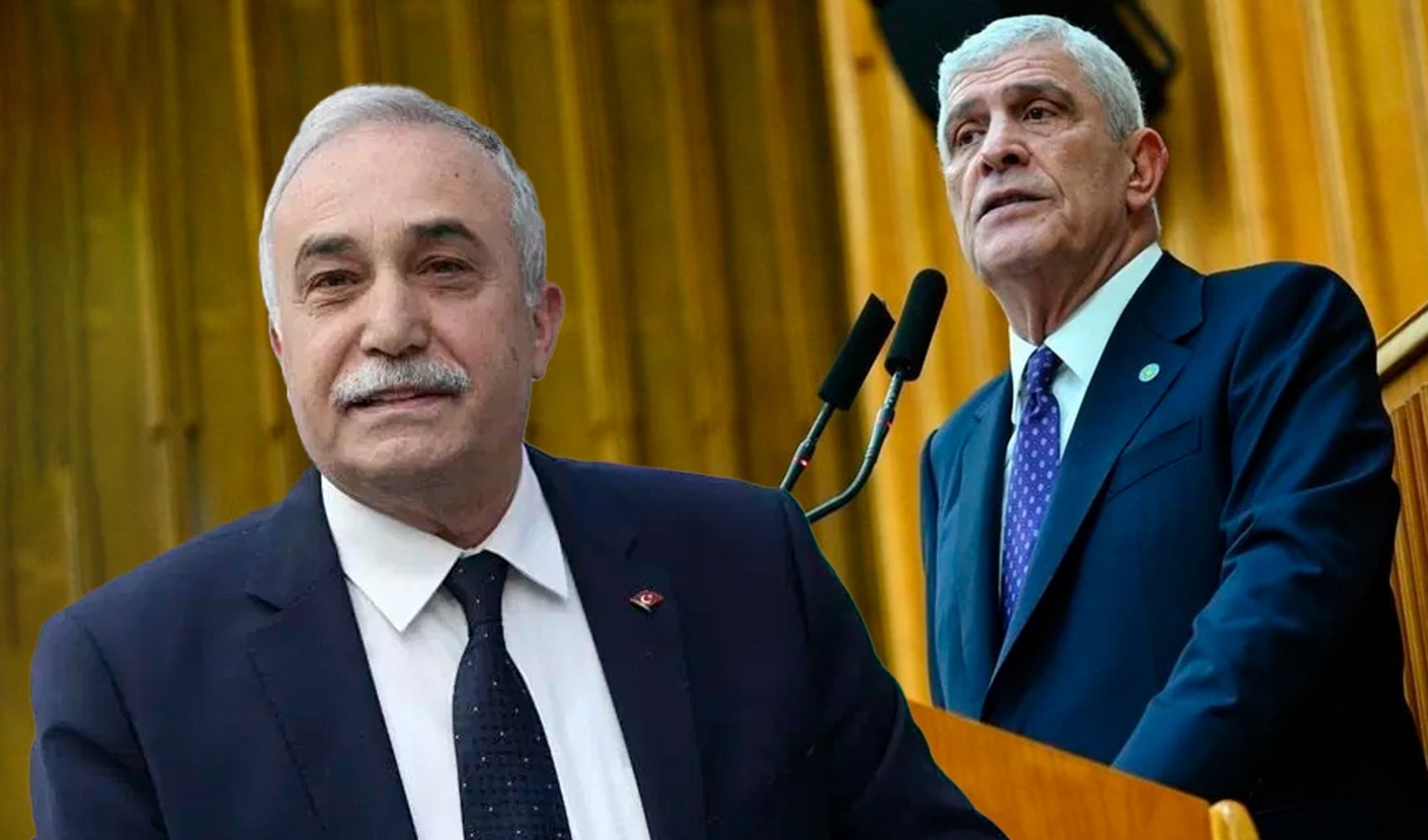
Response from Fakıbaba, who resigned from İYİ Party, to Dervişoğlu
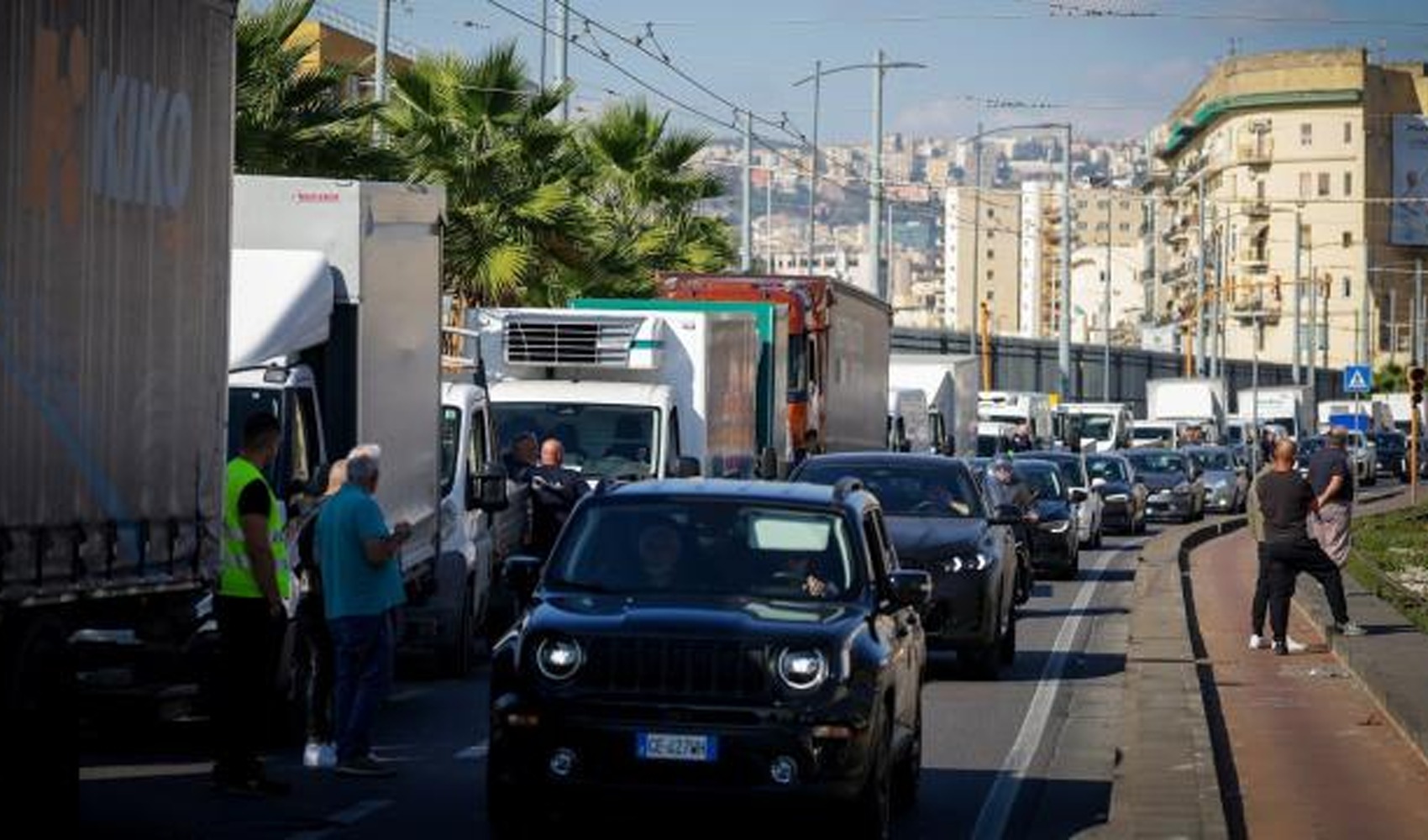
Diesel protest in Italy brings roads to a standstill

Diyanet Foundation, which claimed 'we have no resources,' owns 73 percent of the fund!

Ezel Akay and his brother's test results came back positive

We must first be united for the championship

Social media influencer sets himself on fire during live stream

Is it time for the Turkish Parliament to revoke its 31-year-old 'Casus Belli' decision?

Paşa Döner prices at Istanbul Airport become a hot topic

'From a Journalist’s Pen: The Tüfekli File'