


The Conquest of Istanbul: A great historical revolution is 572 years old!



One of the most important historical revolutions not only in the life of the Turks but in the life of humanity and society... The 572nd anniversary of the Conquest of Istanbul...
May 29, 1453, paved the way for one era to close and a new one to begin. When looking at historical developments, issues, and phenomena through today's lens, various problems can arise if events are not evaluated according to the period and conditions in which they occurred.
From another perspective, As Dr. Hikmet Kıvılcımlı points out in his work 'Conquest and Civilization' (Derleniş Yayınları), viewing it as “not the victory of one religion over another, but the victory of progress over regression” and seeing it “above all as a move for humanity and civilization” emphasizes that the Conquest of Istanbul was a historical revolution.
Happy 572nd anniversary of Fatih Sultan Mehmet's Conquest of Istanbul!
Yes, celebrating the Conquest of Istanbul is the right of all humanity. Even more so, in the words of Kıvılcımlı, it is “to a certain extent, a historical revolution that one can be considered duty-bound to as a human being”.
The wheel of history, turning forward, made a significant leap with the Conquest, providing humanity with new perspectives and opportunities for development!
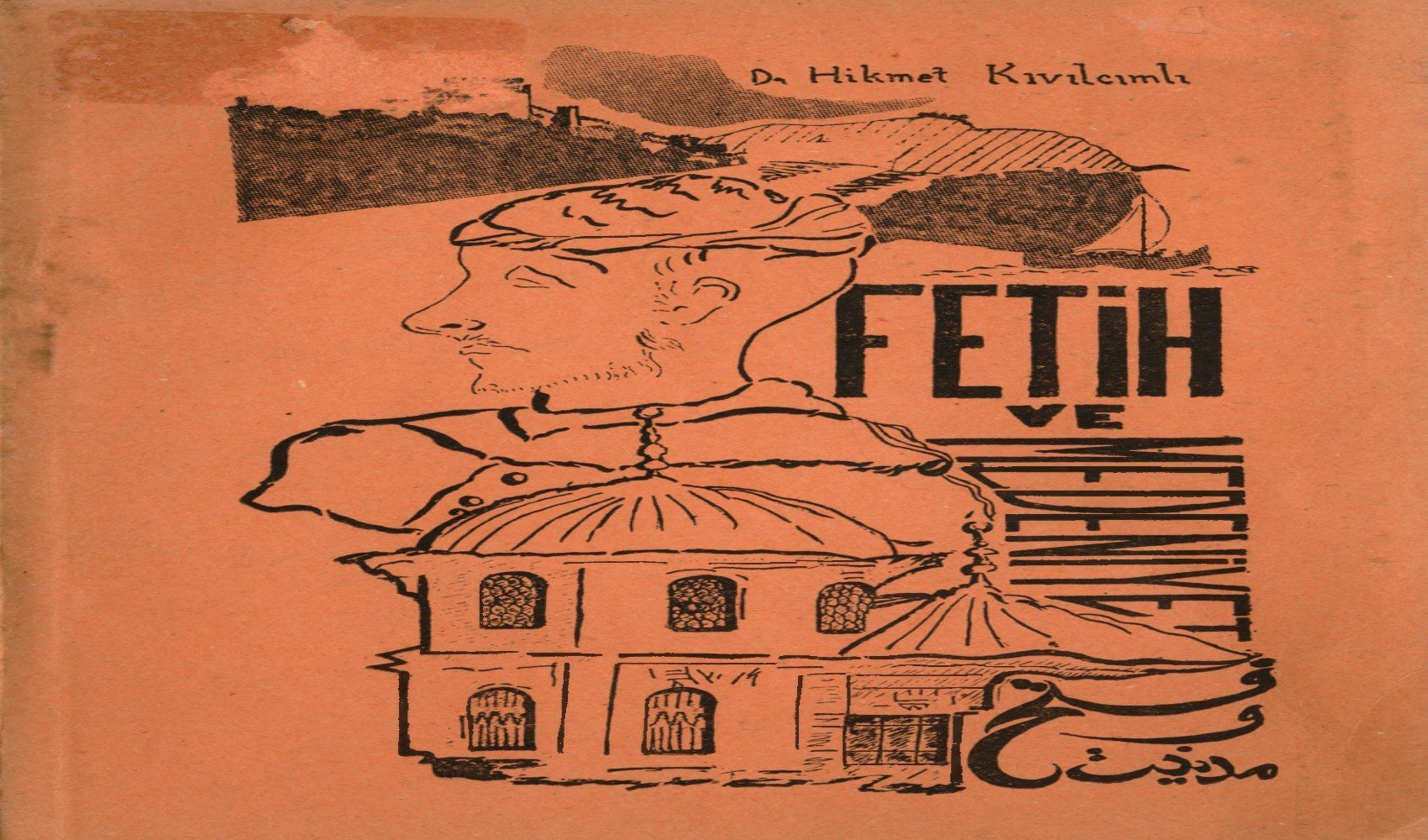
Dr. Hikmet Kıvılcımlı, a leading figure of the left in Turkey, a political leader, theorist, and writer, penned his work “Conquest and Civilization,” which still retains its importance and value, in 1953, on the 500th anniversary of the Conquest of Istanbul. It was published as the second book in the ‘Issues of the Day’ series with the subtitle “The Conquest of Istanbul in the Light of a History Thesis.” It reflects his view of the Conquest of Istanbul within the perspective of the ‘History Thesis’ he had been working on since the 1940s. (Kıvılcımlı was able to publish his ‘History Thesis’ in 1965 under the title ‘History-Revolution-Socialism’.)
The doctor himself designed the cover of the book. There is also a picture on the cover showing Fatih Sultan Mehmet as a young man. On the inside cover and the page immediately following it, there are some verses written by Fatih Sultan Mehmet, who used the pen name ‘Avni’. One of them is as follows:
“Cümle ehli âlemin mamûresin arzetseler
Ehli fakrin hissesine mülki istigna düşer.’
Avni
(If all the prosperity of the world were presented,
The share that falls to the propertyless is: To not give a penny for the universe.
Fatih Mehmet)”
‘The Removal of a Corpse That Had Settled Like a Nightmare on the Path of History’
Kıvılcımlı begins the book by asking, ‘Is the Conquest for a country? Or for humanity?’ He states that a historical revolution of such great importance cannot be confined to a specific border, and that it is a victory that the whole world should greet and celebrate.
Along with the warning not to fall into the error of evaluating the Conquest of Istanbul merely as the capture of a city of great importance or as a clash between Islam and Christianity, the emphasis placed on it as a step for humanity and civilization is appropriate:
“In Arabic, the word ‘Fetih’ (Conquest) coincidentally means: ‘To open.’ The Conquest of Istanbul also saved the humanity of that time from a dead end and opened new horizons for civilization. The Conquest of Istanbul is the removal of a corpse (the Byzantine obstacle) that had settled like a nightmare on the path of history, and the reopening of the paths of civilization, which had been clogged by Byzantine decay, not just to Muslims or Turks, but to all of humanity. Was the opening a bit painful? Possible. But it was customary to remove the dead that way back then.
Therefore, the Conquest of Istanbul is one of the great Historical Revolutions that not only Turks but the whole world can celebrate, is right to celebrate, and—to a certain extent—can be considered duty-bound to as a human being.”
‘By Force? Or by Heart?’
Kıvılcımlı continues by analyzing the dynamics that paved the way for the conquest.
He answers the question ‘Is the Conquest by force? Or by heart?’ by stating: “The gates of Istanbul were opened by Turks and Muslims from the outside, and by Christians and Jews from the inside.” The role of force in history is certainly important. He notes that the conquest was achieved not only by the force of Muslims but also by the hearts of the Christian people:
“…The oppressed Byzantine people sensed justice and human power in the Ottoman Turks, who were of a different religion. The pressure of the Byzantine regime played a repulsive role for the people; the new order brought by the Ottomans attracted the distressed people like a force of attraction…”
Kıvılcımlı evaluates Byzantium as a civilization with a class-based society and a usurious-merchant order that oppressed its own people. While describing the contradictions in Byzantium, the land issue, and ‘feudalization,’ he explains the land order in the Ottoman Empire, the ‘Dirlik (fief) order.’ The Ottoman Empire was maintaining its traditions belonging to a primitive socialist society at that time. The feudal system did not exist.
Asking the question, ‘We pointed out why everyone, Muslim and Christian, wanted to destroy Byzantium. How did the Ottoman state become an attraction for those fleeing the repulsive force of Byzantium?’ Kıvılcımlı explains this on two fronts, one material and one spiritual: “The fact that the Ottoman state was pleasing to the Christian masses stems above all from its cutting and discarding the land relations that had become a Gordian knot in Byzantium. The Ottomans did not just destroy Byzantine relations. In their place, they established a brand-new land order that had not lost its clean nomadic spirit. This innovation is the Dirlik Order.”
'Fatih’s Objective Role, Local Heroism, and Civilized Salvation'
Analyzing Fatih Mehmet’s personality and characteristics, Kıvılcımlı concludes that in order to become Fatih (the Conqueror) and before doing so, he knew how to descend to the people and destroy the remnants of the feudalism that reigned in Byzantium within the Ottoman lands.
The analysis that the Ottoman Empire was founded for the second time with the Conquest is quite important!
“The transition of Istanbul to the Turks, the establishment of the Ottoman state as a continuous empire, escaping from transient feudalism, took place under these social and political conditions. Under these conditions, Fatih’s objective role, local heroism, and civilized salvation are considered historical revolutionism.”
The Wheel of History Turns Forward: ‘All Roads Lead to Istanbul’
The Conquest also created great effects in the West. Emphasizing that with the Conquest, the Byzantine’s obstructive function on the Straits was ended and Istanbul rejoined its role as the center of world trade and civilization, Kıvılcımlı says, “At one time, it was said, ‘All roads lead to Rome.’ After Fatih, it would be: ‘All roads lead to Istanbul.’ And so it happened.” The wheel of history is turning forward!
Kıvılcımlı argues that the Conquest, which opened ancient great civilization routes and developed the past gains of humanity, also enabled the birth of Western civilization. He speaks of two Renaissances. ‘The first occurred with the first opening of Istanbul by Christian barbarians during the Crusades.
The second Renaissance began with the Ottomans’ conquest of Istanbul. And because it was a completely deep-rooted liquidation as wide as the Ottoman Empire, the seeds that broke away from Byzantium were not limited to a few cities or one country. They immediately covered all of Europe. Thanks to that, it did not pass like a straw fire. It became the beginning of the development of modern European history and Western civilization...
Understanding and Grasping History as a Science: The History Thesis
I would like to state this while celebrating the Conquest of Istanbul and emphasizing its historical revolutionary feature. The methodology applied by Dr. Hikmet Kıvılcımlı in his works is to reach the reality of the society he himself is a part of and to make inferences regarding this reality. It would be useful to evaluate the ‘History Thesis,’ which is the book of understanding and grasping history as a science, and ‘Conquest and Civilization,’ which he prepared in its light, in this way.
When perceived in this way, it will be seen as a victory of progress over regression that saved humanity from a dead end.
Would you like to get notifications about new developments and save news?
- NotificationsNew developments and breaking news
- SaveNews is stored in the app
Most Read

Video response to Kim Jong-un claims

Murat Ağırel’s police statement has been revealed

The Orionid meteor shower will be visible from Turkey!

Fatoş Seğmen reveals the cause of her daughter's death

Latest status in the race between AKP and YENİ Party revealed

Injury shock at Liverpool: He may miss the Fenerbahçe match

From brotherhood to a distant partnership...

Who authorized the concert held in a parking garage?

Acting mayor of Üsküdar has been determined

Good news from Izmir, may Istanbul be next