


The 'ghost' wandering the World Cup and Lumumba



“Football is never just football…”
Simon Kuper
The 2026 World Cup group matches are underway… Despite the discriminatory practices, injustices, pressures, and all the obstacles imposed by the US on countries it views as adversaries, those countries—led by Iran—are giving the best response through the anti-imperialist stance they display. The Iranian national team, whose country is under attack by the US and Israel, managed to secure two points from the two matches it played. The Bosnian fans' chants in support of Palestine… And one must not forget the Pahlavi supporters who were packed into the stadium to boo their own country!
One must also not forget that person who, during the Democratic Republic of the Congo matches, held the iconic pose of Lumumba without moving for 90 minutes! That noble stance of a hero who defended his homeland and his people against imperialism and its colonialism—which some outlets call a “strange ritual”—excites oppressed nations… It provided an opportunity for those who didn't know to learn about Patrice Lumumba, and reminded those who did.
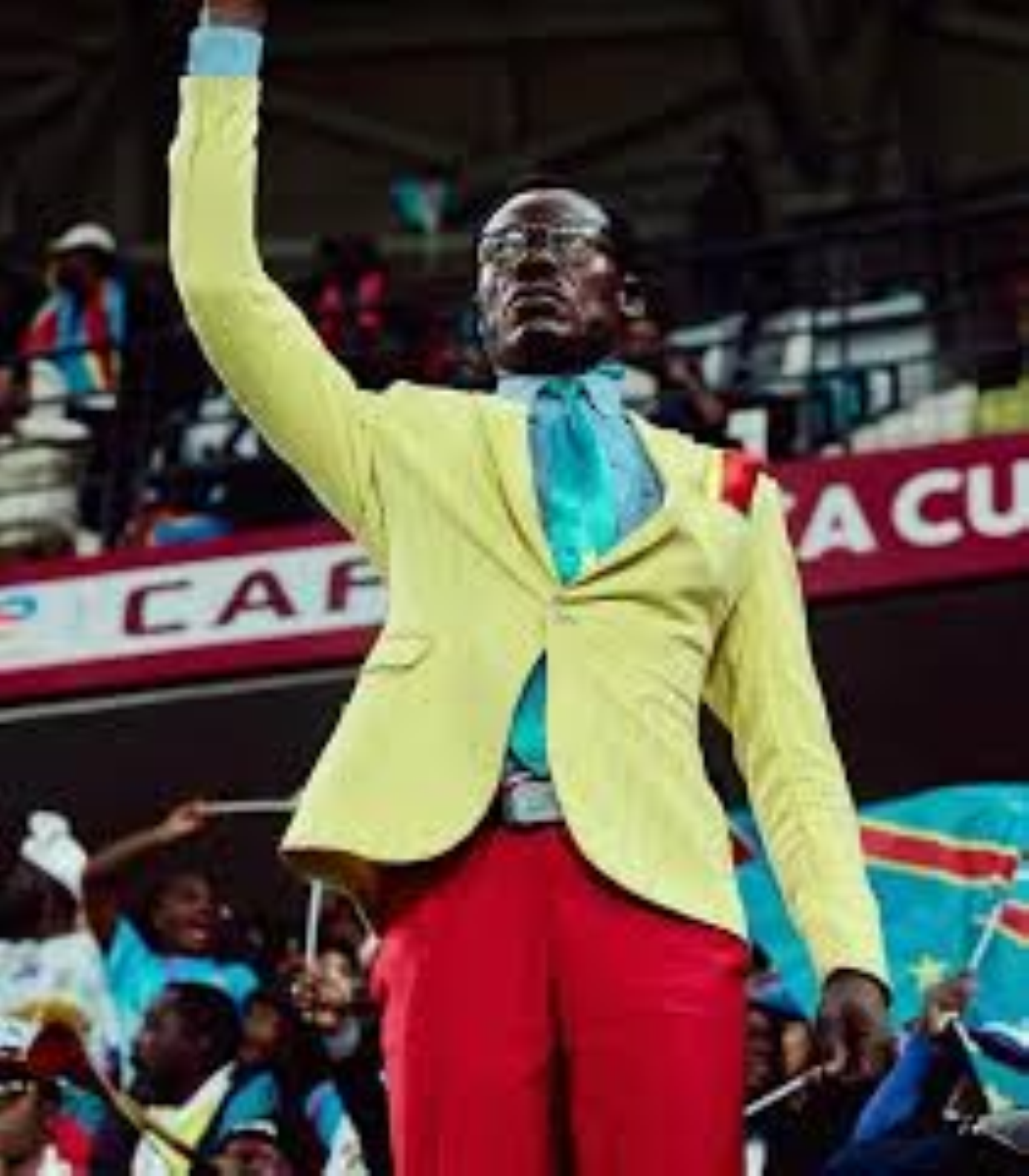
49-year-old Michel Kuka Mboladinga, who bears a striking physical resemblance to Congo's freedom leader and Prime Minister Patrice Lumumba, or by his nickname 'Lumumba Vea' meaning 'Lumumba lives', says in an interview: “Lumumba sacrificed his life for our country. Compared to that, what I am doing is a very small effort.”
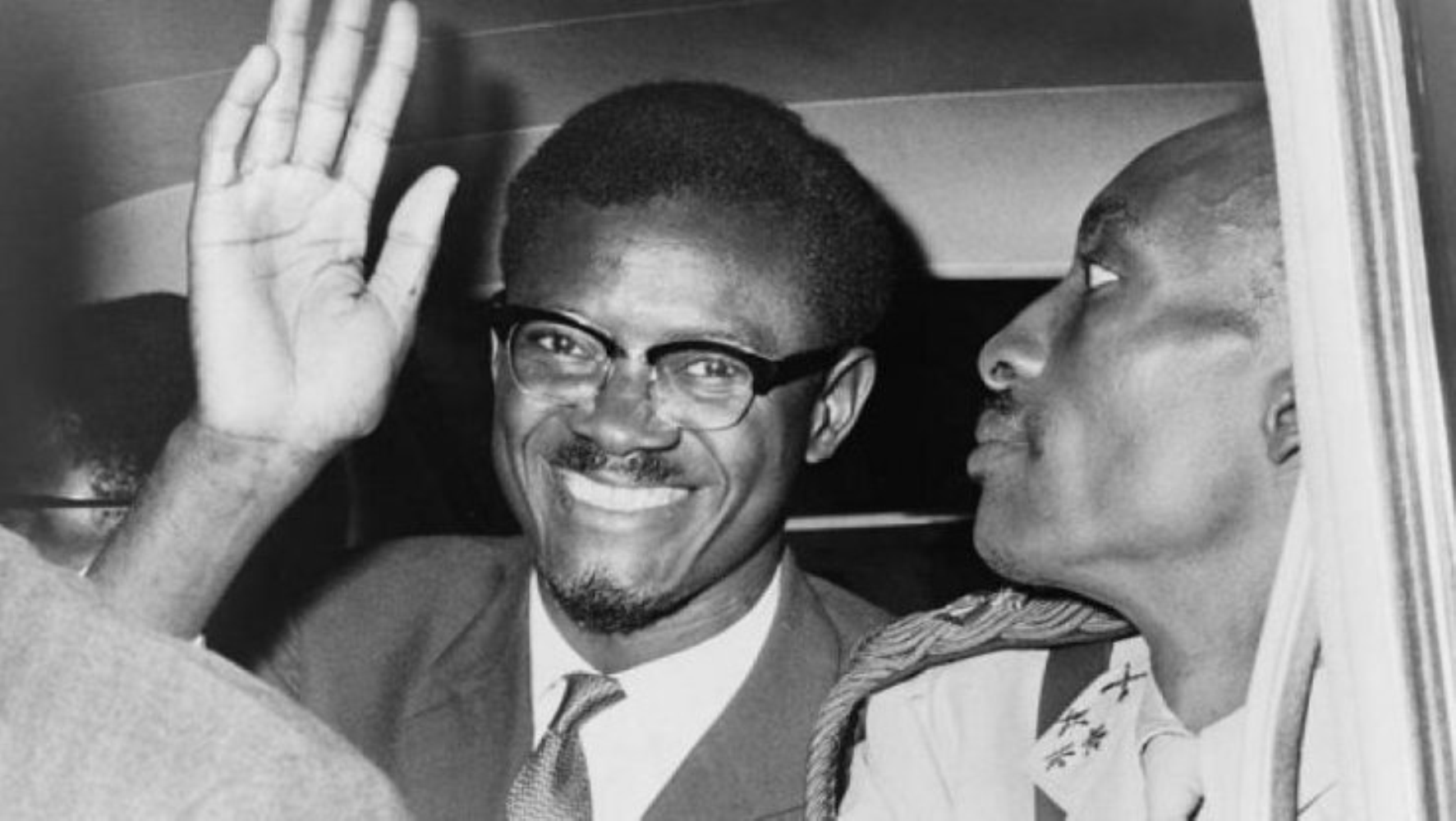
Perhaps it has been talked about, written, and drawn upon, but let us tell it once more; the story of Lumumba, the symbol of Africa's independence, who gave his life at the age of 39 for the independence of Congo and the freedom of its people against Belgian colonialism…
WHO IS PATRICE LUMUMBA?
Patrice Emery Lumumba… He was born in 1925 in Congo, a Belgian colony on the African continent where Europe exploited underground and surface resources. He grew up in a mud-brick village house. He attended Protestant and Catholic schools run by Belgian missionaries. He started working as a clerk at the post office. Later, he worked in various jobs. He first joined the Belgian Liberal Party. Later, he took part in the founding of the Mouvement National Congolais (MNC). Thanks to his good personality and oratorical skills, he stood out and became the focal point of the party. He advocated for the coming together of the different ethnic groups that made up Congolese society and for the struggle against colonialism and oppression. At the party congress held in April 1959, political groups advocating for a unitary form of government for Congo and some members of the MNC chose Lumumba as their leader. However, there were other leaders within the party who found him radical. As a result of this disagreement, a split occurred in the party in July 1959. Lumumba, who was accused of inciting various riots in the country in November 1959, was briefly detained. He was released to attend the Round Table Conference in Brussels.
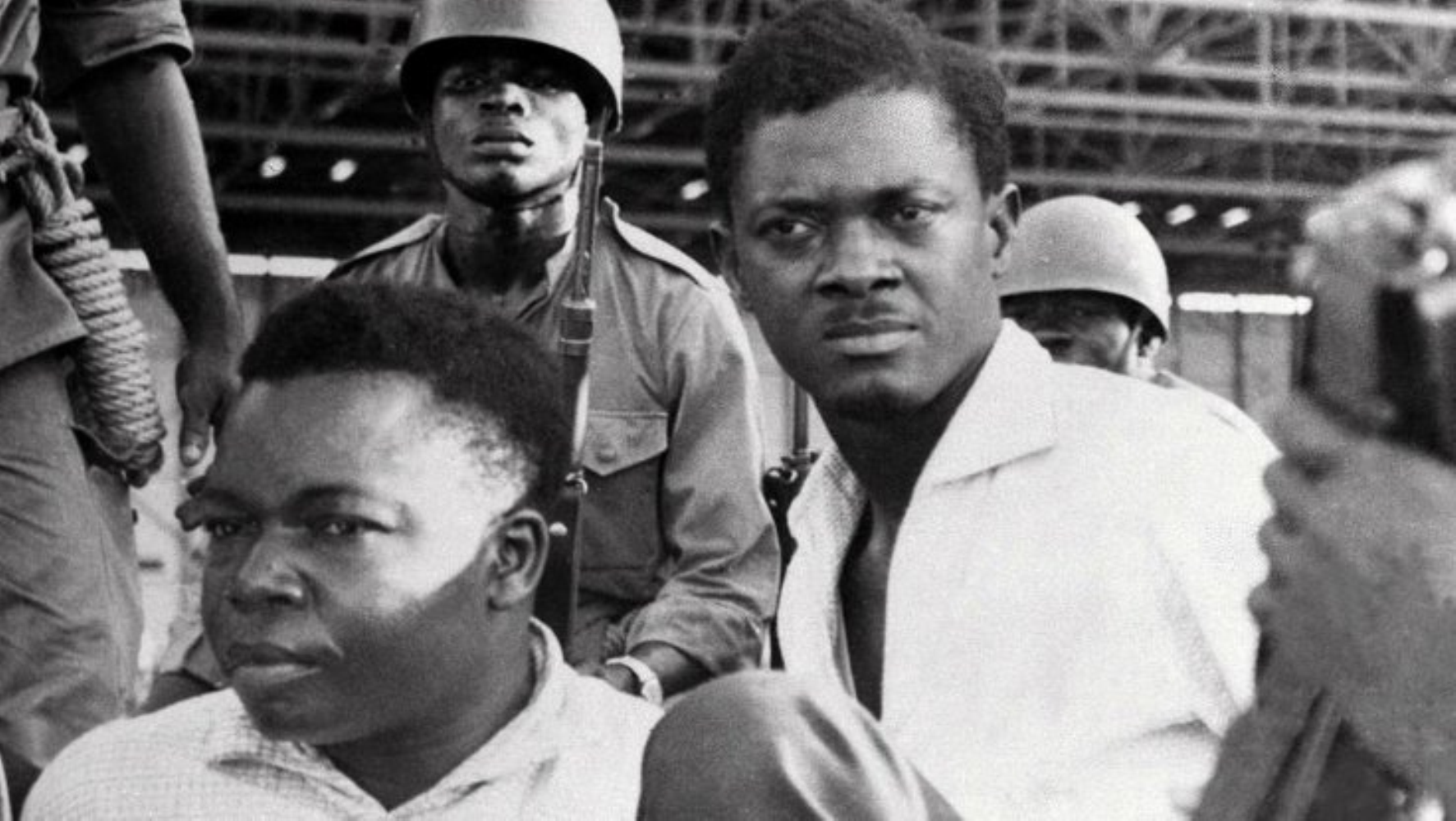
THE SPEECH THAT DISTURBED THE KING OF BELGIUM…
In his speech in front of King Baudouin of Belgium on June 30, 1960, when Congo declared its independence, his words against colonialism and racism, “The humiliations, forced labor, and bloodshed experienced for the sake of independence will never be forgotten,” made him a symbol of the struggle against colonialism not only for Congo but for all of Africa. In the eyes of the West, however, he was a ‘dangerous’ leader!
Congo's elites and collaborators also began to fear Lumumba. An internal rebellion led by soldiers began in the Katanga region, where the country's copper, uranium, and cobalt reserves are located, and the region declared secession. These mines were very important for the West and for Belgian companies.
The United Nations (UN) did not give the necessary response to Lumumba's calls for support. Lumumba asked for help from the USSR. This was unacceptable to the US and other Western imperialists!
DESTROYED WITH ACID!
With the plan of US intelligence and the help of internal collaborators, Lumumba was removed from power through conspiracies. A collaborative group in the army, led by Colonel Mobutu, seized the government and placed Lumumba under house arrest under the supervision of the UN's Ghanaian troops. Lumumba managed to escape house arrest and tried to go to Stanleyville. However, he was arrested by an army patrol and held captive in a military camp in Thysville. Despite the presence of UN troops, Lumumba was taken on January 18, 1961, from the military camp to Katanga, which was the headquarters of the separatists.
Lumumba was executed by firing squad there. His body was dismembered. To ensure there were ‘no traces left’ and that he would not ‘turn into a hero,’ it was destroyed with acid! It was later revealed that the Belgian commissioner who directed Lumumba's execution, Gerard Soete, had kept one of Lumumba's gold-capped teeth as a “souvenir.”
THE GREAT MEANING OF THAT SALUTE…
That salute given for 90 minutes by Michel Kuka Mboladinga, or by his nickname 'Lumumba Vea', is the salute not only of Lumumba but of all oppressed nations waging a struggle for national independence against imperialism… Greetings from us as well…
As I conclude my article here, I respectfully commemorate the leaders of Africa's struggle for independence and freedom; Congolese Patrice Lumumba, Algerians Frantz Fanon and Ahmed Ben Bella, Ghanaian Dr. Kwame Nkrumah, Burkinabe Thomas Sankara, Tanzanian Julius Nyerere, Mozambican Samora Machel, Kenyan Dedan Kimathi, Nigerian Abubakar Tafawa Balewa, Ethiopian Haile Selassie, South African Nelson Mandela, and Omar Mukhtar, who fought for the freedom of Libya…
Would you like to get notifications about new developments and save news?
- NotificationsNew developments and breaking news
- SaveNews is stored in the app
Most Read
Video response to Kim Jong-un claims
Murat Ağırel’s police statement has been revealed
The Orionid meteor shower will be visible from Turkey!
Fatoş Seğmen reveals the cause of her daughter's death
Latest status in the race between AKP and YENİ Party revealed
Injury shock at Liverpool: He may miss the Fenerbahçe match
From brotherhood to a distant partnership...
Who authorized the concert held in a parking garage?
Acting mayor of Üsküdar has been determined
Good news from Izmir, may Istanbul be next