


The Republic's young and deep-rooted 'Plane Tree'



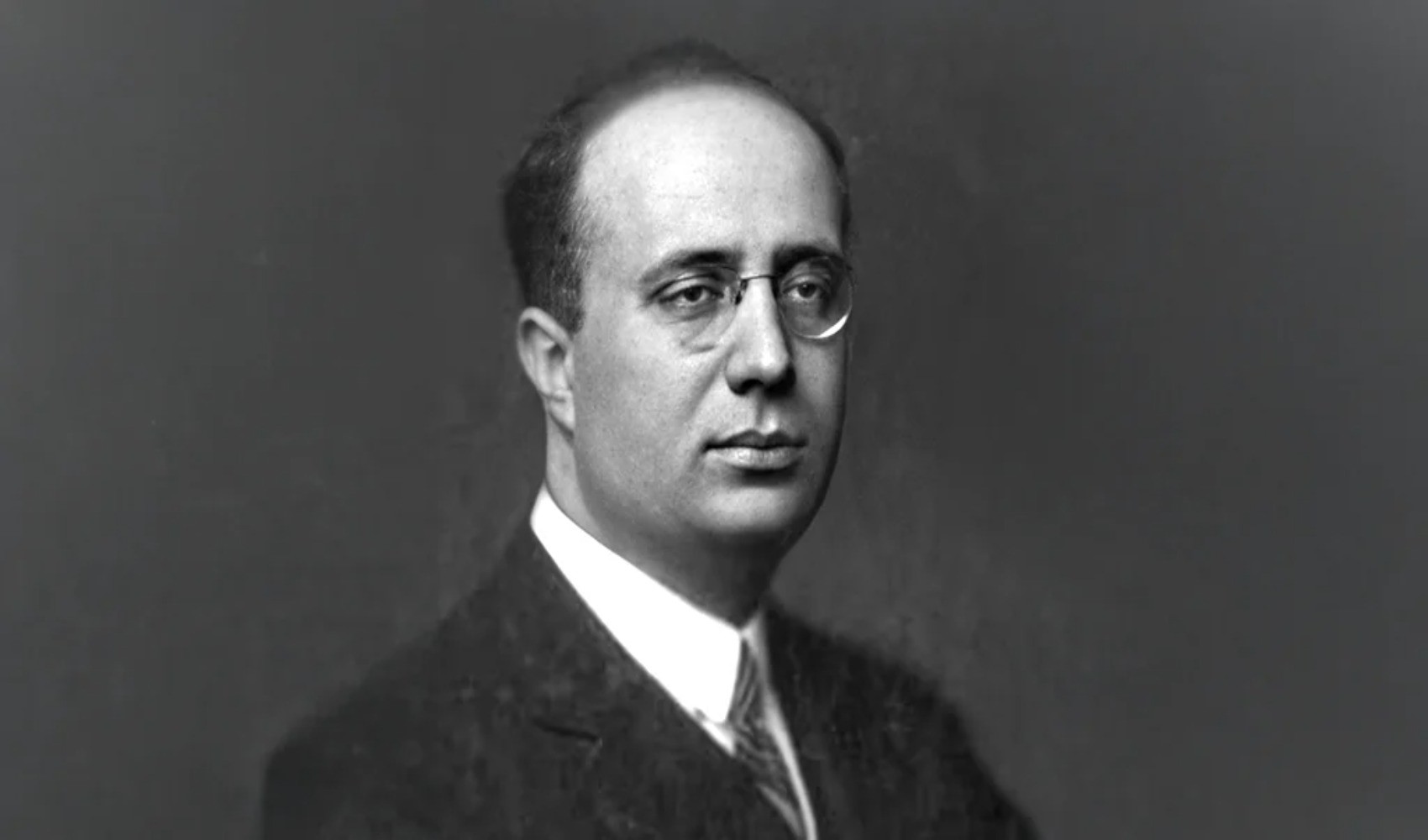
Have you ever heard the name Vasıf Çınar, a man of conviction who did not hesitate to risk everything for the liberation of his homeland at a very young age?
June 2nd; the date he passed away 90 years ago at the age of just 39 (June 2, 1935)…
He was one of the leading cadres of the Turkish Revolution, known for the newspaper İzmir’e Doğru, which he published alongside Mustafa Necati during the years of the National Struggle, and for his role in determining and maintaining the Republic's education policy. Vasıf Çınar, who served as Atatürk's Minister of National Education, last held the post of Ambassador to Moscow…
Struggle Against Occupation
Vasıf Çınar was born in 1896. His father was the former District Governor Abdullah Hulusi Bey. He studied at the İzmir High School (İdadi). He did not continue his studies at the Law School after his third year. He worked as a teacher between 1915 and 1918 alongside his close friend, former Minister of National Education Mustafa Necati. He was one of the influential figures of the Turkish Hearth (Türk Ocağı). During the occupation of İzmir, he adopted a brave and combative stance. He gave impactful speeches at rallies.
In Balıkesir, Çınar began publishing the newspaper İzmir’e Doğru with Mustafa Necati, under the slogan 'It is at the Service of the National Struggle and is its Spokesperson.' Like him, Mustafa Necati was a lawyer, an educator, and a figure involved in the Kuva-yı Milliye (National Forces) movement. He was a close intellectual companion and colleague of Atatürk, one of the architects of the Alphabet Revolution, and a Minister of National Education.
The Voice of the National Forces: İzmir’e Doğru
Let us return to the İzmir’e Doğru newspaper. It began publication with a decision taken at the Balıkesir Congress (September 22, 1919). Vasıf Çınar's brother, Esat Bey, also took part in the efforts. The newspaper, which carried out propaganda activities to inform and organize the public for the Kuva-yı Milliye, continued its publication until the occupation of Balıkesir.
Here, I would like to draw attention to another name on the newspaper's staff: Esat Adil Müstecaplıoğlu (Müstecabi), an important figure in Turkish political history and the field of law. Esat Adil Bey joined the Kuva-yı Milliye in 1919 when he was just 15 years old.
Esat Adil Müstecaplıoğlu, who also served as the President of the Balıkesir People's House (Halkevi), held positions such as Deputy Chief Prosecutor of the Court of Cassation, and was the founder and director of the İmralı Prison, which was Turkey's first open prison.
Goal: Full Independence
Vasıf Çınar and the İzmir’e Doğru newspaper, which published under his leadership, acted as the spokesperson for the philosophy of the National Struggle, which encompassed the idea of achieving full independence through fighting. They were fundamentally opposed to mandates and to a liberation that relied on imperialist powers and was subject to their whims and discretion. There is no such thing as being a captive; the only way out is to win freedom by fighting!
The Occupation of Balıkesir Could Not Break Their Hopes!
The İzmir’e Doğru newspaper, which was published under very difficult conditions at the Balıkesir Kuva-yı Milliye headquarters during the years of imperialist occupation, sought to ensure coordination in the national organization of Western Anatolia. The newspaper, which published 74 issues, ended its publication life with the occupation of Balıkesir on June 30, 1920. The occupation of the city did not break the hope of the National Struggle's Central Committee (Heyet-i Merkeziye). Vasıf Çınar, Mustafa Necati, Mahmut Celal, Hacim Muhittin, Hayrettin, Abdülgafur Efendi, and many other patriots who led the Kuva-yı Milliye in Balıkesir and Western Anatolia successfully fulfilled their duties in liberating the country from occupation and laying the foundations of a new, independent, and free state.
Establishing the Youth and Sports Pillar of the Struggle: Altay
Let us open a parenthesis here for the deep-rooted club of Turkish football, Büyük Altay. In 1914, Vasıf Çınar led the establishment of the Altay Sports Club in İzmir, where tensions were rising under the conditions of the First World War, to spread the struggle among Turkish youth. The other names are also familiar; his brother Esat Bey, Mustafa Necati Bey, Celal Bayar... A foundation that enabled Turkish youth in İzmir to join the National Struggle was also formed through Altay.
At the Service of the Young Republic…
Following his departure from Balıkesir, Vasıf Çınar was appointed as the Private Secretary to the Ministry of Education (Maarif Vekâleti). In 1923, he was elected as a Member of Parliament for Saruhan in the Grand National Assembly of Turkey (TBMM). In the Assembly, he worked on committees concerning education, population exchange, reconstruction, and settlement.
On December 8, 1923, he was elected as the Prosecutor of the Istanbul Independence Tribunal, and later became the Minister of National Education. He carried out the Law on Unification of Education (Tevhid-i Tedrisat Kanunu) and the efforts to secularize schools. He increased the number of teacher training schools.
He resigned from his ministerial post on November 21, 1924. He was appointed as the ambassador to Prague in 1925 and to Budapest in 1927. In 1928, he was brought to the post of Ambassador to Moscow.
Due to the sudden death of his close friend Mustafa Necati, with whom he had served in important roles during the National Struggle and the Republican Revolution, on January 1, 1929, due to appendicitis, he was elected as the Member of Parliament for İzmir in his place. Afterwards, he was appointed as the Minister of National Education for a second time. This duty did not last long. He served as the Ambassador to Rome, and then on July 16, 1934, he began his duty as the Ambassador to Moscow once again.
Vasıf Çınar suddenly fell ill at his home in Moscow on the evening of May 30, 1935. He passed away on the morning of June 2. He was only 39 years old. In his short life, he fulfilled many important duties for our country. His comrade Mustafa Necati (Uğural) had also passed away at the age of 35.
Vasıf Çınar and Mustafa Necati had experienced the collapse, the occupation, the subsequent National Struggle and Liberation, the Republican Revolution, and the construction of a new modern nation-state in every aspect together. They had always stood side by side with our great leader Mustafa Kemal Atatürk!
I commemorate all the heroes of our National Struggle with respect and gratitude…
Bibliography:
- Erol Kaya, ‘Milli Mücadele Döneminde İzmir’e Doğru Gazetesi’, Turkish Studies, Volume 3/1, Winter 2008.
- İzmir’e Doğru, Prepared for Publication by Oktay Gökdemir, İzmir Metropolitan Municipality City Library Series: 64, 2010.
- Tülay Alim Baran, ‘Cumhuriyet Dönemi Devlet Adamlarından Vasıf Çınar’, Atatürk Research Center Journal, Issue: 49, Volume: XVII., March 2001, pp. 1-13.
- Zeki Arıkan, ‘Milli Mücadelede Balıkesir’, Atatürk Yolu Journal 6, issue 24, April 1999.
Would you like to get notifications about new developments and save news?
- NotificationsNew developments and breaking news
- SaveNews is stored in the app
Most Read

Video response to Kim Jong-un claims

Murat Ağırel’s police statement has been revealed

The Orionid meteor shower will be visible from Turkey!

Fatoş Seğmen reveals the cause of her daughter's death

Latest status in the race between AKP and YENİ Party revealed

Injury shock at Liverpool: He may miss the Fenerbahçe match

From brotherhood to a distant partnership...

Who authorized the concert held in a parking garage?

Acting mayor of Üsküdar has been determined

Good news from Izmir, may Istanbul be next