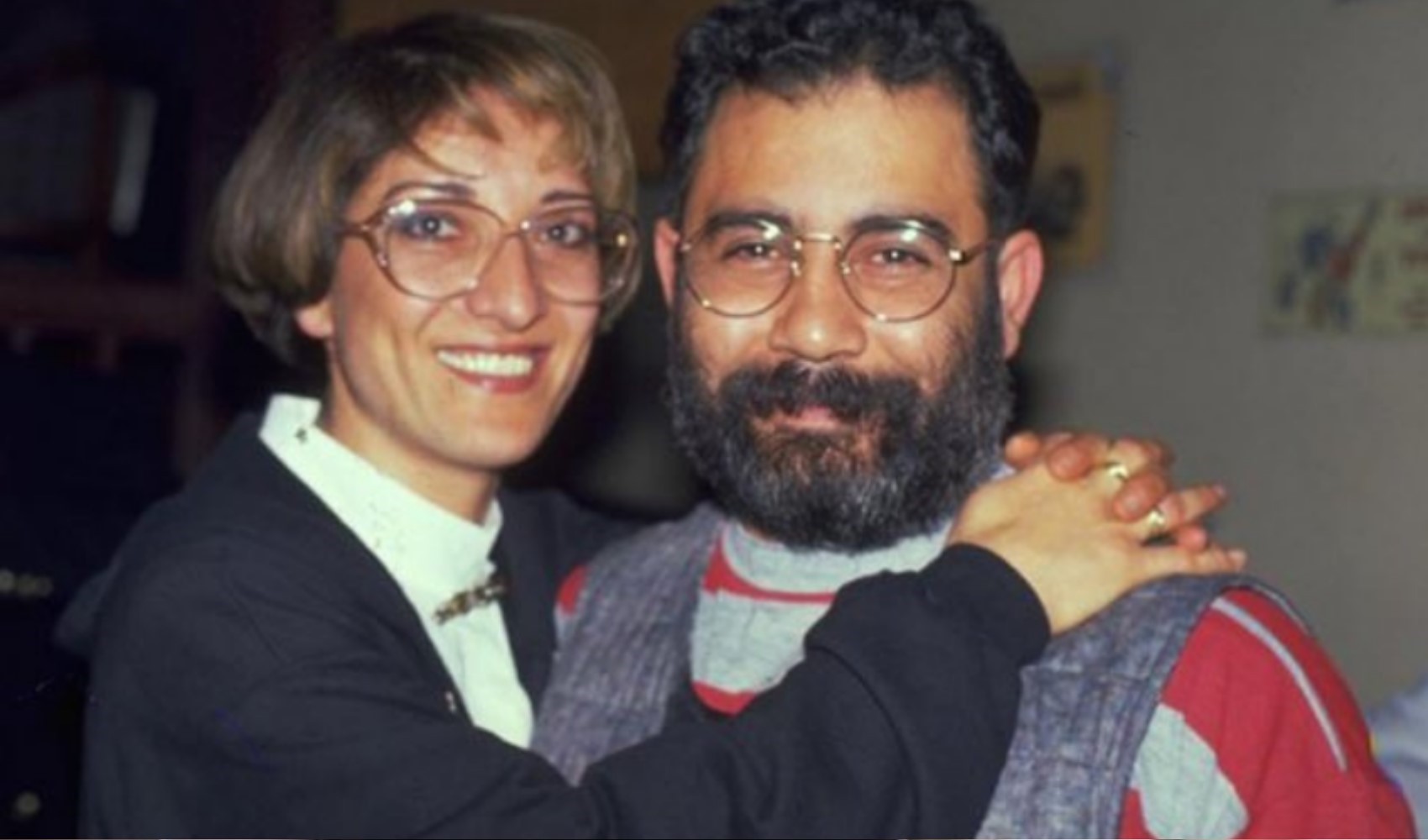
Days before its release, the production company Erbay Medya has issued a statement regarding the legal process surrounding the film 'Ahmet'in Türküsü', which has been in the spotlight due to objections from Gülten Kaya.
In the statement released by the production company, the legal process initiated by the artist's family was recalled, and it was stated, "There are no obstacles left regarding the film's release."
Ahmet Kaya's wife, Gülten Kaya Hayaloğlu, had also previously made a statement regarding the film 'Ahmet'in Türküsü', which is set to tell the life story of Ahmet Kaya, and had characterized the film as a tool for commercial exploitation.
According to the report by Birsen Altuntaş, following Gülten Kaya's remarks that drew attention, the production company Erbay Medya issued a statement regarding the film.
The full statement from Erbay Medya is as follows:
"We have been deeply saddened by the recent reports that do not reflect the truth regarding the film 'Ahmet'in Türküsü', which we are excited to have made and in which we tell the story of the unforgettable name of the music world, Ahmet Kaya, from a different perspective.
The legal process previously initiated regarding our film has been concluded in our favor with a final decision, and there are no obstacles left regarding the film's release. Our film, in which we recount the life of the master artist Ahmet Kaya with very special memories and which we want to bring together with his fans, will be released in all cinemas on Friday, March 1st."
Gülten Kaya's objection and her statement on the subject are as follows:
"We would like to bring to the attention of the public that we absolutely do not support this commercial project, which is claimed to be about the artist Ahmet Kaya, who left us 24 years ago and whose will we represent; a project we are ashamed to call a 'film' and which we see as a disrespect primarily to the artist himself and to all his fans."
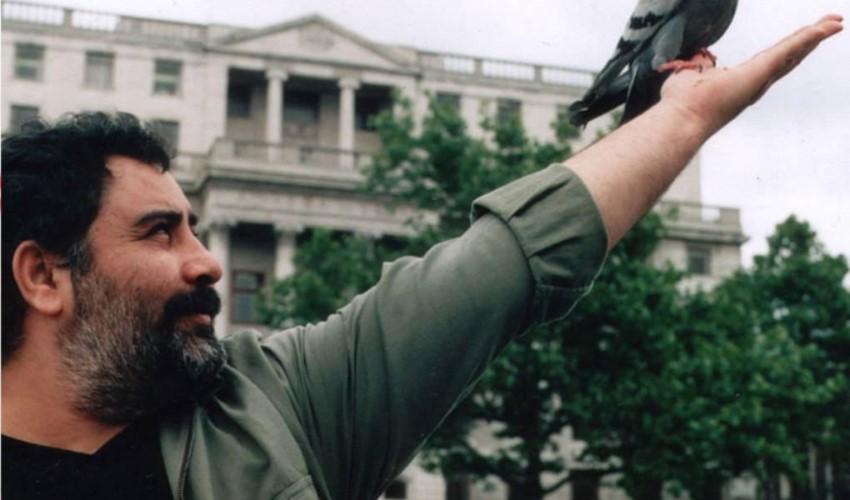
WHO IS AHMET KAYA?
Ahmet Kaya was born in 1957 in Malatya as the fifth child of a Kurdish family. He was originally from Adıyaman. His father was a worker at the Sümerbank textile factory. He attended primary school in Malatya.
He was introduced to music at the age of six with a bağlama gifted by his father. In his spare time from school, he began working in a shop that sold records and cassettes. Due to his family's financial difficulties, they migrated to Kocamustafapaşa, Istanbul, in 1972, and he had to drop out of school. He worked as a street vendor and as an apprentice in various workplaces. During this period, he experienced the difficulties of moving from a small settlement to a big city and adapting to it.
He had the opportunity to meet Ruhi Su at an event held at Boğaziçi University and sang the Ruhi Su folk song titled "Mahsus Mahal". He performed his military service in Gelibolu in 1978, during which time he continued his musical work in the military band.
After returning from the military, he married his first wife, Emine, and their daughter Çiğdem was born in 1982. However, this marriage did not last long. Later, he married Gülten Hayaloğlu, the sister of Yusuf Hayaloğlu. From this marriage, his second daughter, Melis, was born in 1987.
FIRST PROFESSIONAL WORKS
He faced economic difficulties due to unemployment. During this time, his wife left him. Hoping to escape these economic problems, he tried to go to prison by, in his own words, "acting against the system." Ultimately, after much effort, he released his album "Ağlama Bebeğim" in 1984. He gave a small concert at the Istanbul Şan Theater.
The album was confiscated in the year it was released, but the censorship was later lifted. In 1985, he signed with Değişim Studio for his second album, "Acılara Tutunmak", just as he had for the first. The owner of the studio was Sezer Bağcan, the brother of Selda Bağcan, who was in Metris Military Prison at the time.
He mediated the meeting between Ahmet Kaya and Gülten Hayaloğlu, a victim of the September 12 coup, whom he had met in prison. They married after the album was released. Gülten Hayaloğlu delivered the poem "Şafak Türküsü" by Nevzat Çelik, who was sentenced to death in prison, to Ahmet Kaya. Thus, the album that ensured his recognition by large audiences became "Şafak Türküsü", which was made in 1985 and released in 1986. He worked with arranger Oğuz Abadan on this album and composed almost all the music himself. In the same year, he released the album "An Gelir".
MEETING YUSUF HAYALOĞLU
During the time he met Gülten Hayaloğlu, he also became acquainted with her brother Yusuf Hayaloğlu and his poems. The album "Yorgun Demokrat", for which the majority of the lyrics belonged to Yusuf Hayaloğlu, was released in 1987. In 1988, the album "Başkaldırıyorum" was released, in which Hayaloğlu wrote the lyrics for only two songs, and the other lyrics consisted of poems by well-known poets. Then, in 1989, "Resitaller-1", a compilation of his concerts consisting only of bağlama and vocals, was released.
In the same year, with arrangements by Osman İşmen, the album "İyimser Bir Gül", for which Hayaloğlu wrote the vast majority of the lyrics, was released. In 1990, the album "Resitaller-2", which was a continuation of "Resitaller-1", was released. In October of the same year, he released his album titled "Sevgi Duvarı", consisting of poems by various poets.
He composed the music for the films "Tatar Ramazan" in 1990 and "Tatar Ramazan Sürgünde" in 1992. In 1994, he produced and hosted the program "Ahmet Abi'nin Vapuru", which was produced by Gülten Kaya and Yusuf Hayaloğlu and aired on Kanal D.
AHMET KAYA MUSICAL STYLE
In his early albums, he generally focused on the bağlama. Since Ahmet Kaya's style could not be fully categorized into pop, Turkish folk music, or arabesque, it began to be called "özgün müzik" (original music).
He himself opposed his musical style being defined as revolutionary arabesque or protest. Along with compositions for which he wrote the lyrics himself, he also composed poems by well-known poets such as Attilâ İlhan, Can Yücel, Nevzat Çelik, Hasan Hüseyin Korkmazgil, Enver Gökçe, Ahmed Arif, Arkadaş Zekai Özger, and Ahmet Erhan.
He generally addressed social issues in his songs. In his total of twenty-two albums, there is only one Kurdish song (Karwan) and one Kurdish opening.
When he met Ruhi Su at Boğaziçi University and played the folk song "Mahsus Mahal", Ruhi Su said that the bağlama should not be played in that way, like kicking a horse. Years later, during a concert, Ahmet Kaya made a witty reference to this incident while playing the bağlama, saying, "The bağlama can also be played like this."
AHMET KAYA'S DEATH
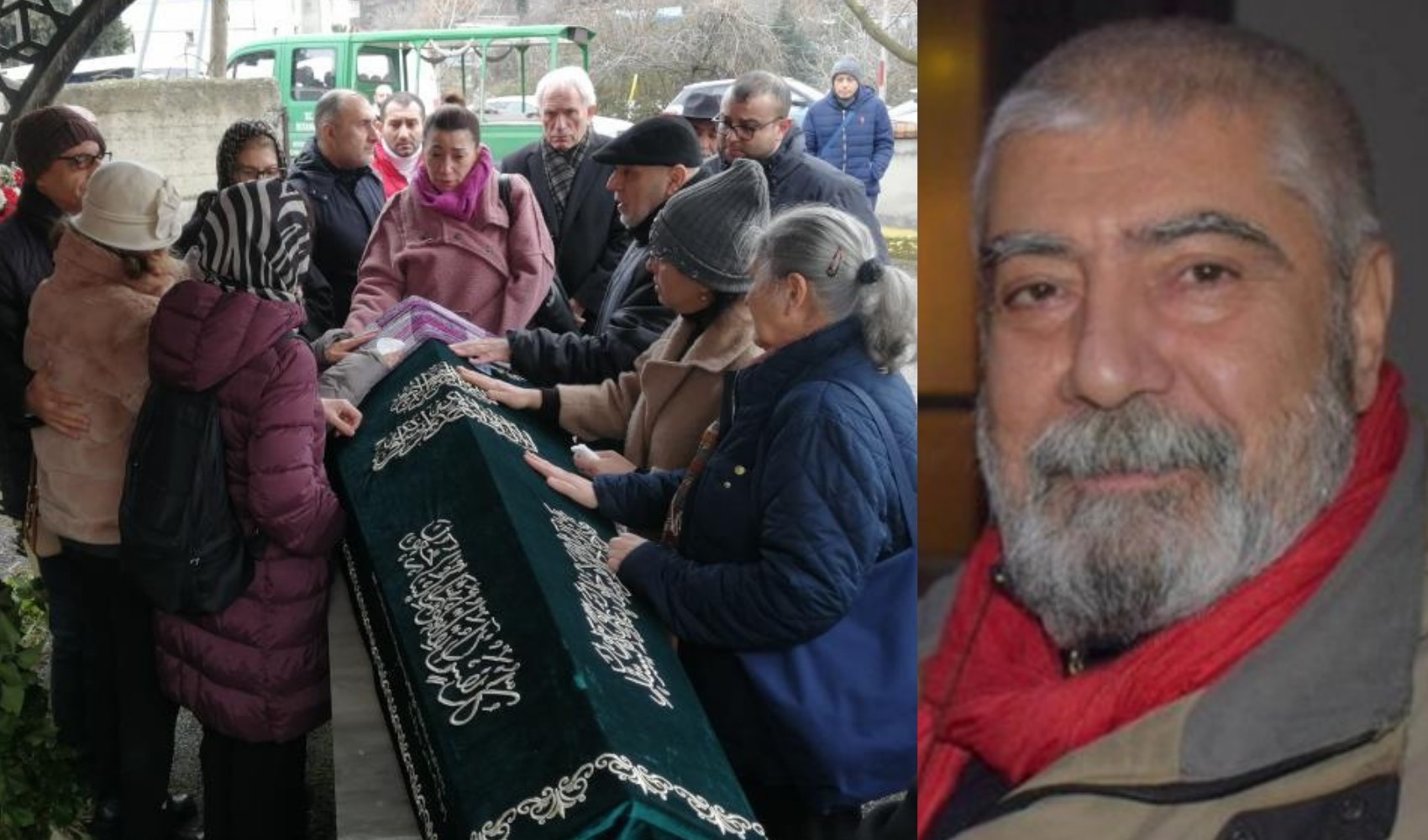
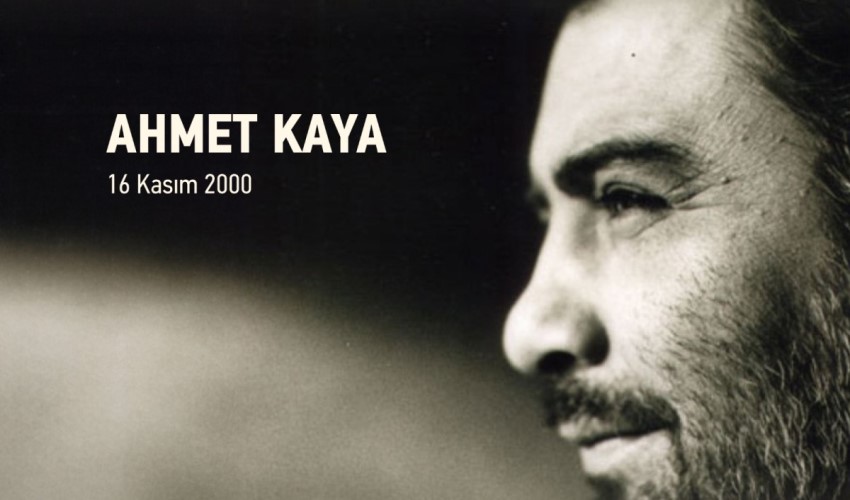
On November 16, 2000, while recording his album titled "Hoşçakalın Gözüm", he passed away due to a heart attack one night at his home in the Porte de Versailles district of Paris. On November 17, 2000, he was buried in section 71 of the Père Lachaise Cemetery in Paris with a ceremony attended by over 30,000 people.
In 2002, an album titled "Dinle Sevgili Ülkem", in which 20 famous artists sang Ahmet Kaya's songs, was made, and the albums "Hoşçakalın Gözüm" and "Biraz da Sen Ağla", which included the Kurdish track "Karwan" (Caravan) and its music video that he had announced at the Magazine Journalists Association night, were released. His grave in section 71 of the Père Lachaise Cemetery was rearranged in 2003.
On his grave, which weighs 3.5 tons, there are edelweiss motifs, instruments, a Kastamonu headscarf pattern, an Istanbul silhouette, song lyrics, and his bust. Four more albums titled "Kalsın Benim Davam" and "Gözlerim Bin Yaşında" (December 2006) have been released.
On September 4, 2007, the Ahmet Kaya People's House, the only place opened in his name in Turkey, was opened in Batman.[24] In 2009, ideas were put forward by the AK Party government regarding moving his grave from Paris to Turkey. Ahmet Kaya's grave is still located in the Père Lachaise Cemetery in Paris.
In 2010, which coincided with the tenth anniversary of his death, the documentary titled "Uçurtmam Tellere Takıldı", prepared by Ümit Kıvanç, was released.
On October 28, 2013, the award in the field of 'music' at the 2013 Presidential Culture and Arts Grand Awards was given to Ahmet Kaya.
On September 1, 2020, a park bearing his name was opened in the Asarlık Irmak neighborhood of the Menemen district of İzmir, timed to coincide with World Peace Day.
News Source: 12punto