An investigation has been launched after a specific area of the Gulf of İzmit turned red.
Experts, who explain that mucilage—also known as 'sea snot'—is a harmless, carbohydrate-rich, jelly-like secretion released from seed coats and roots in plants, state: "Under stress conditions, it helps with vital processes such as nutrient storage, seedling development, and germination in plants by ensuring moisture retention. This secretion can be produced in abundance by phytoplankton living in oceans, seas, and lakes under stress conditions (such as nutrient scarcity or colonization)."
'IT BEGINS TO MULTIPLY RAPIDLY'
Pointing out that these microscopic organisms, which produce a significant portion of the world's oxygen, are causing a massive environmental disaster, experts stated the following:
"These phytoplankton prefer stagnant seawater rich in nitrogen and phosphorus and begin to multiply rapidly in such environments. However, seawater that becomes acidic over time due to nitrogen and phosphorus puts the excessively increasing phytoplankton under stress and causes them to produce abundant mucilage.
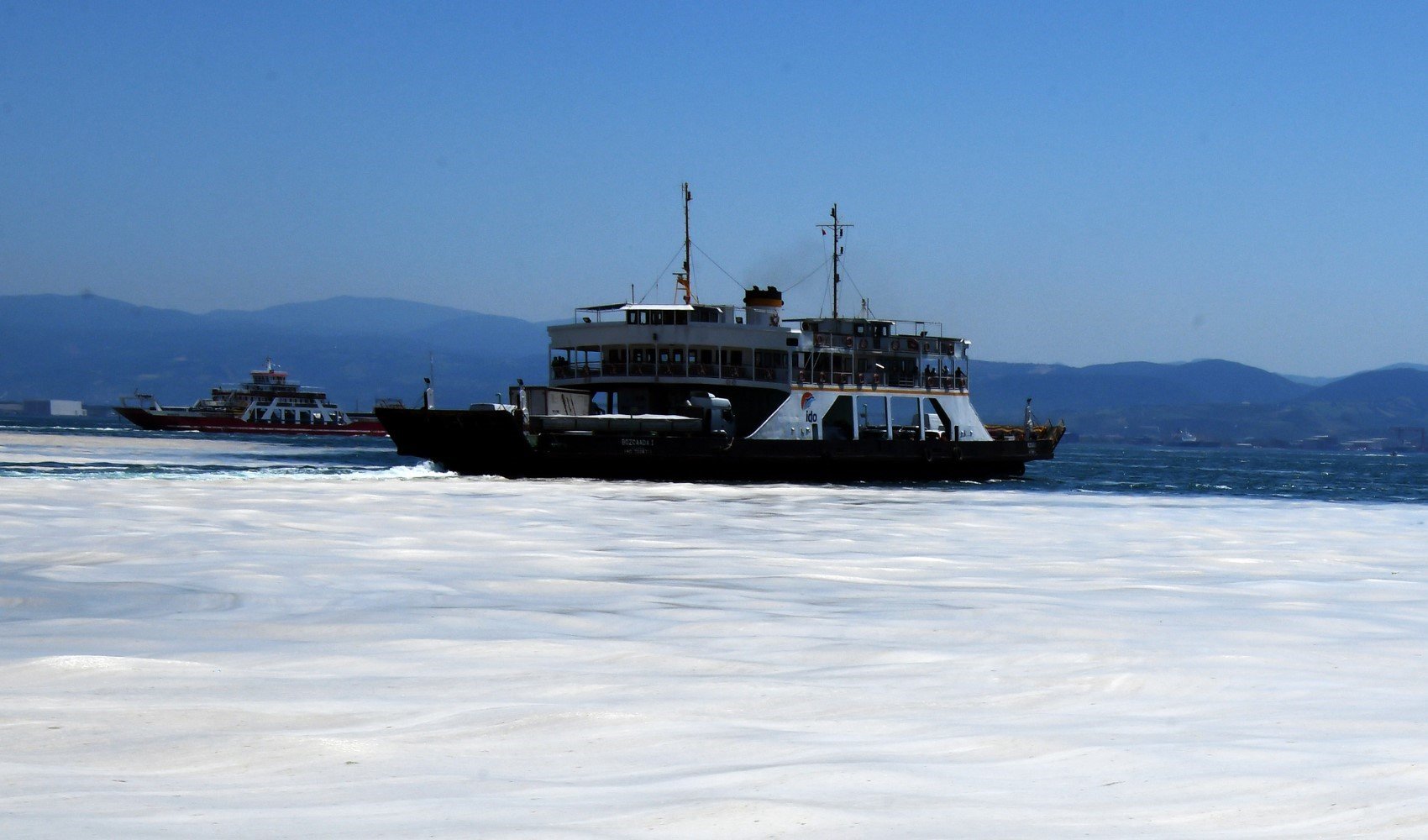
The presence of abundant oxygen, mucilage, and phytoplankton in the environment leads to an increase in harmful bacteria (such as those causing cholera, E. coli, etc.), protozoa (amoebas, etc.), and viruses that attach to them, feed on them, and consume oxygen. Over time, this abnormal food web that begins within the sea turns into a giant clot, covering both the sea surface and the seabed.
Both the lack of oxygen and this 'marine snow' reaching meters in depth lead to mass deaths of fish, crustaceans, sponges, and corals that depend on oxygen in the sea, and these dead organisms lead to a terrible odor and the formation of an environmental disaster. Furthermore, the mucilage that eventually settles on the seabed causes serious damage to marine life and fishing nets."
The Sea of Marmara, an inland sea that has managed to protect itself for so many years thanks to the currents of the Dardanelles and the Bosphorus, is now signaling that a disaster is approaching with this mucilage event.
News Source: 12punto