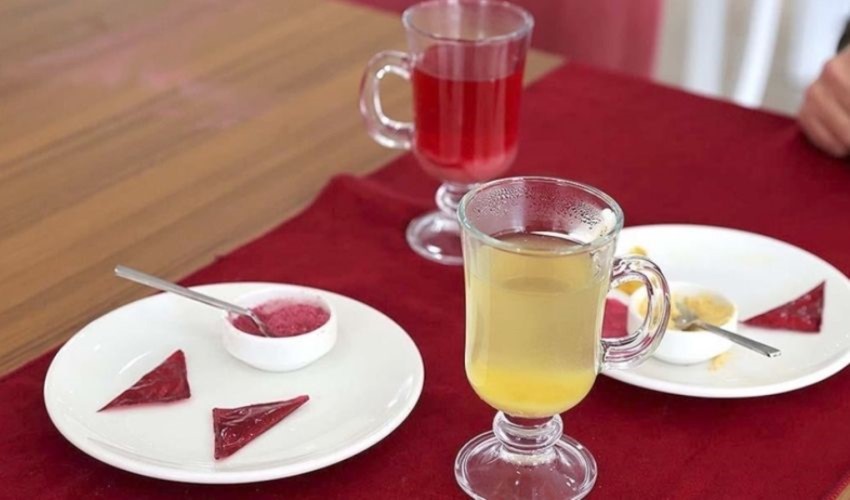
With a project developed by academics at Sivas Cumhuriyet University, herbal tea has been produced that dissolves in water with its edible bag, made from fruit and vegetable peels.
Assoc. Prof. Dr. Emre Hastaoğlu, a faculty member at the Sivas Cumhuriyet University Faculty of Tourism, Department of Gastronomy and Culinary Arts, along with Research Assistant Şefahat Taşçı, master's student Beyza Nur İlhan Akyel, and undergraduate student Büşra Kocaman, developed a project that will provide a "zero waste" opportunity in the food sector.
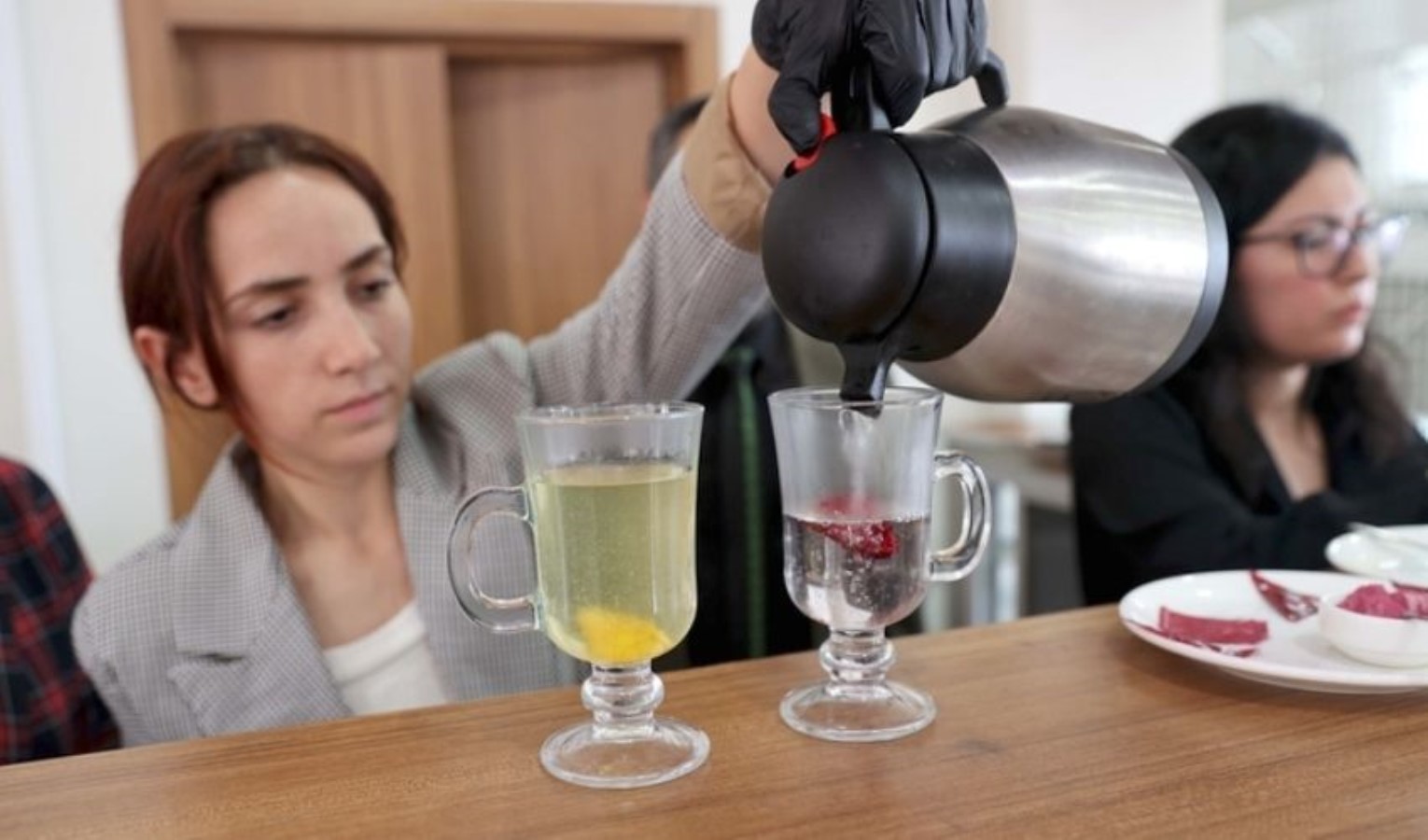
Explaining that they made a water-soluble powdered herbal tea from dried fruit and vegetable peels inside an edible casing, Hastaoğlu pointed out that the product, obtained from a material that is edible and dissolves in hot water, eliminates the negative effects of microplastics.
Stating that they used food waste within the scope of the project, Hastaoğlu said, "We developed such a project to reduce the environmental pollution caused by some vegetable and fruit peels and at the same time to reduce the use of microplastics in the bags used for herbal teas."
Providing information about the project, Hastaoğlu made the following assessment:
"In order to contribute to the Zero Waste Project, we aimed to prevent fruit and vegetable peels from becoming waste and to make them consumable again by grinding them. Thanks to the project, we planned to transform fruit and vegetable peels, which have a rich phenolic (chemical compound) content, into beverages with a long shelf life instead of throwing them in the trash. In this way, we aimed to contribute to both the Zero Waste Project and the 'responsible production and consumption' sub-goal of the United Nations Sustainable Development Goals."
16 DIFFERENT FRUIT AND VEGETABLE PEELS WERE USED
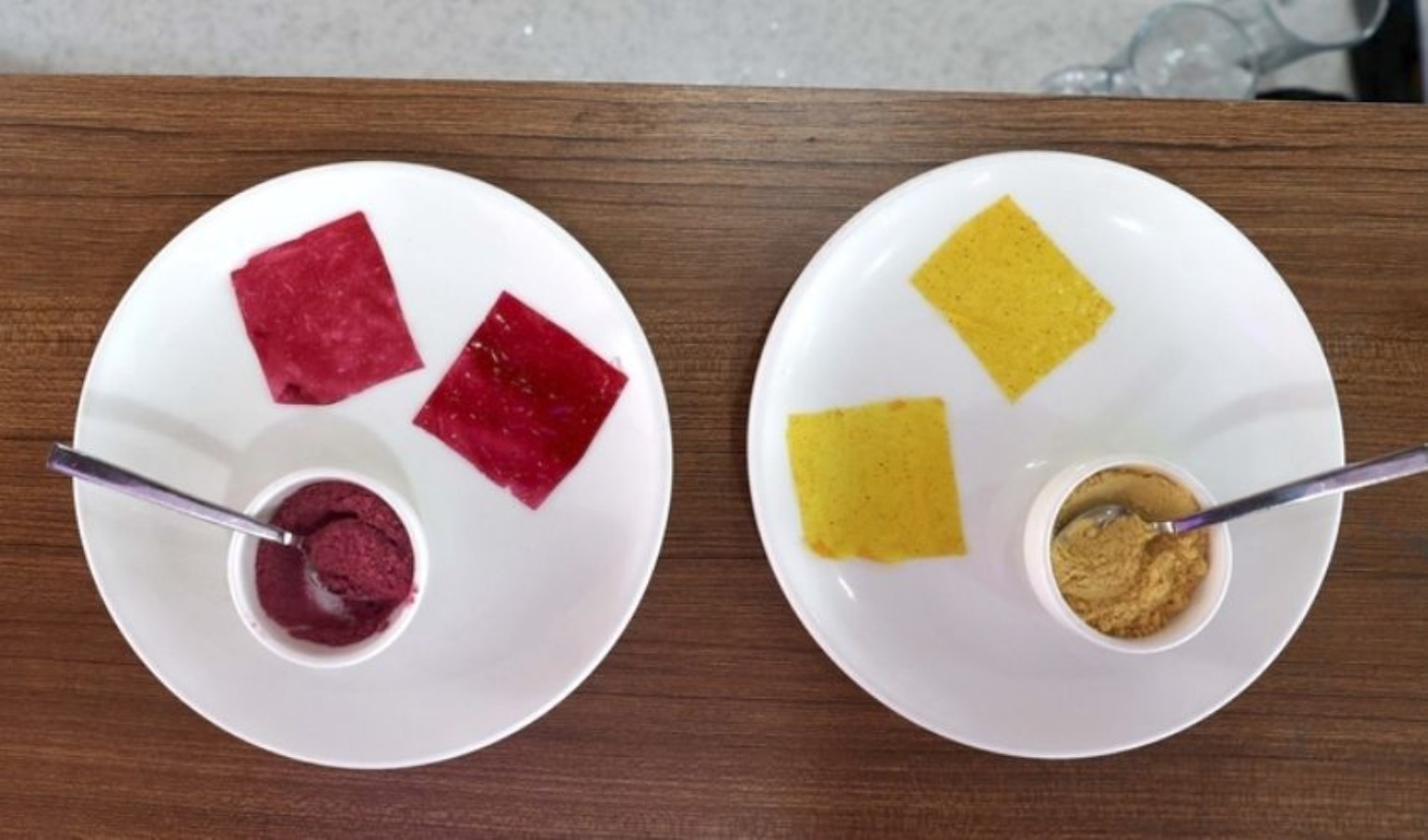
Stating that they used 16 different fruit and vegetable peels to create 4 different colors within the scope of the project, Hastaoğlu said, "We prepared products in orange, yellow, red, and green colors. We prepared herbal teas that have both high color and high phenolic content, mostly from orange, lemon, and red beet peels."
Stating that they basically had three goals within the scope of the project, Hastaoğlu noted the following:
"These are to ensure the reuse of waste, to reduce environmental pollution while reusing waste, and at the same time to reduce the carcinogenic effect of microplastics used in herbal teas. By using edible transparent bags, we aimed to develop tea products that the consumer can easily use and reach in a healthier way."
News Source: 12punto