
Scientists from Kyoto University used chips to send signals to specific regions of the macaques' brains. In the experiment, the macaques were trained in a setup where they were encouraged to look at two separate areas on a screen in exchange for different amounts of water as a reward.
CHIPS WERE IMPLANTED IN THE FRONTAL LOBE REGION OF THE BRAIN
According to the study featured in Independent Türkçe, one of these areas was designated as the high-risk and high-reward zone, while the other was designated as the low-risk and low-reward zone.
The chips were implanted in the Brodmann area 6, which is responsible for planning complex and coordinated movements in the frontal lobe of the brain.
When an intense signal was sent to the Ventral 6V area in this region, it was observed that the macaques focused on the high-risk and high-reward zone on the screen.
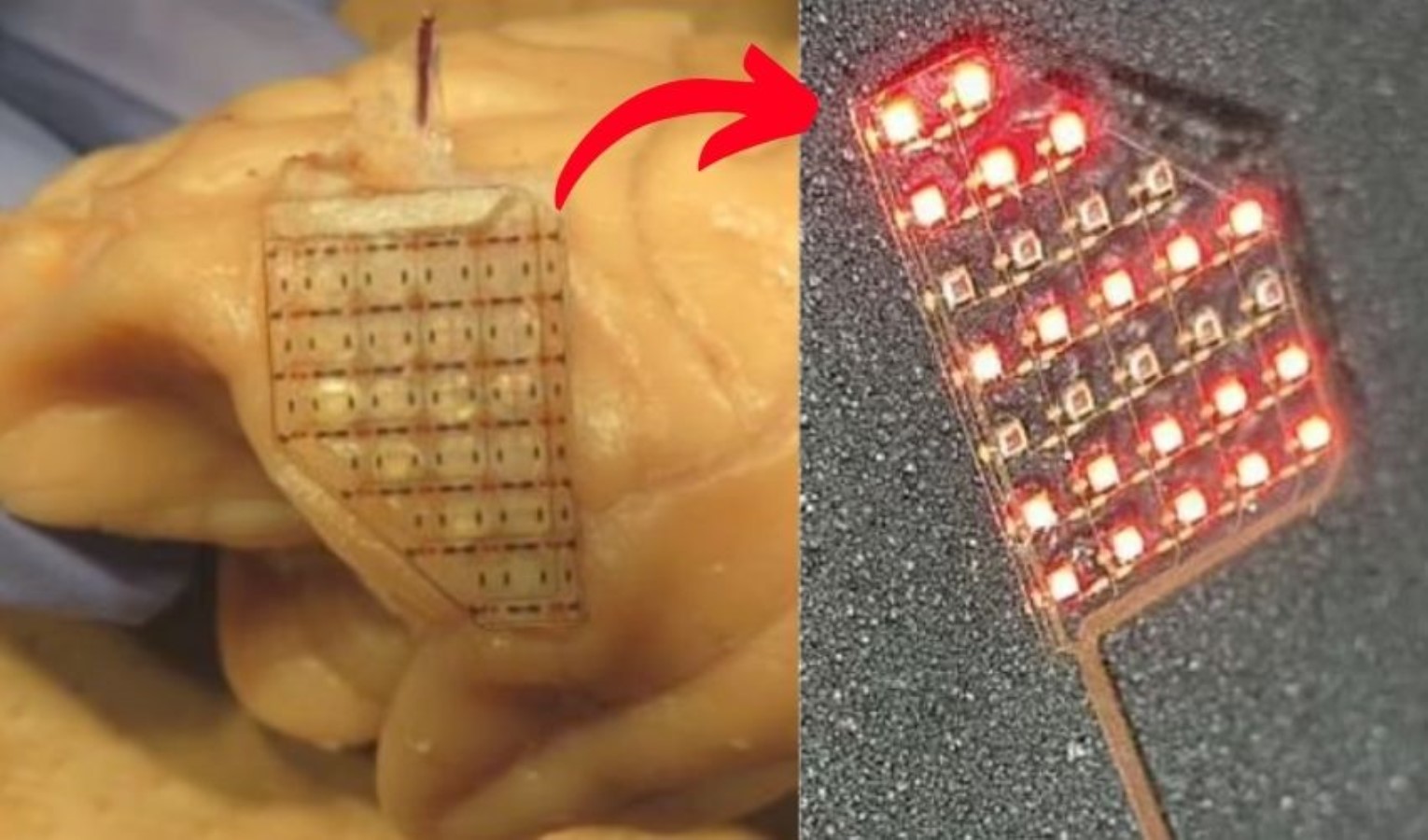
When a signal was sent to the Dorsal 6V area, adjacent to the same region, the primates focused on the low-risk and low-reward area on the screen.
In the study published in the scientific journal Science, the macaques were also made to play a video game that worked on a similar logic.
In the game, which the primates could control with their eyes, their tendencies to take bananas in more dangerous or safer locations were observed. Here, too, the macaques exhibited behaviors similar to those in the first experiment when signals were sent to the Dorsal 6V and Ventral 6V regions.
Veit Stuphorn from Johns Hopkins University in the US said, "This study shows that two neighboring regions in the frontal lobe of the brain regulate risk behaviors in two opposite directions and can both increase and decrease risk-seeking."
Stuphorn, who was not involved in the study, also pointed out that the regions where the chips were implanted carry dopamine to the "ventral tegmental" area, which is responsible for the production and distribution of a powerful stimulant called dopamine. The scientist also stated that with increased research in this area, more information could be gained about how certain regions of the brain play a role in issues such as gambling addiction.
News Source: 12punto