Prof. Dr. Akçay, a breast and endocrine surgeon and faculty member at the Atatürk University Faculty of Medicine Department of General Surgery, made assessments regarding breast cancer, the most common cancer in women, on the occasion of "October 1-31 Breast Cancer Awareness Month."
Stating that it is possible to encounter this cancer in one out of every 8 women, Akçay said, "It is also seen in men, but less frequently. It is seen in 1 man for every 100 women. It is possible to recover completely from breast cancer with early diagnosis and appropriate treatment."
Pointing out that cancer and breast cancer have been increasing worldwide in recent years, Akçay said, "While 1 million new cancer cases were identified annually in the world in 2015 data, we see that this rate rose to 2 million in 2020 data. Again, in 2020, 22 thousand 500 new breast cancer cases were detected in Turkey. In other words, a woman is diagnosed with breast cancer every 3 minutes in the world, and one woman loses her life due to breast cancer every 11 minutes."
EVERY WOMAN MUST HAVE A MAMMOGRAM AT AGE 40
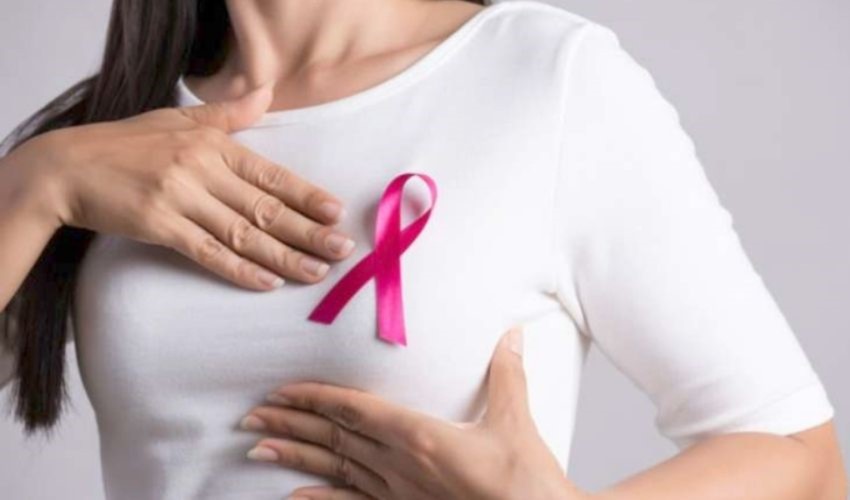
Stating that being a woman is a risk factor in itself for breast cancer, Akçay requested that every woman over the age of 20, after her period ends, examine her right breast with her left hand and her left breast with her right hand by pressing lightly against the chest wall to check for any possible lumps.
Recommending that women consult a doctor every 3 years between the ages of 20-40 and annually after 40 for examinations, Akçay said, "The most important screening method is mammography; every woman must have a mammogram at age 40. After age 40, we recommend screening every 2 years or annually. Have these screenings done as often as you can get to a hospital. It is not possible to prevent cancer entirely, but a Mediterranean-style diet should be followed, and excessive pastry, fatty, and heavy foods should be avoided after age 40."

Recommending that those with a family history of breast cancer undergo more frequent follow-ups and screenings, Akçay noted the following:
"Every woman and girl must take a brisk walk for 1 hour if possible, or at least half an hour, every day. Walking reduces the risk of breast cancer. Furthermore, for our women in the high-risk group—that is, if there is cancer in their family or if they carry the genetic mutation that leads to this cancer—we recommend that they have both breasts removed before the disease develops, just like Angelina Jolie. As is known, the American star Jolie's mother and grandmother had breast cancer. A mutation was detected in the genetic analysis she had done, and without hesitation—even though her beauty and body were at the forefront—she said, 'I have 6 children, I am a mother, I must live,' and had both her breasts removed. Recently, we have been doing this quite often as well. Previously, women in such situations were hesitant to have their breasts removed, but today we perform this surgery frequently. We recommend it to women in the high-risk group; they come in, and we remove both breasts and replace them with prosthetics. The 'Jolie effect' has been influential for us, just as it has been all over the world. Of course, this method reduces the risk of breast cancer by 90-95 percent."
Akçay explained that in cancers detected at an early stage, instead of removing the breast, only the lump is removed through breast-conserving surgery, and chemotherapy and radiotherapy are used less frequently.
Asking women to value themselves, Akçay concluded, "A woman is a mother, a wife. She manages herself, her home, her child, and her husband. Let us definitely start mammographic screenings at age 40. This is accepted all over the world. Again, it is possible to detect cancer early at a rate of 85 percent through screenings. Therefore, early diagnosis and treatment are important."
News Source: AA