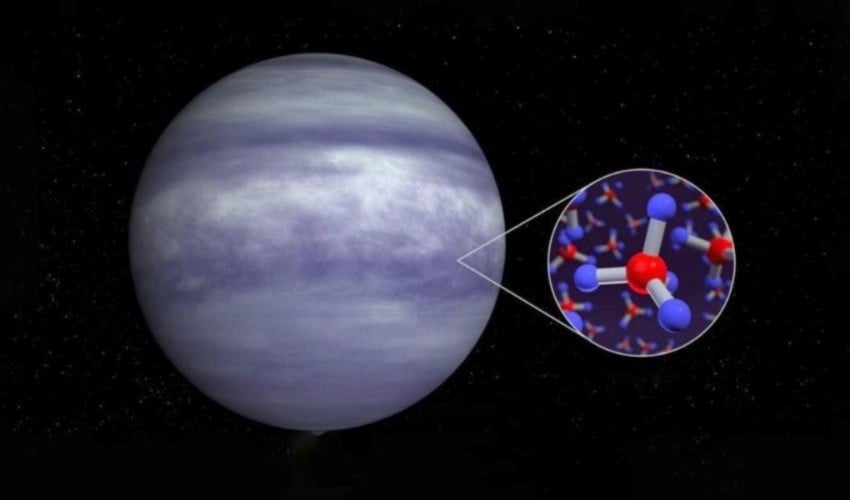
Scientists compare this discovery on the exoplanet WASP-80 b to "finding a needle in a cosmic haystack." In other words, the discovery highlights the incredibly difficult detections that the James Webb Telescope, operated by a group of countries led by NASA, is capable of making.
According to a report by Independent Türkçe, scientist Luis Welbanks from Arizona State University in the US said, "This is the first time we have been able to see such a clear methane signal in the spectrum of an exoplanet passing in front of its star." Welbanks emphasized that even for nearby planets like Jupiter and Saturn in our own Solar System, making such a discovery was only possible 50 years ago.
Michael Line from the School of Earth and Space Exploration stated, "Before James Webb, we believed that methane could be detected by the Hubble Space Telescope on planets where it was abundant. But that expectation largely fell short."
Moreover, this is not the first planet where the James Webb Telescope has discovered methane in its atmosphere. In previous months, the telescope had also discovered such molecules on the exoplanet K2-18b.
WASP-80 B IS CLASSIFIED AS A HOT JUPITER
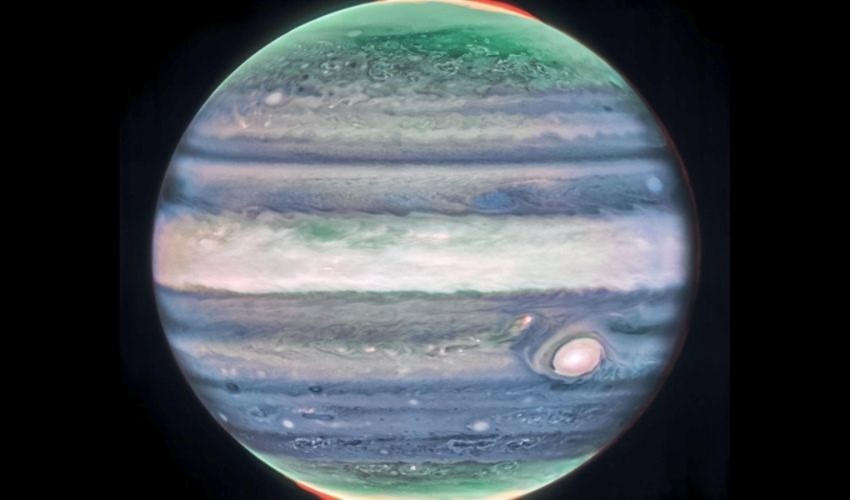
The exoplanet where the new discovery was made, WASP-80 b, is classified as a "hot Jupiter." This is because, despite sharing many characteristics with Jupiter, it is, unlike its namesake, extremely close to its host star.
Due to this relative proximity, distinguishing WASP-80 b from the red dwarf it orbits is by no means easy. According to scientists, this task is akin to a person trying to detect a single strand of hair from 14.5 kilometers away.
This proximity of WASP-80 b to its star causes temperatures on the planet's surface to rise to 552 degrees Celsius.
On Jupiter, by contrast, temperatures are known to drop as low as -148 degrees Celsius.
News Source: 12punto