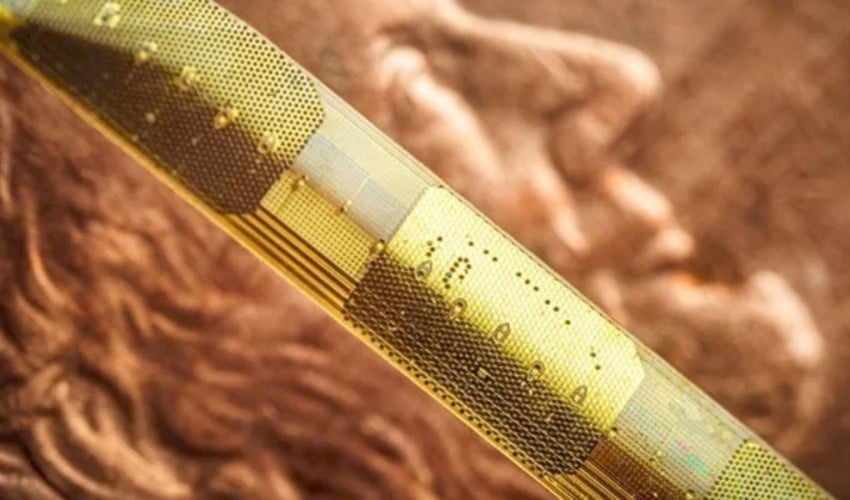
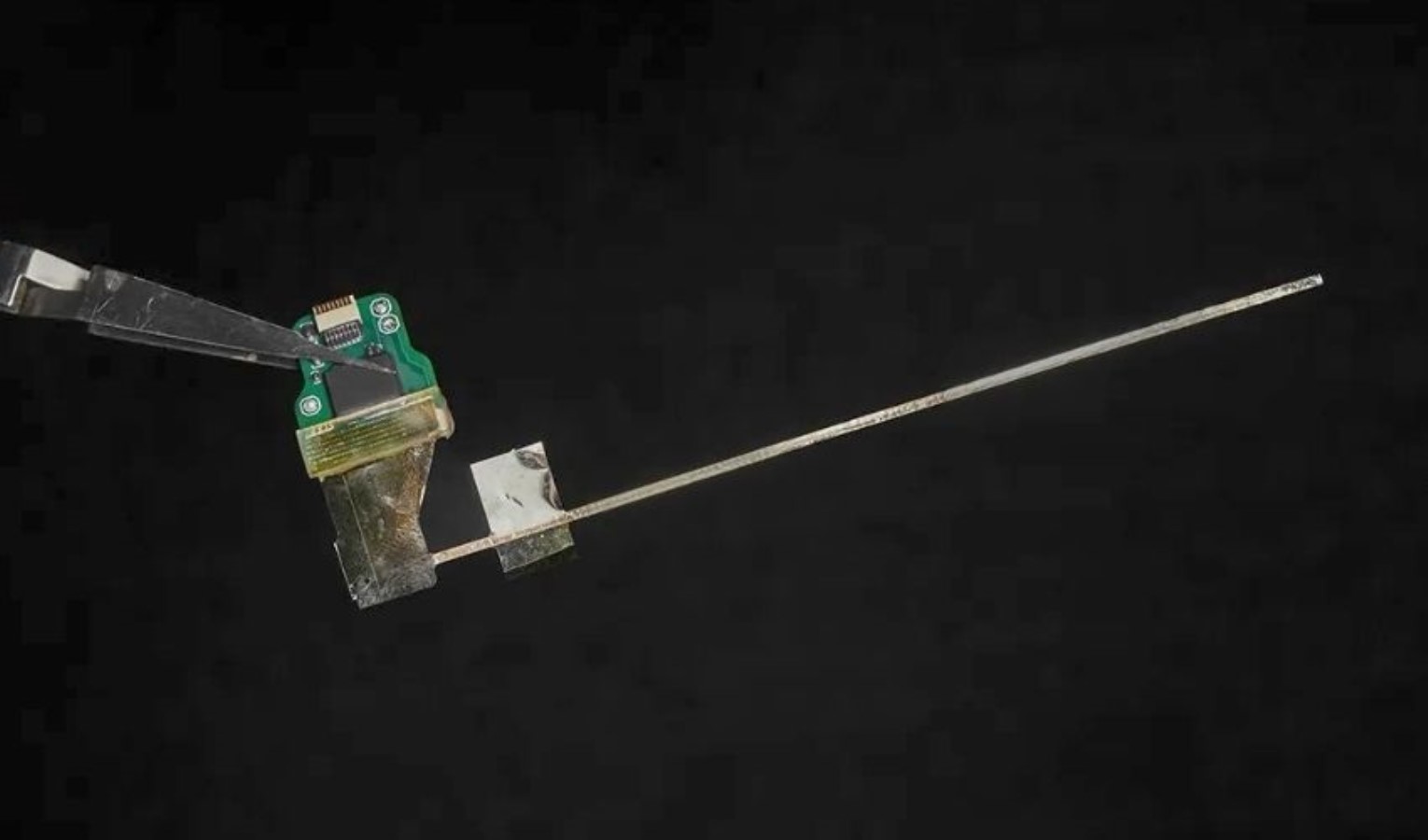
The Integrated Electronics and Biointerfaces Laboratory (IEBL) at the University of California, San Diego, has introduced a revolutionary approach for the clinical recording of deep brain activity. They have developed a new sensor that can penetrate up to 10 cm deep into the human brain, allowing for high-resolution recording.
INNOVATIVE SENSOR
The innovative approach, featured on Donanımhaber, is based on ultra-thin, flexible, and customizable probes made from clinical-grade materials. These probes are equipped with sensors capable of recording brain signals in the area where they are placed. Their small size allows for close placement, enabling high-resolution sensing at unprecedented depths of the brain. Shadi Dayeh, a professor of electrical engineering at UC San Diego and the corresponding author of the paper, explains:
"We have developed a completely different manufacturing method for thin-film electrodes. This method allows for the production of repeatable, customizable, and high-capacity electrodes that can reach the deep brain structures required for treatment. Furthermore, it enables high spatial resolution and channel counts despite a thinner electrode body."
The probes, which are only 15 microns thick (about 1/5 the thickness of a human hair), can currently record up to 128 channels. This is a significant leap compared to today's clinical probes, which only have 8 to 16 channels. Researchers aim to reach thousands of channels per probe. This advancement will provide doctors with the ability to capture, analyze, and understand brain signals at a better resolution.
The implications of this technology could extend beyond epilepsy to applications for Parkinson's disease, movement disorders, obsessive-compulsive disorder, obesity, treatment-resistant depression, high-impact chronic pain, and various other diseases. The UC San Diego Micro-stereo-electro-encephalography (µSEEG) allows for the wireless monitoring of treatment-resistant epilepsy patients for up to 30 days. Professor Dayeh envisions a wireless system that allows patients to move freely in both hospital and home settings while continuously monitoring cortical and deep brain structures.
WIRELESS BRAIN MONITORING SYSTEM
Researchers are actively working on a vision for a brain monitoring system with sensors placed deep within and on the surface of the brain. Communicating wirelessly with a small computer system contained in a box, this system could provide wireless power and computing infrastructure for recording brain signals for up to 30 days. Dr. Dayeh says: "The ultimate goal is to develop the system and necessary technologies by 2026 to offer patients a wireless system that allows them to move freely."
The study notes that the system worked successfully in two patients during tumor removal surgeries. Data obtained from various animal models, including rats, pigs, and non-human primates, demonstrate the versatility of the system. The probes, which are up to 10 cm long, allowed for recordings from deep brain structures, providing significant insights into brain dynamics at both macroscopic and single-neuron levels.
News Source: 12punto